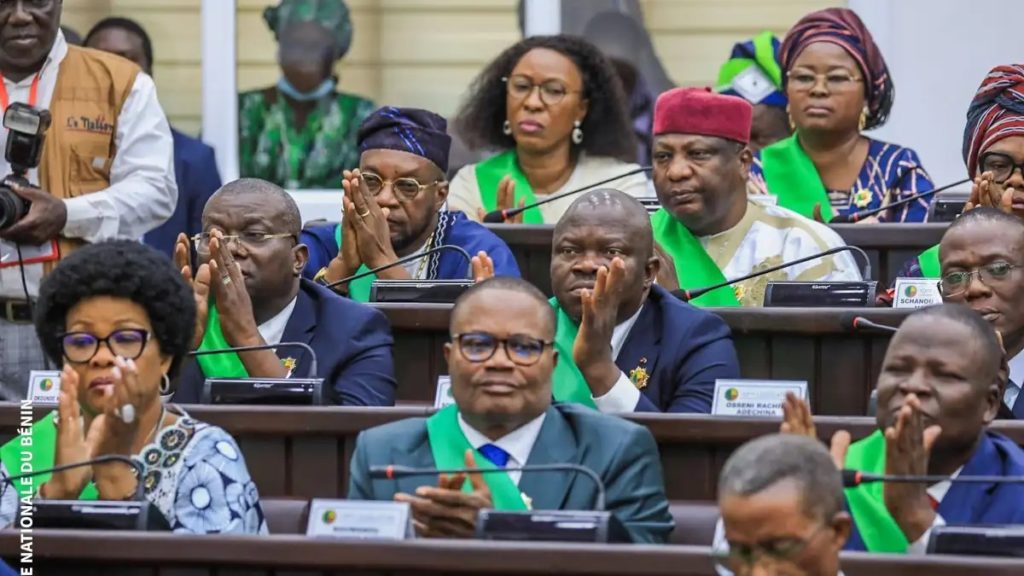
The government of Benin has approved a €30 million financing deal with the French Development Agency (AFD) to build a new contemporary art museum in Cotonou. The project, valued at over $19 billion (FCFA), aims to strengthen the country’s cultural identity and stimulate its creative economy.
The funding adopted by the National Assembly consists of a €25 million concession loan (approximately $16.4 billion FCFA) supplemented by a €5 million grant (around $3.3 billion FCFA).
Before its adoption in plenary session, the convention was reviewed by the Education, Culture, and Social Affairs Commission. According to authorities, the proposed repayment terms offered by AFD are deemed favorable for Benin’s public finances.
In front of parliamentarians, the Minister of Culture, Arts, and Heritage, Yassine Latoundji, emphasized the economic dimension of the future museum. ‘This is an economically driven project that will accompany the cultural industries and create jobs, urban activities, and revenue for the entire ecosystem,’ he stated.
Read Also: Cotonau, Benin’s Cultural Renaissance
Beyond the construction of the building, the financing will also cover museum engineering, training of future professionals, and the establishment’s operational setup. Special attention will be paid to integrating women into creative industries.
The Museum of Contemporary Art in Cotonou fits into Benin’s broader cultural development strategy launched since 2016.
It will complement several ongoing projects, including the International Memory and Slavery Museum at Ouidah, the Vodun International Museum at Porto-Novo, and the Royal and Amazonian Museums in Abomey, all UNESCO World Heritage Sites.
With this new facility, Cotonou aims to become Benin’s main hub for contemporary art creation.
Beyond its cultural vocation, the government sees the MACC as a tool for cultural diplomacy aimed at promoting Beninese artists globally.
Benin has already invested in several infrastructure and development projects. The French Development Agency is strengthening its partnership with the country in the cultural sector.
After parliamentary approval, the text must still be ratified before work can begin. Authorities have not yet announced a construction schedule for the future museum.