Rethinking migration: a call for balanced Africa-Europe cooperation
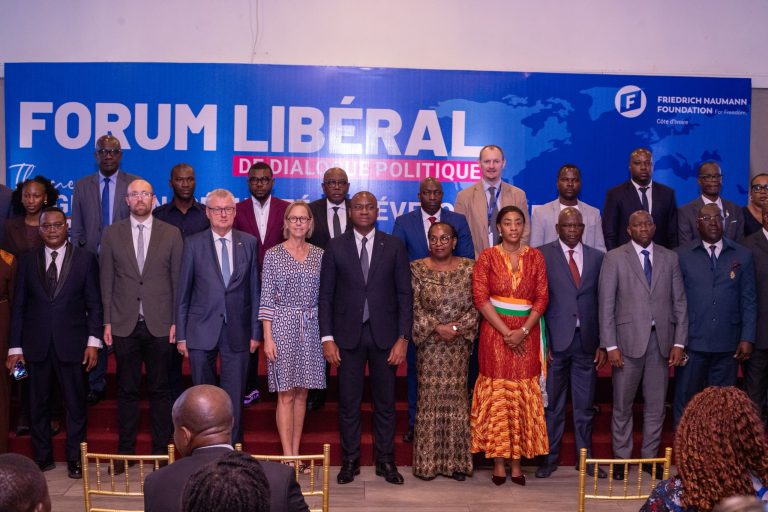
Abidjan – At the opening of the Liberal Political Dialogue Forum in Abidjan on July 15-16, 2026, key figures urged a fundamental shift in how Africa and Europe approach migration. The event, held under the theme “Migration, Security and Development: Rethinking Africa-Europe Partnerships,” gathered policymakers and civil society leaders to challenge conventional narratives.
Sidi Touré, Vice President of the Liberal International and Côte d’Ivoire’s Minister of Animal and Fisheries Resources, emphasized that migration should not be framed as a crisis but as an intrinsic part of human freedom. Citing United Nations data, he noted that migrants constitute only 3.7% of the global population, with over 96% of people remaining in their countries of birth. “The world is not being overwhelmed,” he stated, dismissing fear-driven rhetoric.
Intra-African migration: a natural flow, not a crisis
Minister Touré highlighted that 70% of African migration occurs within the continent itself, using the daily commuter flows at the Adjamé bus terminal in Abidjan as a real-world example. “This isn’t a crisis—it’s life,” he remarked, underscoring Côte d’Ivoire’s longstanding tradition of hospitality, encapsulated by the welcoming term Akwaba.
Addressing regional tensions, he expressed concern over the withdrawal of Mali, Burkina Faso and Niger from ECOWAS and its impact on free movement. “Regardless of political differences, our peoples are bound by brotherhood and our economies by sisterhood. Free movement is a heritage we must protect,” he asserted. He expressed hope that the forum would produce actionable recommendations, compiled in a policy paper for decision-makers.
Xenophobia undermines progress on both sides
Alexandra Heldt, Regional Director for West Africa at the Friedrich Naumann Foundation, condemned the rise of xenophobic discourse across Africa and Europe. Referencing the recurring violence against migrants in South Africa since 2008, she argued that no nation can thrive by blaming migrants for economic hardships. “Migration fosters exchange, innovation and entrepreneurship. It builds bridges, not walls,” she affirmed.
She also highlighted Europe’s contradictory stance, where labor shortages coexist with growing anti-immigration sentiment. Heldt advocated for a migration partnership rooted in shared responsibility, mobility, and freedom, urging leaders to prioritize trust and cooperation over fear and exclusion.
Touré concluded by reaffirming that hospitality is not a weakness but a pillar of strength and sound policy. “Hospitality is not weakness—it is a force and a deliberate strategy,” he said, advocating for migration to be harnessed as a driver of shared prosperity.
The forum continued with in-depth discussions on the legal, geopolitical and human dimensions of migration, bringing together voices from across Africa and Europe.