Institutional Evolution: The Birth of a Second Chamber
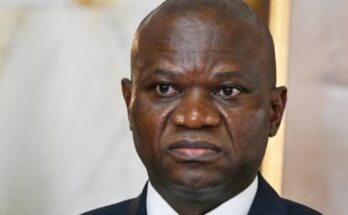
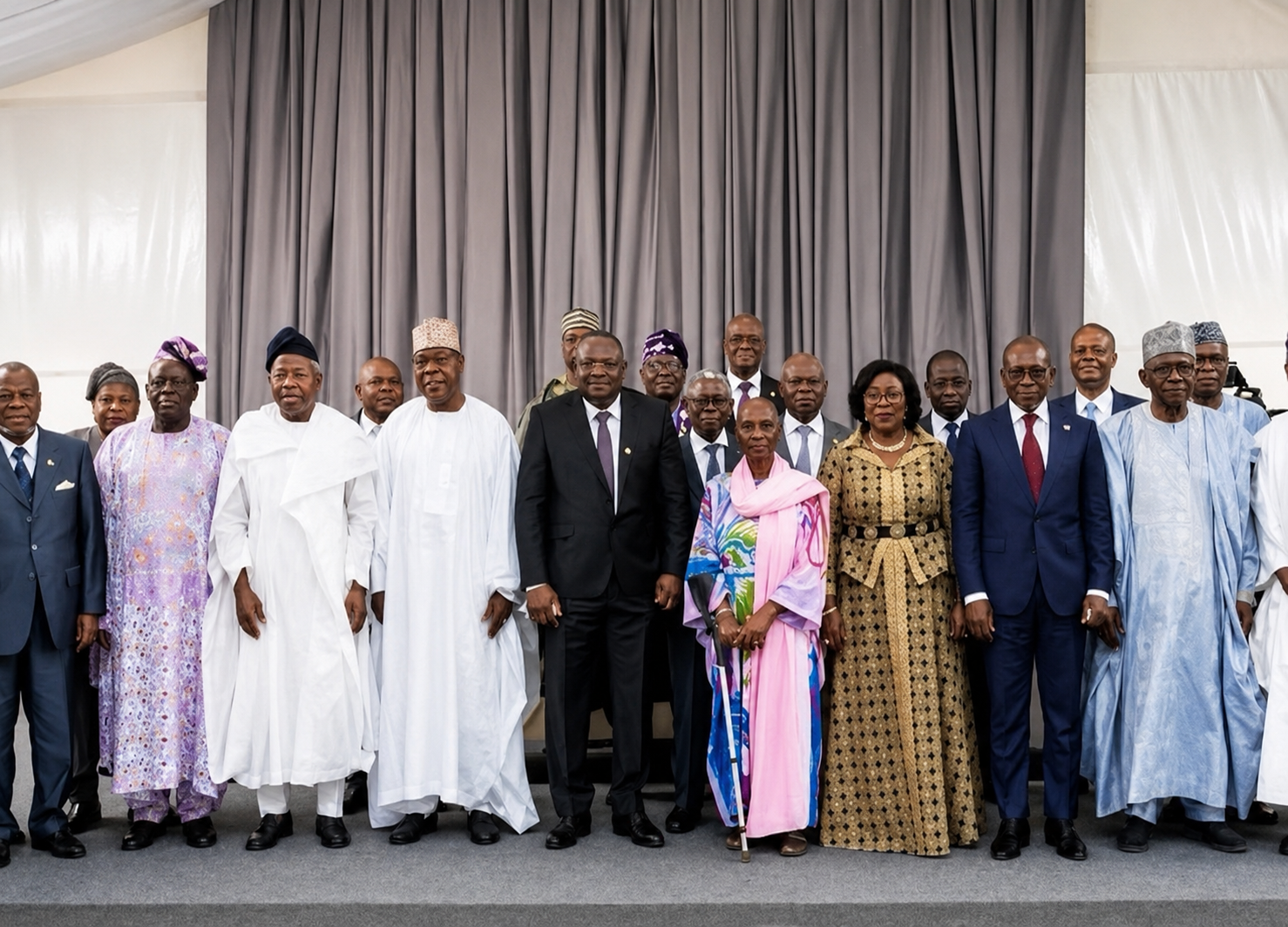
The Republic of Bénin inaugurated its first-ever Senate on July 30, 2026, followed by the election of former President Patrice Talon as its inaugural chair on August 6. This milestone marks a significant shift in the country’s constitutional framework, introducing a bicameral parliamentary system following the adoption of a revised constitution on December 17, 2025. The new upper house aims to rebalance the nation’s institutional architecture, though its creation has sparked intense debate.
A Constitutionally Mandated Institution, Not a Personal Project
The Senate is not a construct of Patrice Talon’s political ambitions. It emerged directly from the constitutional amendments approved in 2025, which explicitly established a two-chamber Parliament consisting of the National Assembly and the Senate. The revised Constitution outlines the Senate’s composition, roles, operational procedures, and powers in detail, making it a permanent constitutional entity rather than an ad hoc creation.
Criticism of the Senate’s establishment, its membership, or its operational framework is valid but framing it as a tool designed to extend Talon’s influence beyond his presidency misrepresents its legal foundation. The Constitution clearly delineates its boundaries and authority, rendering such interpretations legally untenable.
From President to Senate Chair: A Political Transition, Not a Power Grab
The election of Patrice Talon as Senate president has fueled speculation about his potential continued sway over national affairs. As a former head of state assuming leadership of a new institution, his influence is a natural subject of discussion. However, this influence must be distinguished from the constitutional exercise of executive power.
Talon stepped down from the presidency in May 2026 after completing two terms, with Romuald Wadagni elected as his successor in April of that year. This transition confirms that the transfer of executive authority occurred in accordance with constitutional provisions. The fact that Talon now leads the Senate does not equate to a covert resumption of presidential duties. The Senate chair holds no executive powers, does not govern the nation, and does not oversee state administration.
The Constitution vests executive authority exclusively in the presidency. The Senate, as a legislative body, operates within the parliamentary structure, with Article 79 explicitly defining it as the organ responsible for exercising legislative power and overseeing government action.
Legislative Oversight, Not Executive Rule
The Senate’s mandate includes critical regulatory functions aimed at safeguarding national unity, democracy, peace, political stability, and state continuity. Additionally, it is tasked with ensuring adherence to political ethics and the maintenance of a peaceful political climate. While these responsibilities are substantial, they do not transform the Senate into a parallel government.
Confusion arises when terms like regulation, oversight, and control are conflated with governance. The Senate does not replace the presidency, the government, or the ministries. Executive power remains the exclusive domain of the presidency and the cabinet. The Senate’s role is confined to legislative and regulatory functions as prescribed by the Constitution.
The Scope of Legislative Authority
The Senate wields significant, though precisely defined, legislative powers. Certain categories of legislation including constitutional amendments, electoral laws, and regulations governing political parties must receive its non-objection approval before enactment. A two-thirds majority of senators is required to raise an objection, while the absence of a response within the stipulated timeframe is deemed as tacit approval.
The Senate also possesses the authority to request a second deliberation on laws passed by the National Assembly, with exceptions for budgetary and financial legislation. This mechanism reinforces its role as a deliberative body rather than a decorative one, though it remains firmly within the legislative domain.
A Chamber of Experience and Mediation
The Senate’s composition reflects a deliberate effort to integrate institutional wisdom. The Constitution mandates the inclusion of ex-officio members individuals who have held high ranking positions in state institutions as well as appointees with extensive experience in defense and security sectors. If these criteria are not met, additional members are appointed to ensure the Senate meets its constitutional minimum of 25 senators.
This structure positions the Senate as a potential forum for dialogue, crisis prevention, and consensus-building. In democratic systems, governance is not solely determined by majority votes; it also relies on mechanisms for mediation, deliberation, and conflict resolution. The Senate’s design acknowledges this reality by incorporating seasoned leaders who can contribute institutional experience to legislative and regulatory processes.
Navigating Political Influence Without Overstepping Constitutional Boundaries
Critics who argue that Patrice Talon’s Senate presidency could enable him to wield undue influence overstate the case. While it is reasonable to acknowledge that a former president retains political networks, expertise, and influence, this does not equate to the legal exercise of executive power.
The pertinent question is not whether Talon can exert influence he clearly can, as would any former head of state in a prominent institutional role but whether that influence can constitutionally substitute for the authority of the sitting president. The answer is unambiguous: the Senate’s powers are circumscribed by the Constitution, and it lacks the mandate to direct administration, implement government policy, or assume presidential functions.
This distinction between political influence and institutional power is critical to a balanced assessment of the Senate’s role.
Political Continuity vs. Institutional Overreach
The transition from Patrice Talon to Romuald Wadagni as president was widely interpreted as a continuation of the same political trajectory. Wadagni, a former finance minister under Talon, secured the presidency in April 2026 with an overwhelming majority, reflecting the dominance of the ruling coalition. While such continuity can be criticized on political grounds, it does not automatically signify an institutional power grab.
A democracy may experience political succession without abrupt policy shifts. The true measure of institutional health lies in whether responsibilities are clearly separated, powers are exercised within constitutional limits, and oversight mechanisms function effectively. The Senate’s ability to uphold these principles will determine its legitimacy.
The Proof Lies in Practice
As a novel institution, the Senate’s true value will be determined not by theoretical debates or speculative fears, but by its real-world performance. Observers must assess whether it fulfills its constitutional duties without devolving into a mere rubber-stamp body, how effectively it collaborates with the National Assembly, and whether it exercises its legislative and regulatory powers judiciously.
Another key indicator will be the adherence of senators to the Constitution’s stipulation that they remain non-partisan and exercise restraint. Their role is not to engage in political activism but to contribute to stability, dialogue, and constitutional governance.
Clear Roles, Clear Responsibilities
To dispel misconceptions, it is essential to reiterate the division of powers within Bénin’s revised constitutional framework. The president leads the executive branch, the government implements policy, and the Parliament comprising both the National Assembly and the Senate enacts laws and conducts oversight. The Constitutional Court serves as the final arbiter of constitutional disputes.
In this structure, Patrice Talon’s Senate presidency does not restore him to the presidency. His political experience may grant him influence, but it does not confer the constitutional prerogatives of executive authority.
Judging the Senate by Its Actions, Not Assumptions
Scrutinizing the Senate is entirely legitimate; new institutions must be open to evaluation, critique, and reform. However, such critiques are most productive when grounded in facts rather than conjecture.
The Senate is not an extra-constitutional entity. It is a fully integrated component of the revised Constitution, equipped with defined powers and embedded within the bicameral parliamentary system. Its chair is not a shadow president, its authority does not supersede that of the government, and its existence does not diminish the president’s constitutional responsibilities.
The Republic of Bénin’s most pressing challenge is not to determine whether the Senate is being mischaracterized as a “shadow government,” but to evaluate whether it fulfills its constitutional mandate: enhancing legislative quality, fostering political dialogue, and safeguarding institutional stability and peace. The era of speculation must give way to one of assessment and the Senate’s performance will ultimately define its place in the nation’s governance.