The air at Addis-Abeba’s Bole International Airport carried more than just the scent of morning rain on July 13, 2026. It carried ambition. As Romuald Wadagni, President of the Republic of Benin, stepped onto the tarmac, he carried with him the weight of a nation’s vision: to redefine Africa’s economic future. His arrival marked the start of a high-stakes diplomatic marathon, one that would see him navigate a whirlwind of meetings, speeches, and strategic alliances over the course of a single, decisive day.
a bold welcome and the promise of shared vision
At the Presidential Pavilion, Vice-Premier Tiruneh Temesgen stood ready to greet the Beninese leader. The formal welcome was not merely ceremonial—it was symbolic. The relationship between Benin and Ethiopia is no longer just diplomatic; it is a partnership of shared aspirations, particularly in the realm of economic transformation. Within minutes of his arrival, President Wadagni moved from handshakes to handshakes, from protocol to progress. His first official stop? A strategic meeting with Dr. George Elombi, CEO of Afreximbank, a financial institution that has become the backbone of intra-African trade. The Beninese delegation’s reputation for rigorous fiscal management and bold structural reforms preceded it—and the discussions that followed only deepened that trust.
afreximbank retreat: where theory meets transformation
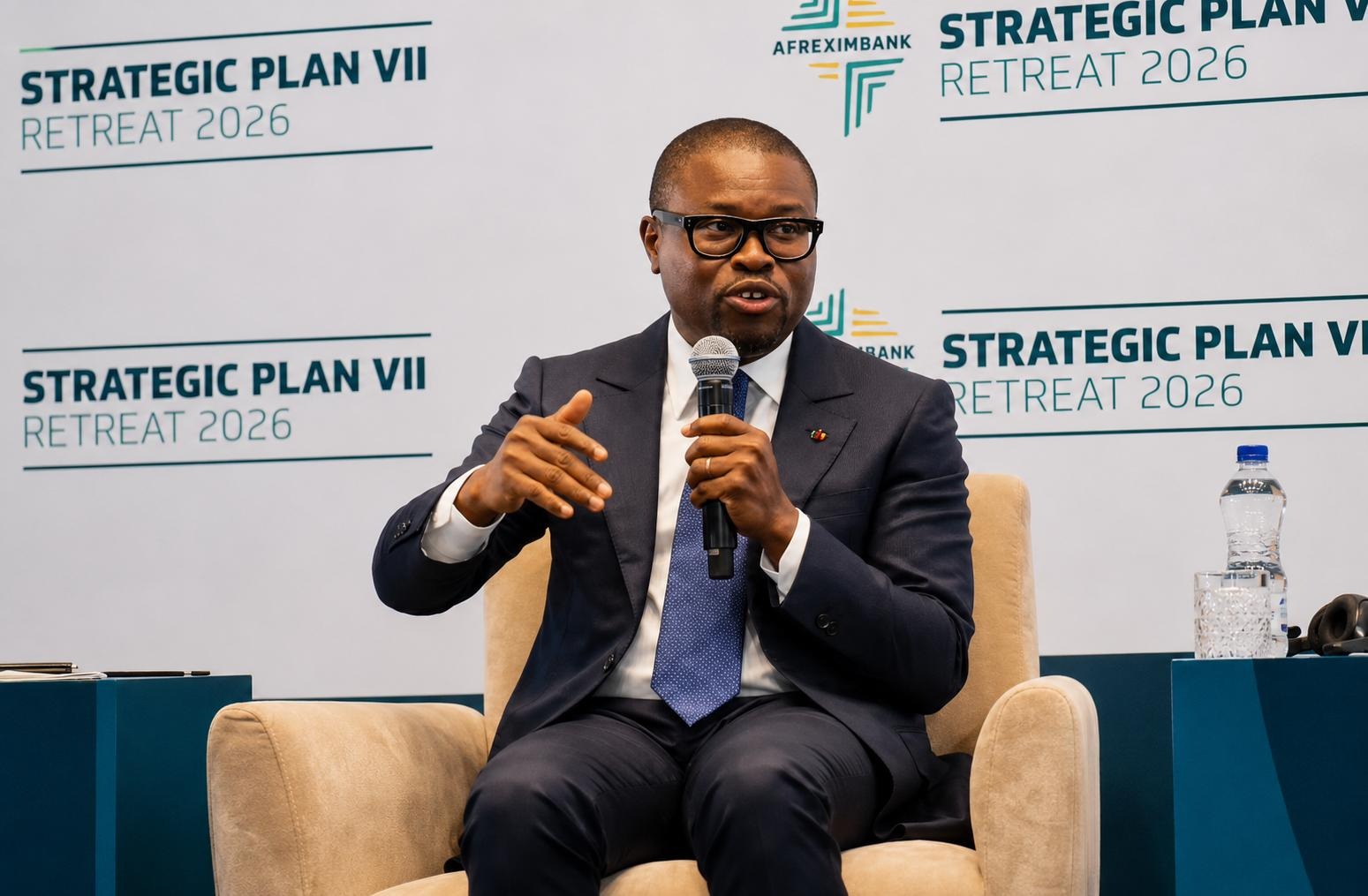
The heart of the visit pulsed at the Afreximbank strategic retreat, where President Wadagni took center stage as the guest of honor. Before an audience of Africa’s top financiers, economists, and policymakers, he delivered a keynote address titled: “Why Governments Fail at Industrialization—and How Benin Succeeded”. The title wasn’t subtle. Neither was the message. Speaking plainly about the realities of state-led transformation, he dissected the three pillars of Benin’s industrial breakthrough: unwavering policy consistency, vocational training tailored to real industrial needs, and a deliberate reduction of reliance on imported inputs.
The President didn’t just talk theory. He pointed to the Glo-Djigbé Industrial Zone (GDIZ)—a continental benchmark for local value addition—as proof. From cotton to cashews to soybeans, the GDIZ has turned raw materials into finished goods, creating jobs and cutting dependence on foreign markets. “Industrialization isn’t a slogan,” Wadagni insisted. “It’s iron discipline. It’s predictable policy. And it’s a refusal to accept mediocrity.” The room listened. Heads nodded. The applause that followed wasn’t courteous—it was reverent. For many in the audience, the Beninese model was no longer an idea to admire from afar; it was a blueprint to emulate.
palais menelik: forging a new east-african axis
The next stop: the historic Palais Menelik, where Prime Minister Abiy Ahmed awaited. The warmth of the reception spoke volumes. This was no routine meeting. It was the launch of a new economic corridor—one that could redefine trade between West and East Africa. Over an hour of private discussions, the two leaders explored avenues of collaboration that stretched beyond borders. Key areas included:
- Aviation and connectivity: Leveraging Ethiopian Airlines’ regional dominance and modernizing Benin’s airports to create a seamless trade gateway.
- Agricultural expertise: Sharing knowledge in high-value crop value chains to boost productivity and export competitiveness.
- Global financial reform: Aligning positions in international forums to push for a fairer global financial architecture—one that reflects Africa’s rising economic voice.
The outcome? A roadmap for deeper integration. By the time the delegations parted, both sides had agreed to turn potential into action—fast.
Benin’s voice gains weight on the continental stage
By evening, President Wadagni was back in Cotonou. But the impact of his 24-hour mission would echo across the continent. In a single day, Benin had done more than visit Ethiopia—it had claimed its seat at the table of Africa’s economic architects. The message was clear: Benin is no longer waiting for solutions. It is crafting them.
The retreat, the palace talks, the frank exchanges—all served as a reminder that leadership in 21st-century Africa is not measured by words alone, but by actions that reshape markets, redefine industries, and rewrite the rules. As the sun set over Addis-Abeba, one thing was certain: Benin had arrived—not as a newcomer, but as a force to be reckoned with.