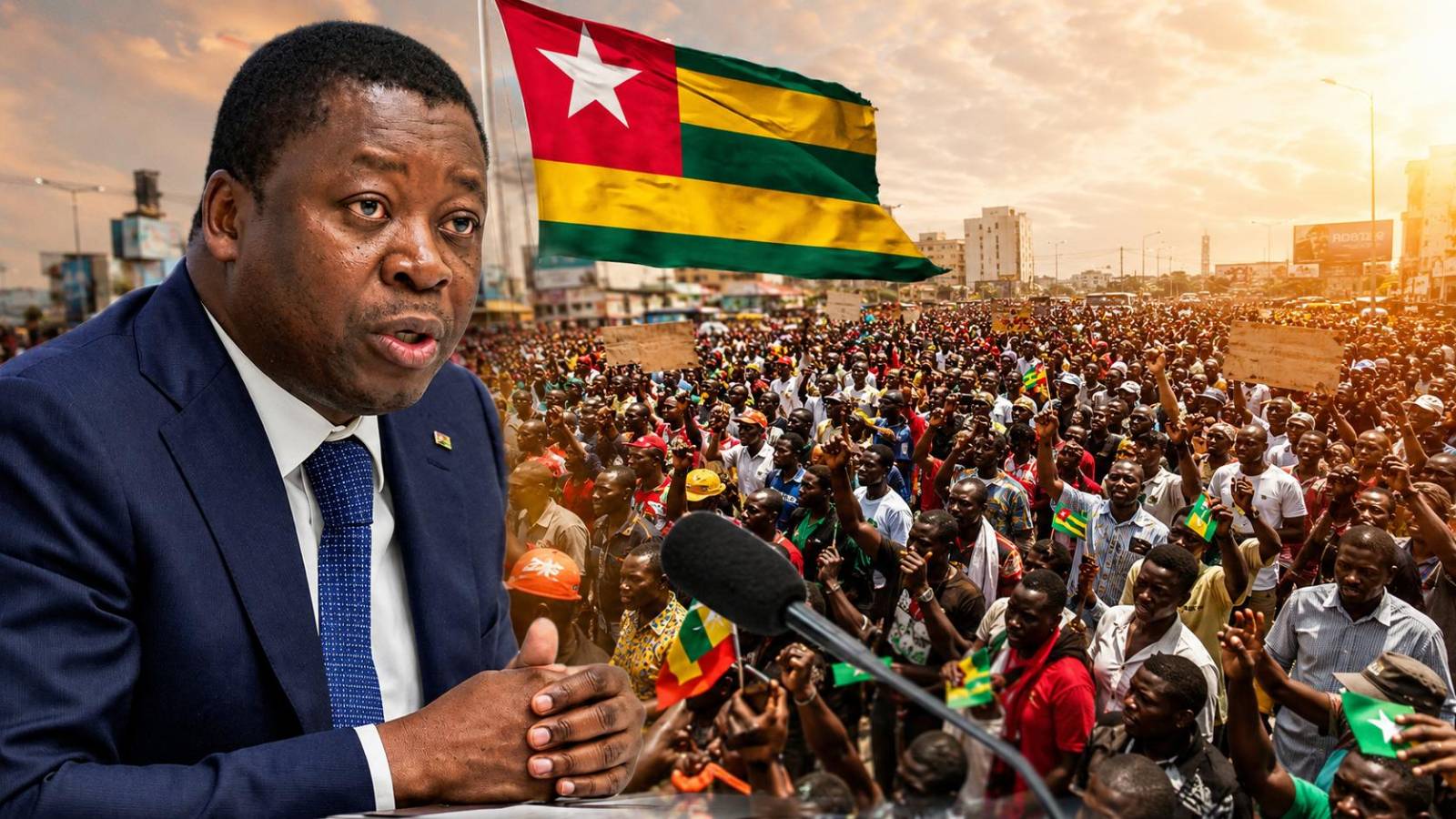
The grim dilemma confronting Togolese youth
Young people in Togo face an increasingly unbearable choice: embark on a perilous journey abroad in pursuit of a dignified life, or remain in a country where their ambitions slowly erode with each passing day. This stark reality has intensified criticism of President Faure Gnassingbé, whose two decades in power are now widely regarded as the root cause of the nation’s collective disillusionment.
The once-hopeful narrative of building a future within Togo has given way to a grim calculus among the youth. Where previous generations clung to the possibility of progress at home, today’s young citizens see emigration as their only viable path to a meaningful existence. This shift underscores not only a generational disconnect from state institutions but also a profound erosion of trust in the government’s ability—or willingness—to foster an environment conducive to success.
The illusion of economic progress and the harsh reality of job scarcity
Official rhetoric touting economic modernization and reform efforts stands in stark contrast to the bleak employment landscape. While government data may paint an optimistic picture of unemployment rates, the truth is far grimmer: over 70% of young workers find themselves trapped in unstable, informal employment, where underemployment is the norm rather than the exception.
Each year, universities in Lomé and Kara churn out tens of thousands of graduates. Yet programs like the National Employment Agency (ANPE) and the National Coalition for Youth Employment (CNEJ) offer little more than empty promises. With no meaningful job opportunities available, legions of educated young Togolese resort to piecemeal survival strategies—driving motorcycle taxis (zémidjans), hawking goods in markets, or cycling through precarious small-scale ventures. Their years of academic investment fade into irrelevance, leaving both families and the nation to bear the cost of wasted potential.
This systemic failure extends beyond individual hardship. When engineers take up street vending and law graduates scramble for informal work, the consequences ripple through the economy. The nation loses not only skilled labor but also the innovation, productivity, and competitiveness that such talent could otherwise drive. Meanwhile, the industrial sector remains woefully underdeveloped, offering too few high-value jobs to match the qualifications of the burgeoning workforce.
A system rigged by favoritism and exclusion
The frustration among Togo’s youth is compounded by a pervasive sense of injustice. Families sacrifice dearly to fund education, believing that hard work and merit will pave the way to success. Yet in Togo, merit alone is no longer enough to guarantee progress.
Access to entrepreneurship and financing is a labyrinth of obstacles. Despite initiatives like the Youth Economic Initiatives Support Fund (FAIEJ), securing loans without substantial collateral or political connections is nearly impossible. Public contracts and lucrative opportunities remain concentrated in the hands of a select few aligned with the ruling UNIR party. For young Togolese without ‘le piston’—the right connections—the doors to social mobility slam shut.
This reality fosters a growing belief that academic achievement, diligence, and perseverance are no longer pathways to success. When equal opportunity ceases to exist, the social contract frays, and disillusionment takes root. The private sector, which could otherwise drive job creation, labors under its own set of challenges: burdensome bureaucracy, limited access to capital, sluggish consumer demand, and economic uncertainty all stifle investment and hiring.
Emigration as the only viable escape
With the prospect of success at home increasingly remote, emigration is no longer seen as an option but as a necessity for survival. This exodus manifests in two particularly alarming trends for Togo’s future:
- The scramble for visas: Day after day, long queues form outside the French embassy, Campus France offices, and immigration agencies in Canada and the Gulf states, as young Togolese seek any means to leave.
- The brain drain of critical sectors: Hospitals are depleted of doctors, nurses, and engineers; tech entrepreneurs and researchers abandon their projects; and educators flee to greener pastures. The loss of these skilled professionals weakens the nation’s capacity for innovation, investment attraction, and economic modernization.
The irony is stark: Togo invests heavily in educating its youth, only for the returns on that investment to benefit foreign economies. Host nations gain from the skills honed in Togo, while the country itself struggles to retain the talent that should be fueling its own development.
The political deadlock that extinguishes hope
The economic despair is further deepened by a crisis of political confidence. Many young Togolese view the nation’s challenges as inextricably linked to a political system that has calcified over time.
The controversial adoption of the Fifth Republic Constitution in 2024, which transformed the country into a parliamentary regime, has shattered the last vestiges of hope for change. To many in the youth, this reform is merely a legal maneuver to indefinitely prolong Faure Gnassingbé’s grip on power—now under the title of President of the Council of Ministers. By foreclosing any possibility of democratic renewal or generational leadership at the helm of the state, the regime has pushed its youth toward disengagement from public life, leaving them with no recourse but to seek their futures beyond Togo’s borders.
For some, the issue transcends economics. Without institutional renewal, a strengthened rule of law, independent judiciary, and genuine political competition, economic reforms are doomed to fail. This conviction reinforces the belief that the path to progress lies not at home but abroad.
This disillusionment has also sparked a crisis of civic participation. Many young people are withdrawing from political parties, civil society, and public initiatives, convinced that their voices hold no sway over national decisions. Such disengagement weakens democratic vitality and deprives the nation of the creative energy of an entire generation.
Can a nation thrive when its youth abandon it?
Critics argue that after nearly two decades in power—first under his father’s legacy and then his own—President Gnassingbé bears direct political responsibility for this outcome. The era of his leadership has failed to produce an inclusive economic model capable of meeting the aspirations of a growing youth population. Instead, prosperity remains concentrated in the hands of a privileged few, while the majority grapple with poverty or prepare for exile.
Historical precedents suggest that no nation can thrive when its most dynamic, educated, and ambitious citizens view departure as their primary aspiration. The countries that succeed are those that retain their talent, foster innovation, guarantee equal opportunity, and cultivate trust between citizens and institutions.
A pressing question looms over Togo’s future: How can a nation hope to develop when its brightest minds dream only of leaving? Without concrete solutions to unemployment, governance transparency, business climate improvement, and democratic aspirations, the country will continue to hemorrhage its most valuable resource—its youth—leaving behind a hollowed-out economy and a lost generation.