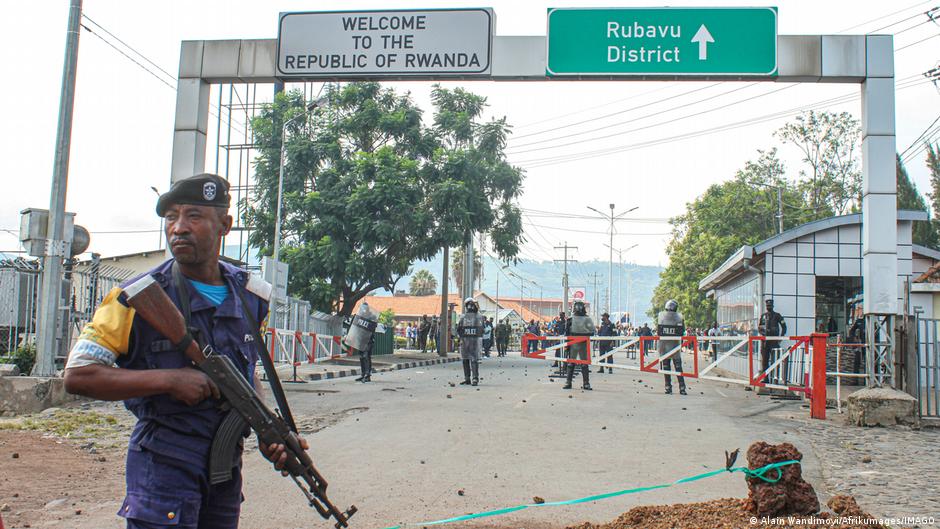
Residents of Goma, a bustling city in the eastern Democratic Republic of the Congo (DRC), are feeling the pinch after authorities in neighboring Rwanda announced the closure of border crossings linking the two nations. The decision, aimed at curbing the spread of Ebola, has sent shockwaves through communities that rely on cross-border trade for their livelihoods.
The human toll of closed borders
Jacques Safari, a street vendor in Goma, has seen his daily earnings plummet since the border with Rwanda shut its gates. For years, he sold eggs to travelers passing between Goma and Gisenyi, a town just across the border. “Before the closure, I could sell up to five trays of eggs daily. Now, I struggle to move even two,” he explains. “Most of my customers were travelers—now they’ve vanished.”
The economic ripple effects extend beyond small vendors. Hamuli Kasilembo, a wholesaler at Birere Market, faces his own set of challenges. “Supply chains have ground to a halt,” he says. “Before, crossing the border was easy. Now, securing stock is nearly impossible—and with money no longer flowing as freely, even finding buyers is a struggle.”
Supply shortages and economic strain
Local businesses aren’t the only ones suffering. The closure has disrupted the flow of essential goods, leaving residents scrambling to find basic necessities. Rice, soap, and other household staples that were once easily sourced from Rwanda are now in short supply, driving up prices and deepening financial hardship.
Economists warn that the impact will only worsen if the border remains closed for an extended period. Alphonse Muanda, an economist based in Goma, highlights the vulnerability of small-scale traders. “Cross-border trade isn’t just commerce—it’s survival for many,” he notes. “When the border shuts, it’s the informal economy that collapses first. These are people who depend on daily earnings to put food on the table.”
What’s next for Goma’s economy?
As the closure enters its second month, fears of a humanitarian crisis are growing. With no immediate sign of reopening, residents are bracing for further economic decline. The once-thriving trade between Goma and Gisenyi, a lifeline for thousands, now hangs in the balance—leaving economies on both sides of the border in limbo.