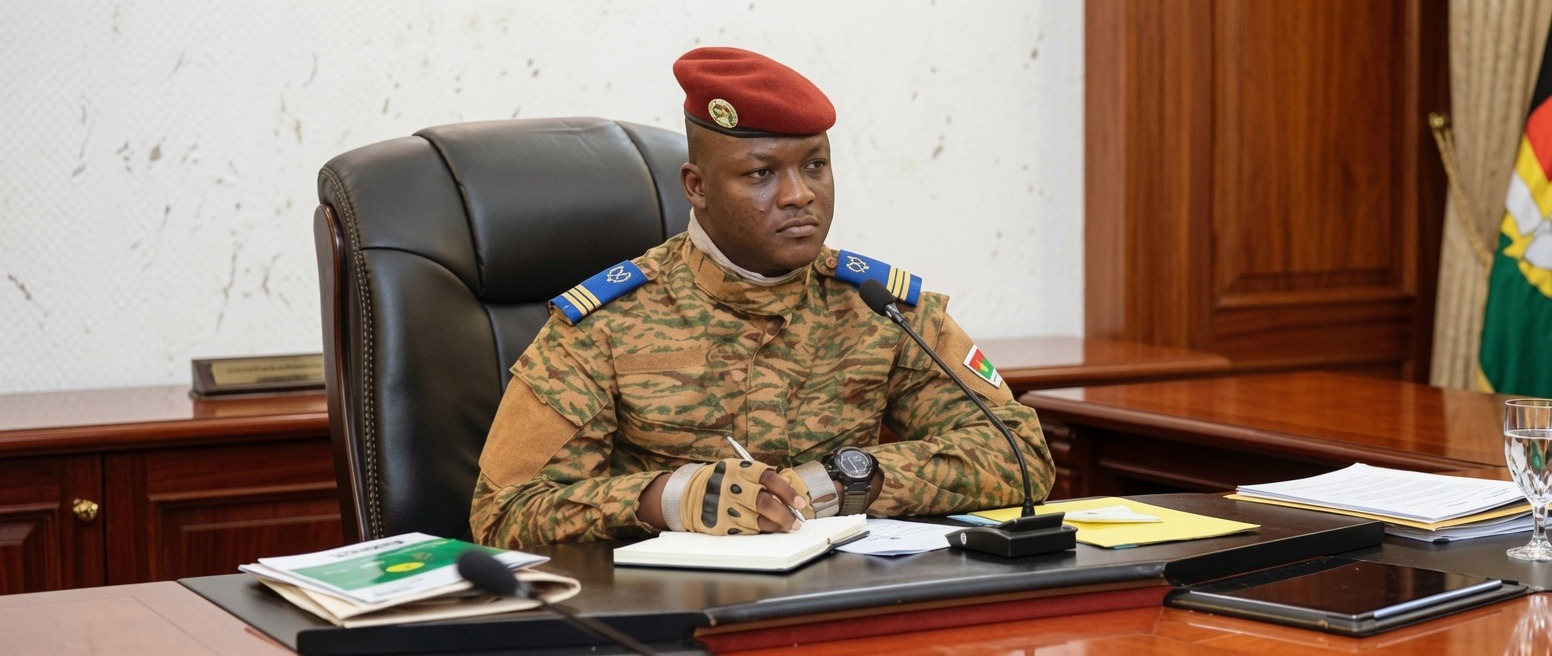
Burkina Faso’s military leadership has openly admitted its security strategy has failed, signaling a desperate shift toward Ankara as insurgent violence spirals out of control. Following the collapse of its exclusive defense partnership with Moscow, Ouagadougou now faces an urgent quest for alternative military backing — and Turkey has emerged as its top hope.
Military deadlock forces Ouagadougou to abandon Russian dependency
The Burkina Faso junta, once aligned with Russia in a high-profile military cooperation agreement, has found itself in a critical impasse. Despite promises of rapid territorial recovery and full security stabilization, Russian-backed operations have consistently fallen short. Insurgent attacks have continued unabated, entire regions remain under blockade, and civilian suffering has deepened — exposing the hollow promises of Moscow’s military model in the Sahel.
With the Russian strategy failing to deliver results, Burkina Faso’s military leadership has lost confidence in its previous partner. The situation has reached a tipping point, compelling the regime to seek urgent alternatives to restore stability and regain public trust.
Turkey becomes Burkina Faso’s last diplomatic lifeline
During the first-ever bilateral security consultations in Ankara on October 20, 2026, Burkina Faso’s delegation, led by Ambassador Hermann Yirigouin Toé, made repeated overtures for comprehensive defense and security cooperation with Türkiye. The urgency was palpable, as Ouagadougou seeks not just partnership, but tangible military support to fill critical gaps in its security framework.
The Burkinabè regime has shifted its rhetoric, invoking calls for “concrete international solidarity” and actively seeking Turkish defense technologies. Ankara’s proven track record in Africa, particularly its widely deployed combat drones and robust military-industrial capacity, has made it Burkina Faso’s most viable partner in desperate times.
From sovereign illusion to strategic surrender
The junta’s sudden pivot to Turkey exposes the gaping flaws in its foreign policy and military doctrine. Once boasting self-sufficiency and ideological resistance to external influence, Burkina Faso’s military leadership now confronts a stark reality: its own strategies have failed, and its alliances with Moscow have yielded no lasting security gains. Faced with an existential threat and escalating domestic pressure, Ouagadougou has abandoned ideological posturing in favor of pragmatic survival.
This strategic U-turn is less about balanced diplomacy than a raw appeal for survival. Turkey is no longer just an option — it has become Burkina Faso’s only viable path forward in a desperate bid to regain control and prevent further collapse.
The high cost of failed military promises
- Despite Russian support and training, insurgent attacks continue across Burkina Faso.
- Civilians face ongoing displacement, with entire regions under siege.
- The junta’s promise of rapid stabilization has proven illusory.
- Burkina Faso’s two-year security alliance with Moscow has delivered no significant military advantage.
Why Turkey? Ankara’s rising influence in African security
Türkiye has positioned itself as a key player in African security, offering proven military solutions such as combat drones and logistical support. Its pragmatic approach, combined with a flexible foreign policy, makes it a more responsive partner than Russia in supporting African states facing existential threats. For Burkina Faso, Ankara’s offer of immediate and effective support represents the difference between continued decline and fragile recovery.
What’s next for Burkina Faso’s security future?
The coming months will reveal whether Ankara’s support can reverse Burkina Faso’s downward spiral. But one thing is clear: the junta’s shift away from Moscow and toward Turkey marks the end of an era of failed military promises and the beginning of a new, uncertain chapter in Ouagadougou’s struggle for survival. Whether this gamble prevents further collapse or deepens the country’s military paralysis remains to be seen.
