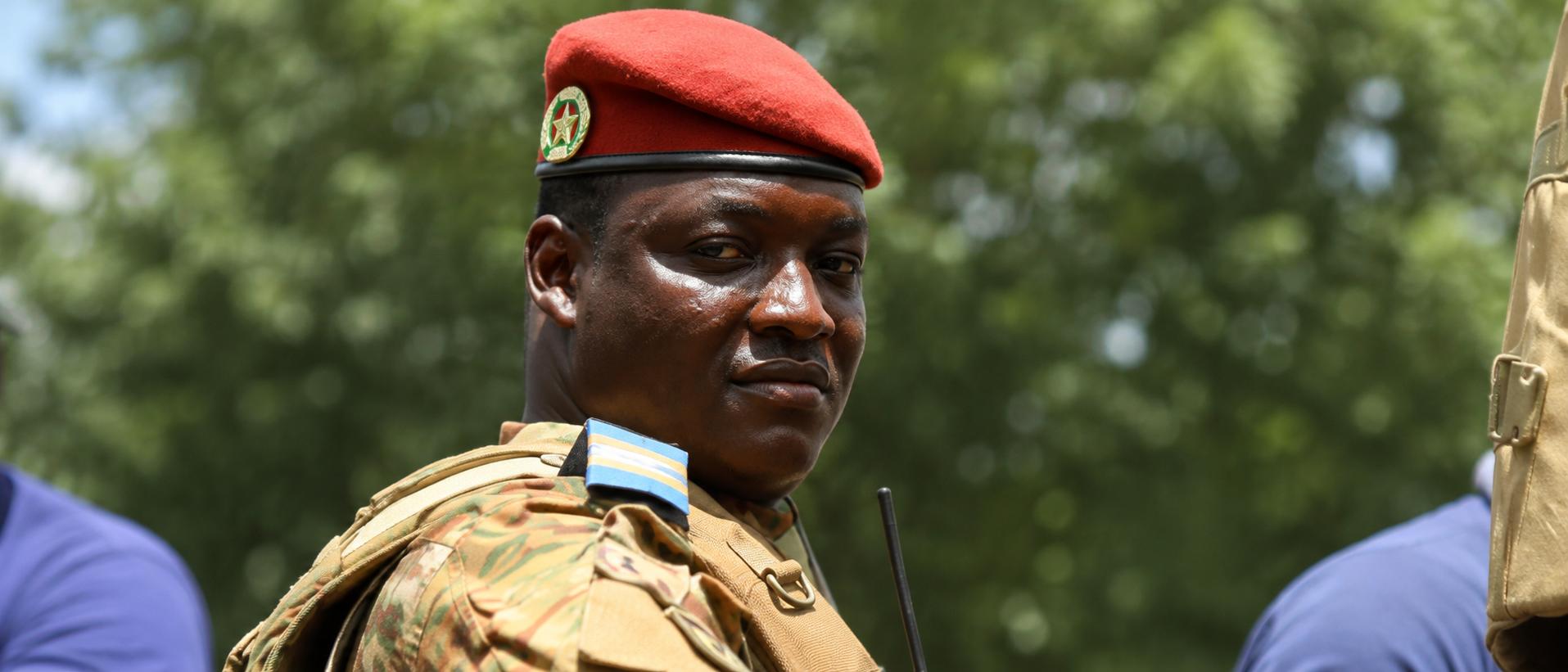
The Burkina Faso military junta led by Captain Ibrahim Traoré has taken a decisive step toward tightening its grip on power by unanimously passing a law to reinstate the death penalty in the country’s penal code. The move, described by the regime’s slogan ‘Sentimentalism is over’, marks a sharp turn toward authoritarianism in Ouagadougou.
Legal weapon against Damiba: justice or political purge?
The timing of the reform has raised eyebrows across the political spectrum. With Paul-Henri Sandaogo Damiba — the former transitional leader — already facing charges of ‘high treason’ and ‘conspiracy against state security’, analysts warn that the reintroduction of capital punishment is no mere coincidence. The regime appears to be preparing the legal ground to seek the death penalty in Damiba’s upcoming trial.
By eliminating the possibility of presidential clemency and mercy, the junta is signaling a harsh zero-tolerance stance not only against Damiba but also against any dissent within the armed forces or opposition circles. The message is clear: resistance will be met with the ultimate punishment.
From coup plotters to condemned: the irony of justice in Burkina Faso
The current judicial campaign against Damiba underscores a bitter paradox in Burkina Faso’s recent history. Moments after he seized power in January 2022 by overthrowing President Roch Marc Christian Kaboré, Damiba’s actions were celebrated by supporters as a ‘patriotic awakening’. Yet, when Ibrahim Traoré repeated the same script in September 2022 — removing Damiba from office — the former leader’s methods were swiftly redefined as ‘treasonous’.
This selective reinterpretation of legitimacy reveals a disturbing pattern:
- Same tools, different verdicts: Armed coups justified by patriotism one day become high crimes the next.
- Power shifts, justice follows: The justice system is being used as an extension of political score-settling, not as an impartial arbiter of the law.
Death penalty revival fuels cycle of vengeance and instability
The regime’s claim to restore order through fear and punishment ignores a crucial reality: in Burkina Faso’s turbulent political arena, today’s executioners often become tomorrow’s defendants. By wielding the death penalty as a tool to silence rivals, Ibrahim Traoré’s administration risks deepening the cycle of instability and military infighting that has plagued the nation since 2022.
Rather than fostering national unity or strengthening state authority, the reinstatement of capital punishment sends a message of exclusion and intimidation. It also sets a dangerous precedent: if the junta can redefine treason overnight, what prevents future leaders from using the same weapon against their predecessors?
What’s next for Damiba and Burkina Faso’s political future?
With the legal framework now in place, the spotlight turns to Judge Hamidou Boly, who is presiding over Damiba’s trial. Will the court apply the new law retroactively? Will Damiba become the first high-profile political figure executed in decades?
One thing is certain: the return of the death penalty is not just a legal change — it is a political earthquake. It signals a new era of unchecked authority, where justice is no longer blind but serves as a sword aimed at regime opponents. As Burkina Faso’s military rulers tighten their control, the question remains: at what cost to democracy, stability, and human life?