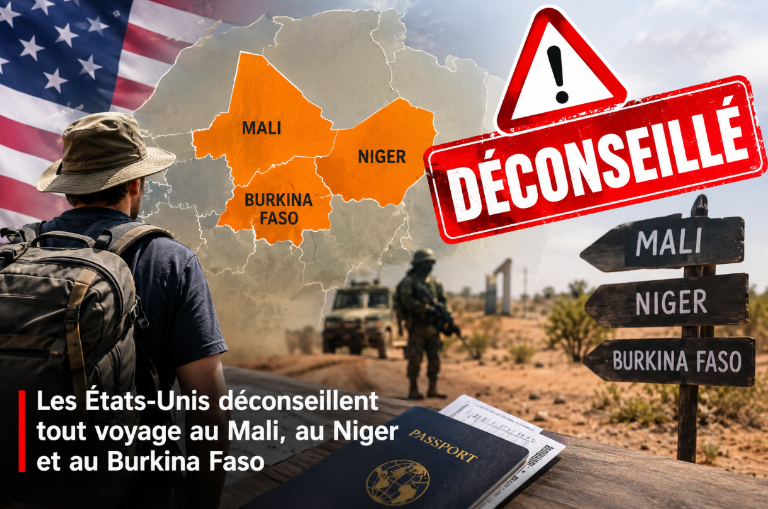
The United States has issued its sternest travel advisory for three Sahel nations in 2026, placing Mali, Niger, and Burkina Faso at the top level—Level 4: Do Not Travel—citing extreme risks including terrorism, kidnappings, and violent crime.
Why the US warns against Sahel travel in 2026
Washington’s decision reflects escalating security threats in the region, where armed groups continue to target civilians, security forces, and foreign nationals. The State Department’s advisories, updated throughout 2026, highlight persistent dangers that make travel inadvisable even for essential purposes.
The warnings come as militant factions linked to Al-Qaeda and ISIS expand their operations, carrying out attacks on major routes, military posts, and urban areas. Government employees in these countries face strict travel restrictions, with U.S. personnel often confined to capital cities due to elevated risks.
Mali’s worsening security crisis
The U.S. has maintained Mali at Level 4 since mid-2026, emphasizing threats from terrorism, kidnappings, and organized crime. Violent incidents have surged in central and northern regions, with armed groups carrying out ambushes and bombings.
Bamako, the capital, is no longer considered safe outside controlled zones. American diplomatic staff are barred from traveling beyond the city, and consular support remains severely limited in high-risk areas. Foreign travelers are warned that emergency assistance may not be readily available.
Niger’s high-risk zones stretch beyond Niamey
Niger’s advisory underscores risks in border regions and conflict-affected areas where militant groups operate. The U.S. warns against all travel due to terrorism, kidnappings, and criminal violence, particularly in the country’s west and south.
Road travel outside Niamey is discouraged, with security forces reporting frequent attacks on convoys. The U.S. embassy’s ability to respond to emergencies is constrained by the volatile environment, leaving visitors with minimal protection.
Burkina Faso faces unrelenting militant threats
Burkina Faso’s Level 4 status stems from a surge in jihadist violence, with militants targeting remote areas, economic sites, and urban centers. The U.S. warns of kidnapping risks in hotels, restaurants, and mining zones, where attacks occur with little warning.
American government workers are restricted to Ouagadougou, and humanitarian organizations report increasing difficulties in delivering aid due to roadblocks and militant infiltration. The security situation has forced closures of schools, markets, and public services in affected regions.
Broader Africa travel risks: Nigeria, Central African Republic, and more
While the Sahel nations draw the most severe warnings, other African destinations face elevated risks. Nigeria is rated Level 3 overall but holds Level 4 alerts for its northeast and northwest regions due to terrorism and kidnappings. The Central African Republic and Chad are also classified as Level 4, alongside Cameroon and Mozambique in specific high-risk zones.
These advisories reflect localized threats, with some regions remaining stable while others deteriorate rapidly. Travelers are advised to check real-time updates before planning any journey.
Safeguarding travelers: what the warnings mean
The U.S. government’s do not travel advisories serve as a clear signal: the risks in Mali, Niger, and Burkina Faso outweigh any potential benefits of visiting in 2026. For businesses, NGOs, and tourists, the consequences of ignoring these warnings could include stranded personnel, disrupted operations, or worse.
Experts urge travelers to:
- Monitor security alerts closely, as conditions change rapidly.
- Avoid non-essential travel to these countries entirely.
- Prepare contingency plans for emergencies, including evacuation routes.
- Consult local and international advisories before making any travel decisions.
Sahel’s instability forces tough choices
The U.S. travel bans for Mali, Niger, and Burkina Faso highlight the Sahel’s ongoing crisis, where militant influence and weak governance fuel insecurity. Without significant security improvements, the region’s reputation as a high-risk zone is likely to persist, affecting tourism, trade, and humanitarian efforts.
For those considering travel to Africa, the Sahel’s Level 4 warnings serve as a stark reminder that some destinations demand extreme caution—or avoidance altogether.