Direct talks: Burkina Faso’s secret transfer of Guinean returnees raises alarms
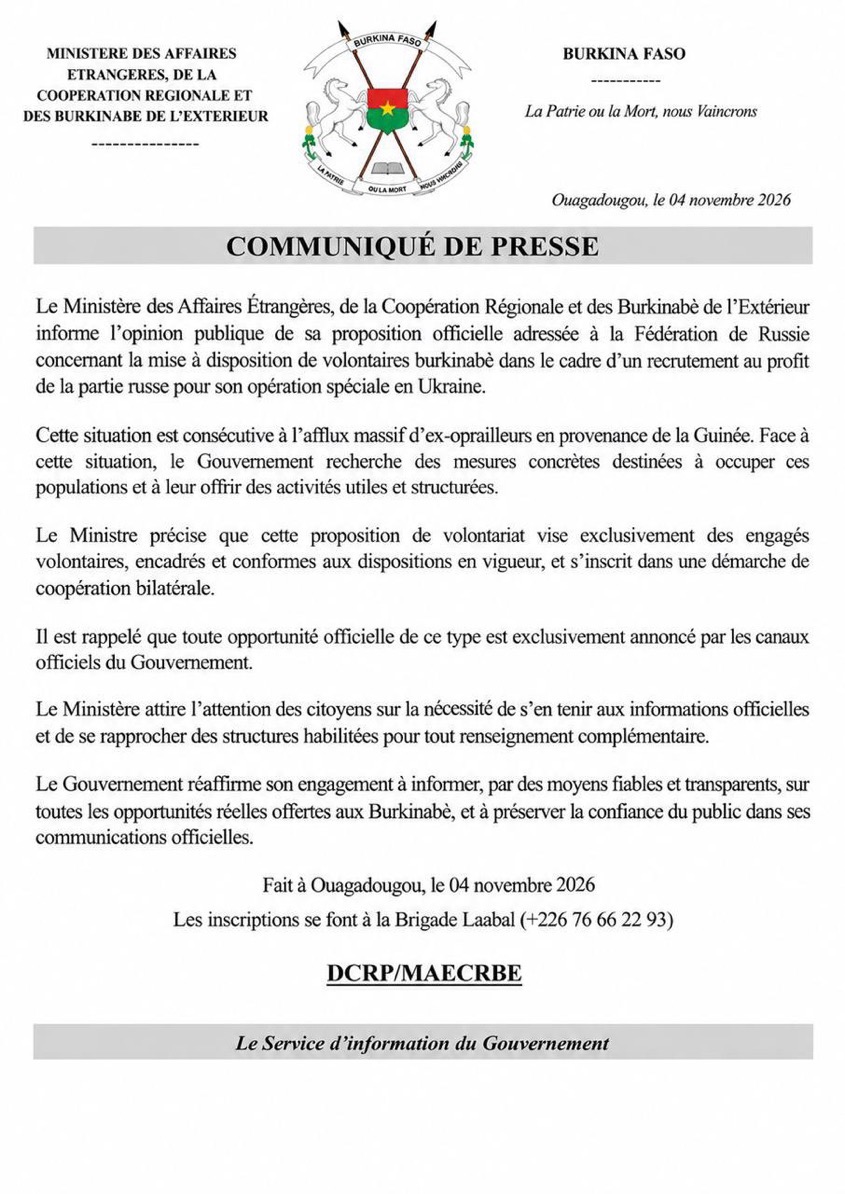
The recent wave of Burkinabè miners expelled from Guinea and relocated to Ouagadougou has taken an unexpected turn. Reports indicate that these individuals may be prepped for deployment as part of a controversial agreement with Russia, raising serious concerns about their consent and safety. While authorities frame this as standard repatriation, the logistical focus on their transportation suggests a deeper, more sinister purpose.
From goldfields to the battlefield: the vulnerable caught in a geopolitical trap
These miners, once engaged in clandestine gold mining in Guinea, now face a grim alternative: either accept a high-risk military role in Ukraine or return to economic precarity. Their expulsion stripped them of livelihoods, leaving many with no choice but to consider desperate measures. The Kremlin’s need for fresh recruits in its prolonged conflict creates a dangerous match for Ouagadougou’s strategic interests.
Ouagadougou’s shifting alliances: Russia’s growing footprint in West Africa
The Burkinabè government has increasingly embraced Moscow as a key security partner, relying on Russian paramilitary support documented as recently as July 2024. This growing bond is framed as liberation from Western influence, yet its true impact on ordinary citizens remains under scrutiny. When international cooperation threatens to push vulnerable populations into foreign wars, the line between sovereignty and exploitation blurs dangerously.
The authorities have yet to clarify the ultimate destination of the relocated miners or the terms of their involvement. Are they being gathered for protection or for recruitment? Without transparency, the answer points toward a troubling scenario.
A recruitment gamble with human stakes
For Russia, these men represent expendable assets on Ukraine’s frontlines. For Burkina Faso, they symbolize either a strategic asset or a humanitarian liability. The lack of public disclosure about their status, rights, or alternatives fuels speculation and deepens public distrust in the government’s intentions.
If consent is coerced under economic pressure, the entire operation violates basic ethical standards. Voluntary enlistment requires full awareness of risks death, injury, or lifelong trauma none of which have been addressed. Instead, these men are being moved under questionable pretenses, their vulnerabilities weaponized in a distant war.
The unspoken cost of sovereignty: protecting citizens or exporting problems?
Burkina Faso’s leaders insist this partnership enhances national independence. But sovereignty demands more than rejecting old allies it requires safeguarding citizens from becoming pawns in geopolitical games. If these returnees are sent to Ukraine without transparent agreements or legal protections, the state fails in its most fundamental duty.
Critical questions remain unanswered: Who initiated this relocation? Were the men informed of the true destination Ukraine and the irrevocable consequences of signing up? What legal status would they hold abroad? And crucially, how would families access compensation or support if their loved ones are killed or maimed?
Humanitarian cover-up: the hidden face of diplomatic cooperation
Behind the official statements lies a harsh reality: these are not soldiers by choice, but displaced workers with no safety net. Their journey from expulsion to potential frontline service exposes a chilling truth that fragile lives can be repurposed to serve foreign military ambitions. The silence from both capitals only deepens the suspicion that their welfare is not the priority.
If this operation proceeds, it will mark a dark milestone: the transformation of economic refugees into expendable soldiers. And it will force a reckoning was this move about sovereignty, or sacrifice?
By Jeanne Ntouba — Journalist