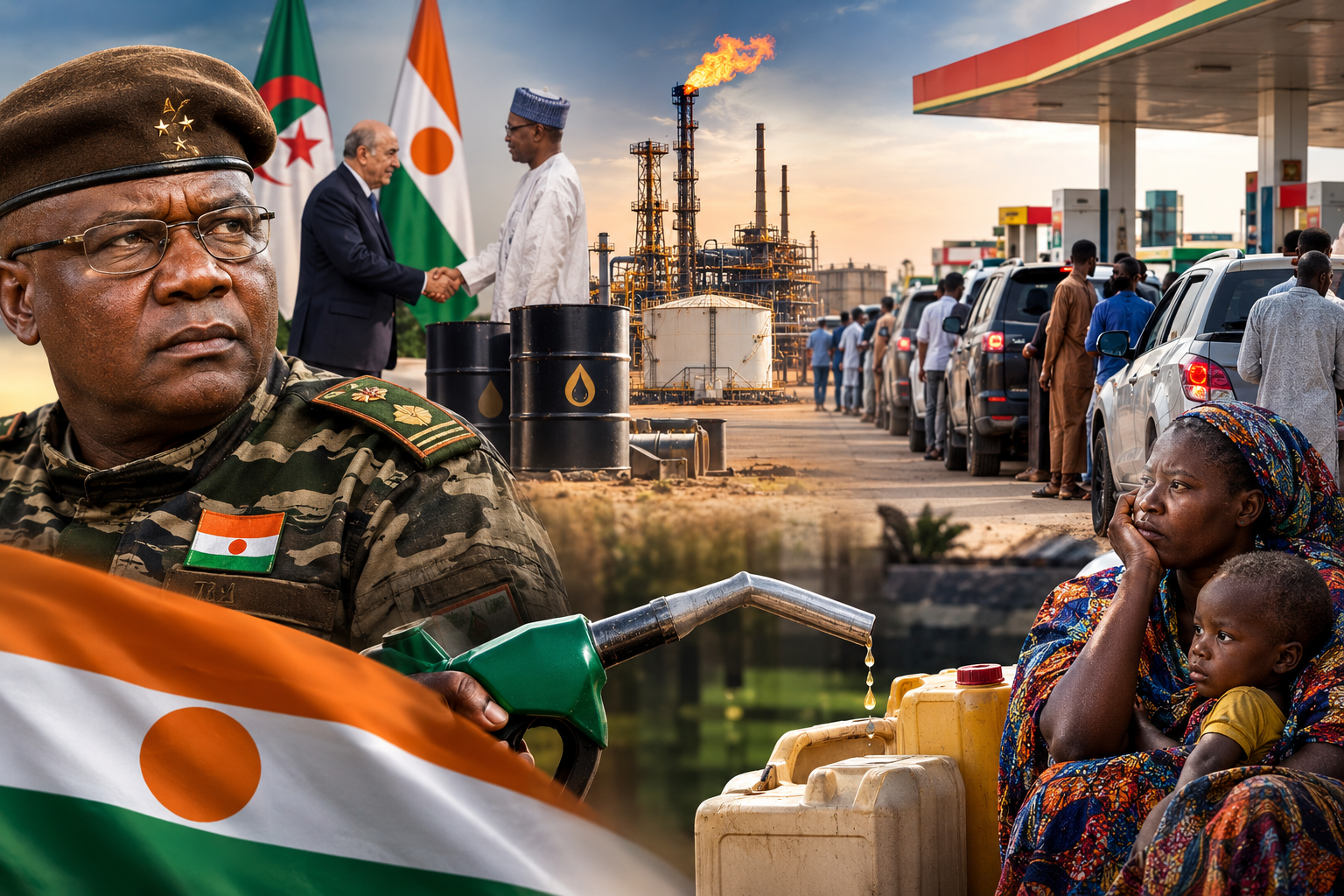
The recent security pact between Algeria and Niger has drawn attention to Niamey’s diplomatic maneuvers, yet a pressing issue remains unresolved: how can an oil-producing nation face chronic fuel shortages that disrupt daily life?
The contradiction is stark. Niger possesses oil reserves and has developed extraction and refining capacities, yet its domestic market struggles with inconsistent fuel supply. Long queues at petrol stations, transport disruptions, and economic slowdowns reveal a systemic failure one that directly impacts citizens, businesses, and local commerce.
Why production fails to meet local demand
The core issue extends beyond oil output. Distribution bottlenecks, export priorities, and refining inefficiencies reveal gaps in Niger’s energy strategy. Where does the extracted crude go? What volume stays for domestic use, and what is shipped abroad? Without transparent data, these questions expose flaws in resource management that authorities must address with concrete figures.
Foreign partnerships under scrutiny
Niger’s growing ties with external actors particularly Russia, a key ally for several Sahel regimes raise concerns about the terms of economic and security agreements. As foreign influence expands in critical sectors, the lack of disclosure around these deals fuels skepticism about their true benefits for the population.
Transparency as the missing link
Claims of strengthened sovereignty over natural resources demand proof: consistent supply, fair pricing, and clear accounting of oil revenues. Security cooperation, while addressing regional threats, cannot substitute for sound energy policies or transparent governance. The populace expects more than diplomatic victories they demand tangible improvements in their daily lives.
A sovereignty tested by reality
For many Nigériens, the question is simple: what good is oil wealth if it doesn’t secure reliable fuel access at home? True sovereignty isn’t measured by the number of signed agreements but by the ability to convert resources into direct benefits for citizens. Until petrol stations can meet demand, rhetoric about economic independence will ring hollow.
The challenge for Niamey is clear: eliminate the opacity in its oil supply chain, assign accountability for shortages, and prove that strategic decisions prioritize national welfare. Otherwise, the disconnect between resource abundance and public hardship will continue to undermine trust.
By Jeanne Ntouba — Journalist