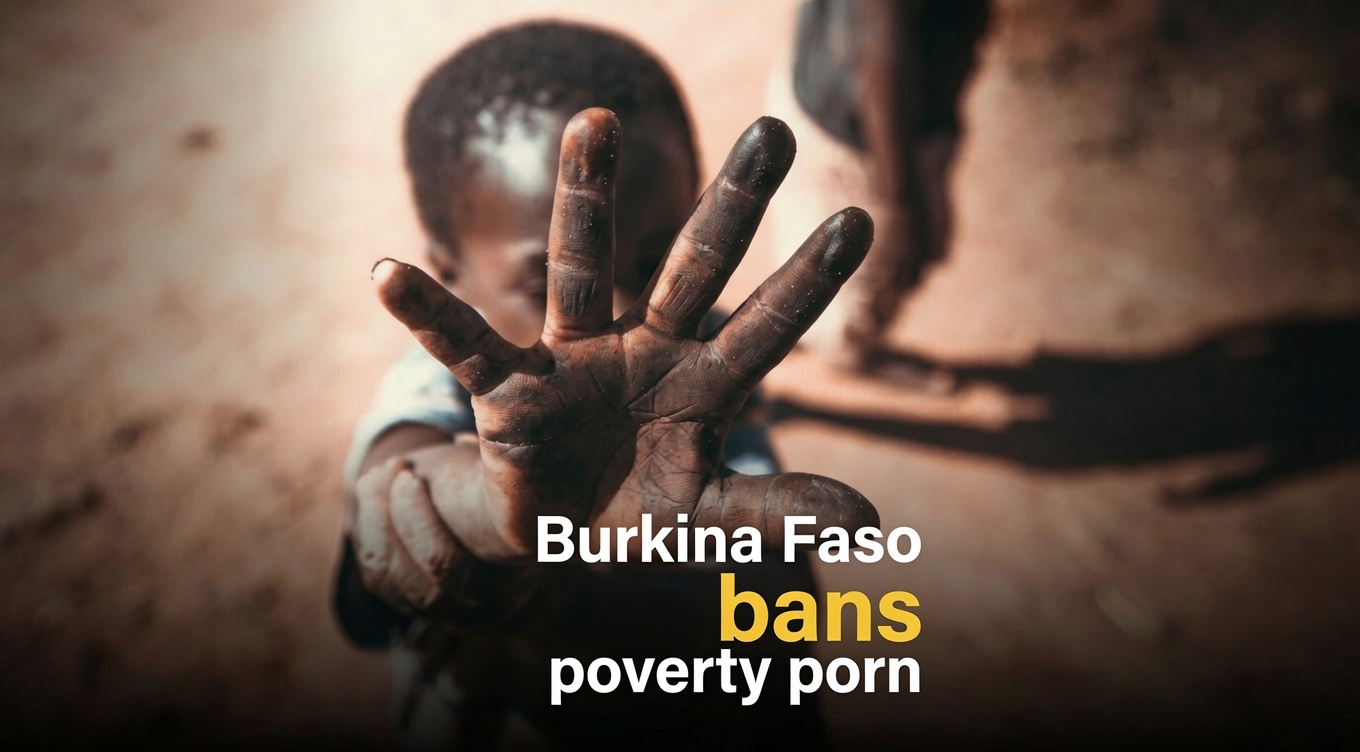
Burkina Faso has taken a definitive stance against the exploitation of human suffering for online engagement or financial gain. The transitional government has enacted a stringent ban on what sociologists term poverty porn, a practice that reduces individuals facing hardship to mere objects of pity. This landmark decision redefines the boundaries of ethical representation in the digital age and reinstates the primacy of human dignity in public discourse.
Exploitative imagery and the erosion of dignity
The proliferation of digital platforms has turned misérabilism into a lucrative trend. A recurring pattern emerges: influencers or humanitarian organizations capture close-up footage of malnourished children, internally displaced persons, or families in extreme distress. While the surface intent may be to raise funds or raise awareness, the method strips individuals of their dignity and objectifies their suffering.
By transforming hardship into a spectacle, these videos perpetuate a cycle of voyeurism that denies people their right to privacy and self-determination. The Burkinabe authorities have now drawn a clear line against this unethical practice, signaling a commitment to upholding the fundamental rights of all citizens.
Strategic considerations behind the ban
Beyond ethical concerns, the prohibition of poverty porn aligns with broader political and security imperatives. Burkina Faso is navigating a multifaceted crisis, and the widespread circulation of images portraying the country solely through a lens of suffering poses reputational risks for the government.
The authorities contend that poverty porn not only harms individual dignity but also fuels a negative international narrative. By curbing the dissemination of such images, the administration seeks to reclaim control over the national narrative. The objective is not to obscure the crisis but to reject the reduction of Burkina Faso to a stereotype of helplessness and failure.
The shadow of censorship and hidden realities
Critics, including civil society members and opposition figures, argue that the ban is not solely motivated by ethical considerations. They perceive it as a veiled political maneuver by the transitional leadership, aimed at suppressing the truth about the country’s dire humanitarian situation.
The detractors contend that by prohibiting the documentation of poverty, the government gains a legal tool to conceal the full extent of the crisis. Despite the ban, the harsh realities persist: millions of internally displaced persons fleeing insecurity, communities under blockade struggling to access essential supplies, and daily struggles with hunger and inadequate healthcare. For these observers, the law serves as a smokescreen, shielding the image of a flawless transition while muting the alarms that once spotlighted the nation’s suffering.
Charting a new path for humanitarian communication
This legislative shift compels humanitarian organizations and content creators to reassess their strategies. The challenge now is to mobilize solidarity and document crises without resorting to sensationalism or violating the new restrictions.
Experts advocate for a shift toward solution-oriented communication and courageous field journalism. It is entirely feasible to highlight a crisis by showcasing the resilience, determination, and agency of affected populations rather than their vulnerability alone. Such an approach does not diminish the gravity of the situation; instead, it empowers individuals by recognizing their role as active participants in their own narratives. This method also ensures that the spotlight remains on Burkina Faso—a nation enduring hardship yet refusing to surrender to silence.