The Burkina Faso government has taken a decisive step in its ongoing battle against rising militant violence, but the move to reinstate capital punishment raises critical questions about its effectiveness as a security measure and its consequences for democratic freedoms.
Breaking news: Burkina Faso’s legislature approves death penalty revival
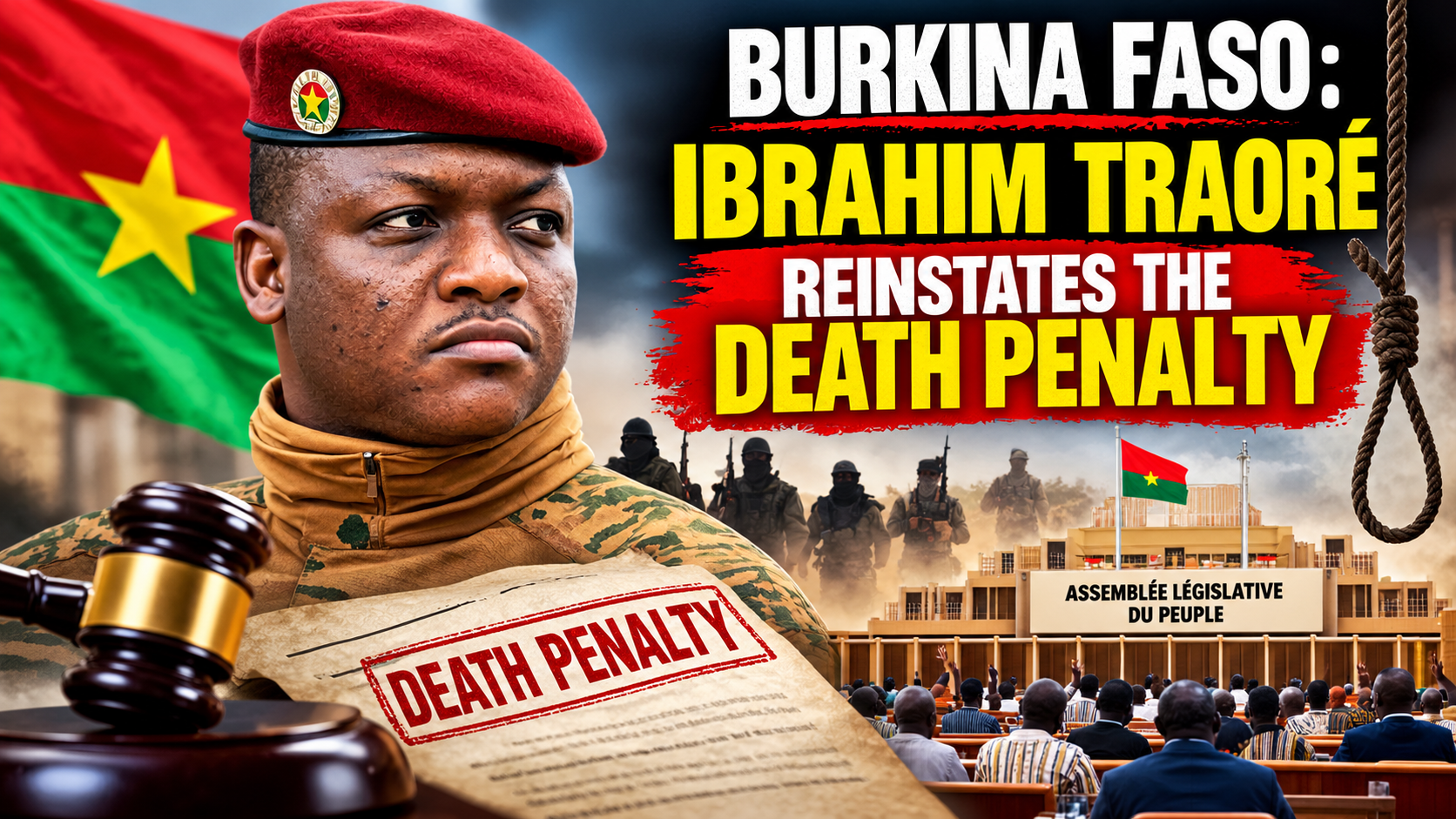
In a move announced on October 20, 2026, Burkina Faso’s legislative body approved a sweeping penal reform that brings back capital punishment a penalty abolished in 2018. The unanimous vote by the country’s 71 legislators marks a stark shift in the government’s approach to justice, framed by authorities as a necessary measure to strengthen public safety amid ongoing jihadist attacks.
The dual purpose of harsh penalties: deterrence or political assertion?
Officials defend the reform as a legitimate response to critical security threats, targeting crimes such as terrorism, espionage, treason, and premeditated murder. The new legislation also extends the scope of capital punishment to include cases of importing expired or banned substances that result in death. While the government argues that extreme sanctions are essential to protect citizens, experts and observers caution that such measures may do little to reduce violence and could instead deepen societal fear.
In a country where armed groups have displaced over a million people and perpetrated countless atrocities, the public’s demand for safety is urgent. Yet the question remains: does the threat of execution truly deter militants, or does it merely project an image of uncompromising authority?
Beyond punishment: the inadequacy of penalties in resolving insecurity
Security analysts emphasize that an effective counter-terrorism strategy requires far more than harsher punishments. Prevention through intelligence, rapid response by defense forces, fair judicial processes, and sustained state presence in vulnerable areas are all indispensable. The death penalty, once applied, is irreversible a reality that places immense pressure on judicial systems to ensure flawless prosecutions.
Without robust safeguards, there is a significant risk of wrongful convictions, particularly in a context where political pressures and weakened institutions may influence proceedings. A justice system that prioritizes fear over fairness risks alienating the very communities it aims to protect.
Ibrahim Traoré’s hardline stance: balancing sovereignty and justice
Under President Ibrahim Traoré, the government has adopted an uncompromising tone regarding national security, especially concerning treason and espionage. Recent public statements by Traoré indicate that individuals convicted of such offenses will face severe penalties without leniency. While such rhetoric may reinforce a perception of unwavering resolve, it also intensifies scrutiny over the independence and transparency of the judicial process.
The challenge for Traoré’s administration is to demonstrate that this penal overhaul does not serve as a tool to silence dissent. Civil society groups and international observers have already raised alarms about shrinking civic freedoms, including reports of intimidation against journalists, judges, and critics of the government. The same penal reform that reintroduces capital punishment also restricts certain press freedoms, according to official explanations of the new code.
Security versus freedoms: a dangerous trade-off?
In democracies, even during crises, public institutions must remain accountable to citizens. The right to question government actions, the freedom of the press, and the integrity of the judiciary are cornerstones of a functioning society. When penal laws grow stricter while civic spaces shrink, the line between state protection and state control becomes dangerously blurred.
For a nation battling extremist violence, the ultimate test of governance is not the severity of its laws, but its ability to deliver tangible safety and preserve fundamental rights. Can a state governed by fear truly inspire trust in its institutions?
What the future holds for Burkina Faso’s citizens
The reintroduction of the death penalty is more than a legal reform it is a political declaration. It signals a commitment to a punitive vision of justice and sovereignty, but it also demands accountability.
Citizens deserve more than empty promises of protection. They need verifiable improvements in security, reliable due process, and institutions that operate with integrity. As Burkina Faso moves forward, the world will be watching to see whether this policy choice leads to progress or whether it entrenches a cycle of repression and instability.
Conclusion: a policy under the microscope
Burkina Faso stands at a crossroads. The government’s decision to revive capital punishment reflects a broader strategy of asserting authority through fear. Yet lasting security cannot be built on fear alone. It requires a balanced approach one that combines firmness in protecting citizens with an unwavering commitment to justice, transparency, and human rights.
By Jeanne Ntouba — Journalist