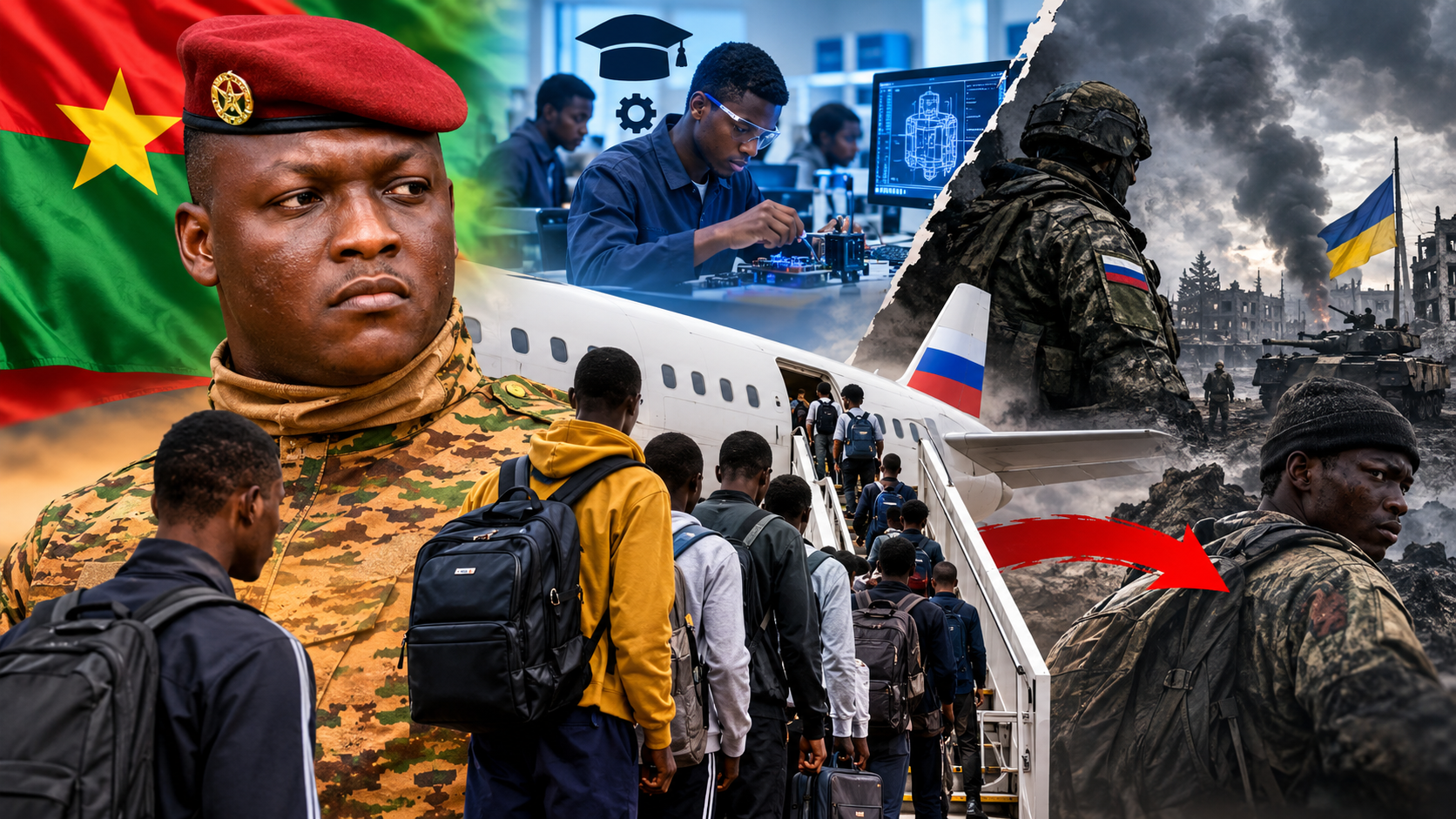
Amid claims of advanced technological training, a pressing question looms over Burkina Faso’s plan to dispatch young citizens to Russia. Is this initiative truly about equipping the youth with cutting-edge skills for national development, or does it risk exposing them to far greater dangers in a nation deeply entangled in the conflict in Ukraine?
From education and training at home to studying abroad
This policy shift raises eyebrows, especially given the stance Ibrahim Traoré once championed. The Burkinabe leader previously emphasized the importance of educating and training the country’s youth within national borders. He advocated for educational sovereignty and technological self-reliance, stressing the need to build expertise domestically to drive Burkina Faso’s progress. So what has changed? Why must these young citizens now travel to Russia for training, and what happened to the earlier commitment to national education?
A promising opportunity clouded by uncertainty
At face value, the promise of offering advanced technological education to Burkinabe youth appears commendable. A nation cannot envision a sustainable future without investing in the scientific, industrial, and technical training of its people. Yet, such initiatives must come with clear objectives, robust safeguards, and transparent expectations for those participating.
The reality in Russia today presents a fundamentally different environment. The country is deeply engaged in a prolonged conflict in Ukraine, mobilizing substantial human, military, and economic resources. Within this context, concerns have grown about the potential recruitment of foreign nationals sometimes under misleading promises of employment or education into active military roles.
Lessons from past recruitment controversies
Reports from other African nations have highlighted cases where citizens were reportedly recruited under false pretenses, only to find themselves on the front lines. These incidents underscore the need for extreme caution when sending young people abroad for any form of training, particularly in countries entangled in active warfare.
Under these circumstances, what assurances can Ibrahim Traoré and his government provide to the families of Burkinabe youth? How can they guarantee that those sent abroad will not be drawn into the conflict in Ukraine?
Unanswered questions and demands for accountability
The Burkinabe government must move beyond broad declarations. Concrete details are urgently required: How many young citizens are involved? Which Russian institutions will provide the training? What qualifications will they earn? What legal frameworks will govern their stay? Will their return to Burkina Faso be assured, and what safeguards will prevent any form of military recruitment direct or indirect?
These questions are not posed out of opposition to cooperation with Russia. They arise from the fundamental responsibility of any government to protect its people. International cooperation must never become a conduit for exposing youth to dangers they neither chose nor fully understand.
The contradiction in shifting education priorities
There is a glaring inconsistency in the government’s current approach. If the goal is to prioritize the training of Burkinabe youth, why not invest first in strengthening domestic education systems? Burkina Faso possesses the potential to build world-class universities, technical schools, and research centers. Why send young citizens abroad when the infrastructure for training within the country already exists or could be developed?
Ibrahim Traoré’s earlier vision of educating youth at home reflected a commitment to national sovereignty and self-sufficiency. The shift toward sending young citizens to Russia demands urgent clarification: Does the government genuinely lack the capacity to train its youth domestically, or are other motivations at play?
Building the future, or risking it?
Educating young people is an ambition worth pursuing. But doing so at home was a promise made by Burkina Faso’s leadership. However, ensuring their safety is not just an ambition it is an obligation. Families deserve transparency, concrete guarantees, and the certainty that their children will not become expendable in a war far removed from their nation’s interests.
Burkina Faso’s youth hold the future of the country in their hands. Their growth must be nurtured with care, responsibility, and foresight not gambled away in an uncertain and potentially perilous venture abroad.
By Nicolas Biyong — Journalist