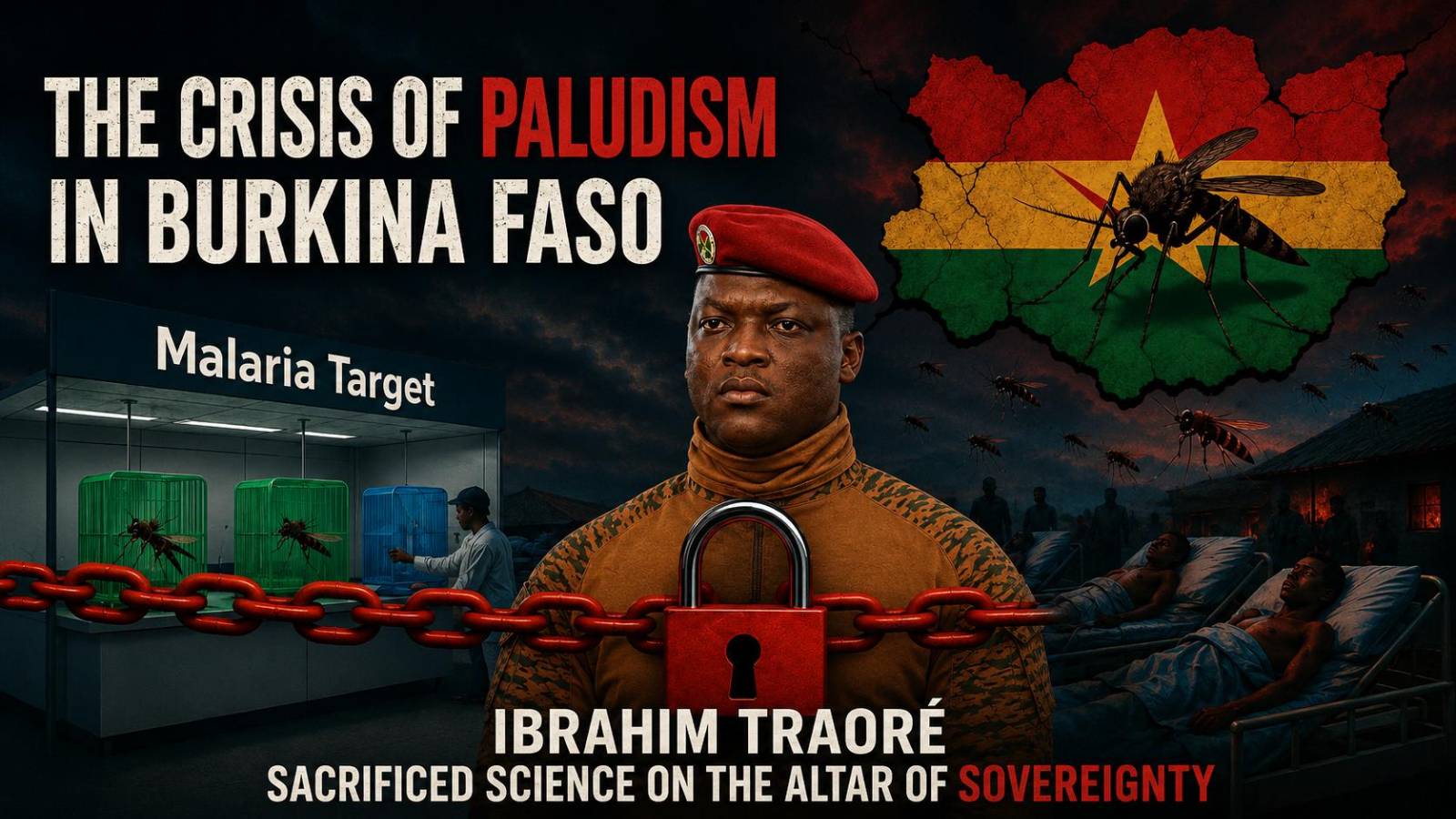
The recent decision by Captain Ibrahim Traoré’s administration to permanently shutter the Target Malaria research facilities and destroy all genetically modified mosquito samples marks a pivotal moment in Burkina Faso’s sovereignist narrative. While framed as a bold assertion of national autonomy, this move raises pressing concerns about the nation’s medical research future and the economic repercussions of scientific isolation.
This action sends a resounding, almost symbolic message to global scientific partners and international consortia. By terminating the decade-long Target Malaria project—largely funded by the Bill & Melinda Gates Foundation—and mandating the complete eradication of its genetically modified mosquito strains, Ouagadougou has abruptly concluded a contentious chapter in both science and governance.
Research sacrificed for political symbolism
The Target Malaria initiative, though widely debated, stood as one of the most promising avenues in the fight against malaria, a disease that continues to devastate Sub-Saharan populations, particularly children under five. Its methodology relied on cutting-edge gene-drive technology to suppress mosquito fertility, offering a potential game-changer in disease control.
Critics, including local NGOs and civil society groups, have long argued that the nation risks becoming an ‘open-air testing ground’ for foreign biotechnologies. However, the regime’s insistence on ‘health sovereignty’ fails to obscure a harsher truth: the stifling of domestic innovation and the erosion of Burkina Faso’s scientific credibility.
Consequences for local research and talent
The abrupt halt to the project has dire implications for Burkina Faso’s scientific community. Researchers affiliated with the Institut de Recherche en Sciences de la Santé (IRSS) and other institutions now face the loss of critical funding and access to state-of-the-art facilities. The decision also sends a chilling signal to academics and scientists considering partnerships abroad, potentially accelerating a brain drain.
A seismic shift in geopolitical risk perception
Beyond health concerns, this decision reshapes Burkina Faso’s standing among investors, credit rating agencies, and international organizations. It underscores a dramatic erosion of confidence in the Sahel’s stability, driven by three key shifts:
- Contractual security collapse: Prior to the 2022 transition, state agreements were broadly honored, and predictability was the norm. Now, unilateral terminations driven by political expediency have replaced this stability, prompting long-term investors to freeze commitments.
- Regulatory opacity: Once anchored in regional and international standards, Burkina Faso’s governance now operates through opaque decrees and sudden policy shifts. This legal unpredictability has triggered capital flight toward more stable jurisdictions.
- Collaboration in R&D under suspicion: International research partnerships, long seen as catalysts for development, are now viewed with skepticism, accused of espionage or interference. This growing mistrust risks locking the nation out of global innovation networks.
The pitfalls of health autarky
By framing its stance as a defense of national biological heritage, Burkina Faso aims to carve out a path of self-sufficiency. Yet the feasibility of this ambition remains questionable. Malaria eradication demands billions in investment and cross-border cooperation—mosquitoes, after all, do not respect national borders.
Observers of West Africa must heed this geopolitical signal. A misguided quest for sovereignty, if it veers into technological autarky, risks isolating the Sahel from global capital and therapeutic advancements. The true cost, ultimately, may be borne by the Burkinabè people, who remain on the frontlines of a preventable disease.