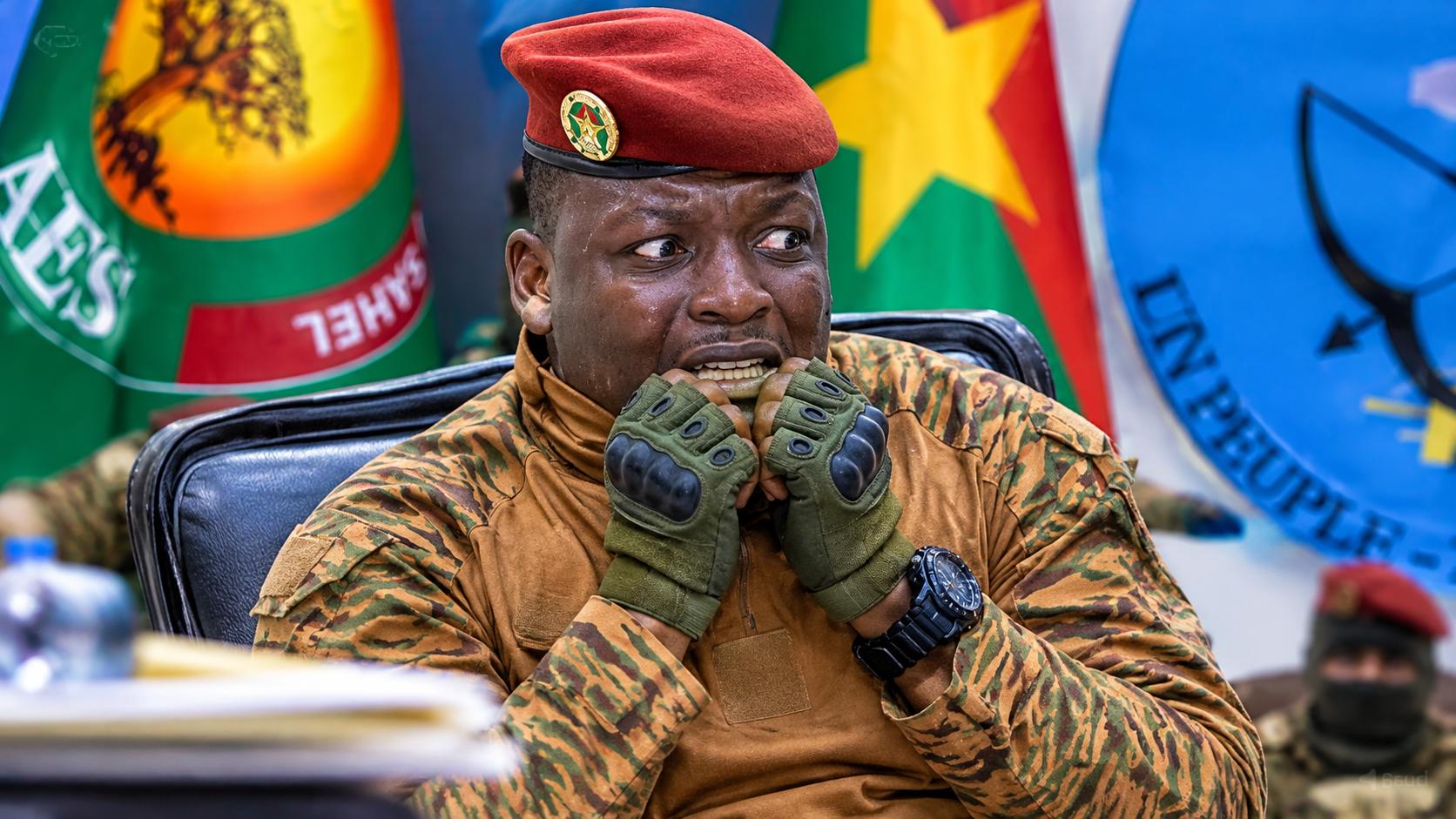
Ibrahim Traoré’s decision to skip the Russia-Africa summit has intensified scrutiny over the internal stability of Burkina Faso’s military-led government. While the Burkinabè leader has cultivated a reputation for uncompromising sovereignty and alignment with Moscow, reports suggest his absence may stem from concerns over potential threats within his own ranks.
From diplomatic posturing to domestic vulnerabilities
The strongman’s frequent displays of unity with Russian President Vladimir Poutine have been a cornerstone of his political narrative, positioning Burkina Faso as a sovereign actor breaking from traditional alliances. Yet this strategic positioning masks deeper uncertainties about the cohesion of his transitional government.
Sources close to the administration indicate that Traoré’s absence officially attributed to security concerns reflects apprehension that key allies within his inner circle could exploit the moment to stage an internal challenge. A trusted military associate, reportedly considered a linchpin of the current regime, has emerged as a potential wildcard in this high-stakes gambit.
Propaganda vs. governance: the fragility of perceived strength
Traoré’s rise has been accompanied by a deliberate media strategy, leveraging social platforms to project an image of resolve and nationalist fervor. This carefully curated persona contrasts sharply with mounting criticism over Burkina Faso’s escalating security crisis and deteriorating humanitarian conditions.
Critics argue that the government’s prioritization of symbolic victories such as high-profile foreign alliances has overshadowed addressing urgent domestic crises. The discrepancy between official messaging and ground realities has begun to sow doubt, even among those who initially backed the military transition.
When allies become liabilities
In regimes born from coups, the loyalty of military elites is both the foundation of power and its most volatile element. Over time, the same figures who enabled Traoré’s ascent may now harbor competing ambitions, particularly as access to resources and influence shifts within Burkina Faso’s security apparatus.
The delicate balance between maintaining internal consensus and projecting external strength has placed Traoré in a paradox: his absence from Moscow may preserve his grip on power or expose the very fractures he seeks to conceal.
Is the summit snub a sign of crisis or caution?
Without corroborating evidence, it remains speculative whether Traoré’s absence signals an imminent power struggle. However, the episode underscores a critical question: can a government whose legitimacy hinges on both diplomatic visibility and domestic control survive if these pillars begin to waver?
The Kremlin summit, in this context, becomes more than a geopolitical event it serves as a stress test for Burkina Faso’s fragile transitional order. Whether Traoré’s gamble on Moscow can outpace the erosion of trust within his own ranks will determine whether his leadership survives beyond the optics of international defiance.
What next for Burkina Faso’s fractured power structure?
Traoré’s next moves will be closely watched. Will he reassert control through decisive action, or will the absence in Moscow embolden rivals to push for a reshuffle within the transitional council? The answer may lie not in diplomatic theatrics but in the quiet corridors of power in Ouagadougou, where the true balance of influence is maintained or contested.
By Jeanne Ntouba — Journalist
