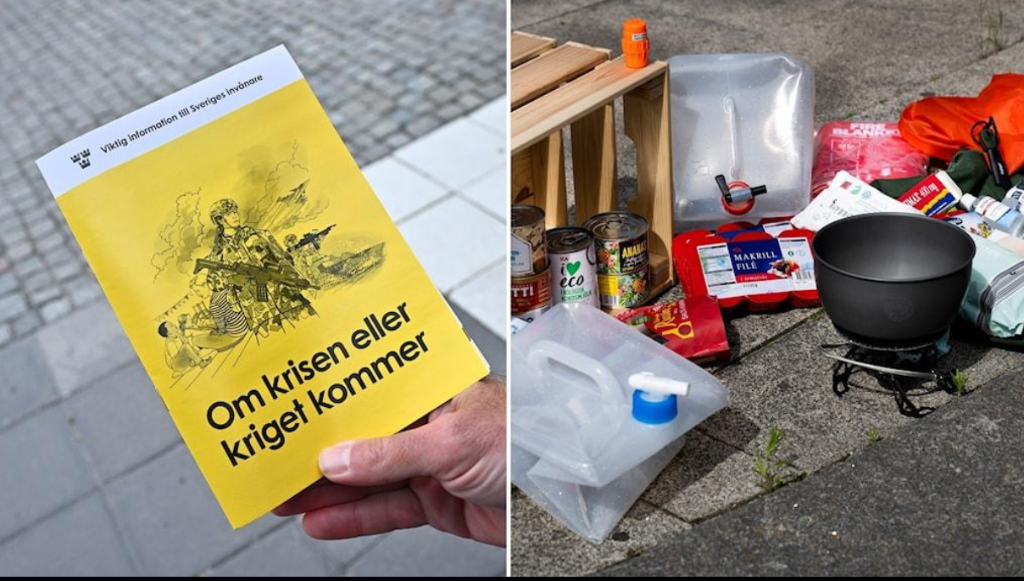
Governments worldwide issue urgent call for citizen preparedness
From Northern Europe to the Middle East, authorities are escalating warnings about the need for households to maintain emergency supplies. This shift reflects growing concerns that geopolitical tensions, cyber threats, and military conflicts could disrupt daily life at an unprecedented scale.
What was once considered routine disaster planning has now been elevated to a national security priority. Governments are no longer treating emergency preparedness as optional—they are making it a civic duty.
Europe’s emergency protocols gain momentum
Several European nations have implemented concrete measures to bolster public resilience. The United Kingdom launched a national emergency preparedness campaign in October 2024, urging citizens to maintain 72-hour self-sufficiency kits. The guidance emphasizes non-perishable food, potable water, medical supplies, battery-powered radios, and emergency cash reserves.
Northern European countries are taking even more extensive steps. Finland recently expanded its national grain reserves to cover nine months of domestic consumption, while Sweden, Poland, and the Baltic states have reinforced civil defense shelters, evacuation protocols, and critical infrastructure backup systems. The 2022 Russian invasion of Ukraine served as a wake-up call, demonstrating how rapidly supply chains and essential services can collapse even beyond active war zones.
Cyber warfare and covert aggression enter preparedness equations
Western intelligence agencies have identified a new front in international conflict: hybrid warfare. In 2026 assessments warned of potential Russian provocations targeting NATO infrastructure, including cyberattacks, sabotage operations, and destabilizing activities designed to remain below the threshold of open war.
These tactics aim to test alliance cohesion without triggering collective defense responses under Article 5. While no imminent Russian attack on NATO territory is confirmed, the precautionary approach emphasizes the need for citizens to be self-reliant during the critical first 72 hours of any crisis.
Middle East tensions drive regional preparedness surge
The Iran-Israel-US power struggle continues to destabilize the region. Following joint military actions in early 2026, Iran launched retaliatory strikes against Gulf states, with the United Arab Emirates reporting missile launches and drone incursions allegedly originating from Iranian territory.
These incidents underscore vulnerabilities in critical infrastructure—oil facilities, ports, airports, and energy grids—that could trigger global supply chain disruptions. For households, this means emergency planning isn’t just about personal survival; it’s about contributing to national economic resilience during geopolitical shocks.
Asia’s shifting alliances heighten global risk landscape
The recent reopening of the China-North Korea border crossing at Dandong, followed by Kim Jong-un’s visit to the Chinese city in October 2026, signals deepening military and economic cooperation between Beijing and Pyongyang. Simultaneously, North Korea’s enhanced military collaboration with Russia adds another layer of strategic uncertainty.
While these developments don’t guarantee imminent coordinated offensives, they highlight the increasingly complex web of international relationships that can rapidly generate new crisis scenarios across multiple regions.
Practical preparedness without panic: what citizens should do
The NATO alliance has formalized emergency preparedness requirements for member states, focusing on energy security, food reserves, water access, communication systems, and essential service continuity. For individuals, the recommended approach balances practicality with peace of mind:
- Emergency supplies: Stock at least three days of non-perishable food, one gallon of water per person per day, first aid kits, flashlights, batteries, and portable chargers
- Communication plans: Establish family meeting points and out-of-state contact protocols in case local networks fail
- Financial readiness: Maintain small denominations of cash, as digital payment systems may become unavailable
- Information sources: Keep battery-powered or hand-crank radios to receive official emergency broadcasts
These measures aren’t about fear—they’re about reducing vulnerability during periods when government response systems may be overwhelmed by simultaneous crises.
From individual action to collective resilience
The modern emergency paradigm represents a fundamental shift in national security doctrine. Governments now recognize that societal resilience depends on both state resources and citizen preparedness. While authorities maintain responsibility for defense and critical infrastructure protection, they increasingly view household emergency supplies as a strategic asset during extended disruptions.
In an era where supply chain breakdowns, energy shortages, and cyber disruptions can cascade globally within days, the family emergency kit becomes more than personal insurance—it becomes a pillar of national stability. The message is clear: preparation isn’t paranoia; it’s participation in the collective defense of modern society.