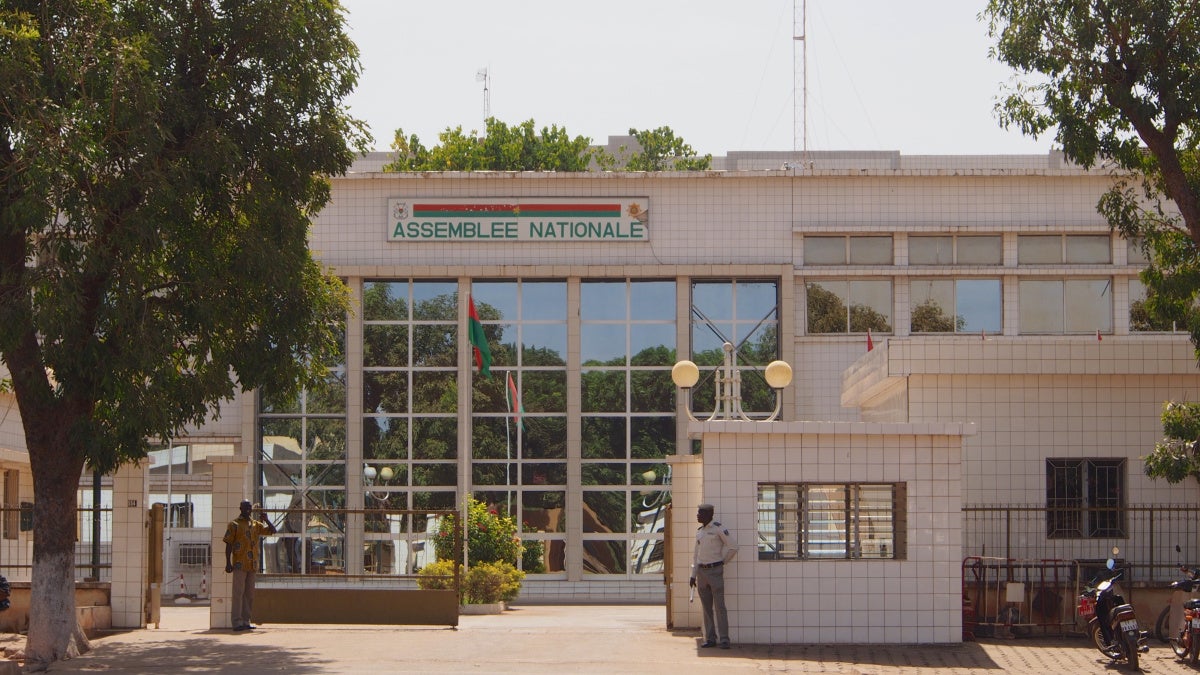
On September 1st, the Transitional Legislative Assembly of Burkina Faso enacted a new law that criminalizes consensual same-sex relations, marking a profound regression for the rights of lesbian, gay, bisexual, and transgender (LGBT) individuals. Under this revised legislation, individuals found guilty of homosexual acts could face imprisonment for up to five years, in addition to financial penalties.
This statute infringes upon the fundamental rights of LGBT individuals to non-discrimination and privacy. Its passage occurs within a broader context of diminishing civic and political freedoms, alongside a severe crackdown by the military junta on political opposition, media outlets, and peaceful dissent.
Historically, Burkina Faso did not possess a law criminalizing consensual same-sex relations. Unlike numerous other African nations, Burkina Faso had not inherited a colonial-era penal code that prohibited acts deemed as sodomy.
Integrated into the wider Code des personnes et de la famille (Code of Persons and Family), the provision criminalizing same-sex relations received unanimous approval from all 71 members of the Assembly. This new measure aims to punish “behaviors […] likely to promote homosexual practices and assimilated practices” with prison sentences and fines.
Burkina Faso’s Minister of Justice and Human Rights, Edasso Rodrigue Bayala, stated that this new law represents a “response to the profound aspirations of our society,” reflecting a “respect for cultural values.”
The junta’s decision to criminalize consensual same-sex relations directly violates its obligations under both the African Charter on Human and Peoples’ Rights and the International Covenant on Civil and Political Rights.
Conversely, recent court decisions in other African countries such as Botswana, Mauritius, and Namibia have affirmed that laws criminalizing homosexual conduct are unconstitutional and discriminatory, thereby infringing upon the rights to privacy and non-discrimination for LGBT individuals.
Beyond violating fundamental rights, such laws actively foster violence and abuse against LGBT people. In 2014, the African Commission on Human and Peoples’ Rights (ACHPR) urgently called upon member states of the African Union to “end acts of violence and abuse” targeting individuals based on their sexual orientation or gender identity.
Junta President Ibrahim Traoré should refrain from signing the Code des personnes et de la famille. Instead, he ought to return it to the Assembly for revision. The amended Code must uphold the rights to non-discrimination and privacy for all individuals in Burkina Faso, irrespective of their sexual orientation and gender identity.