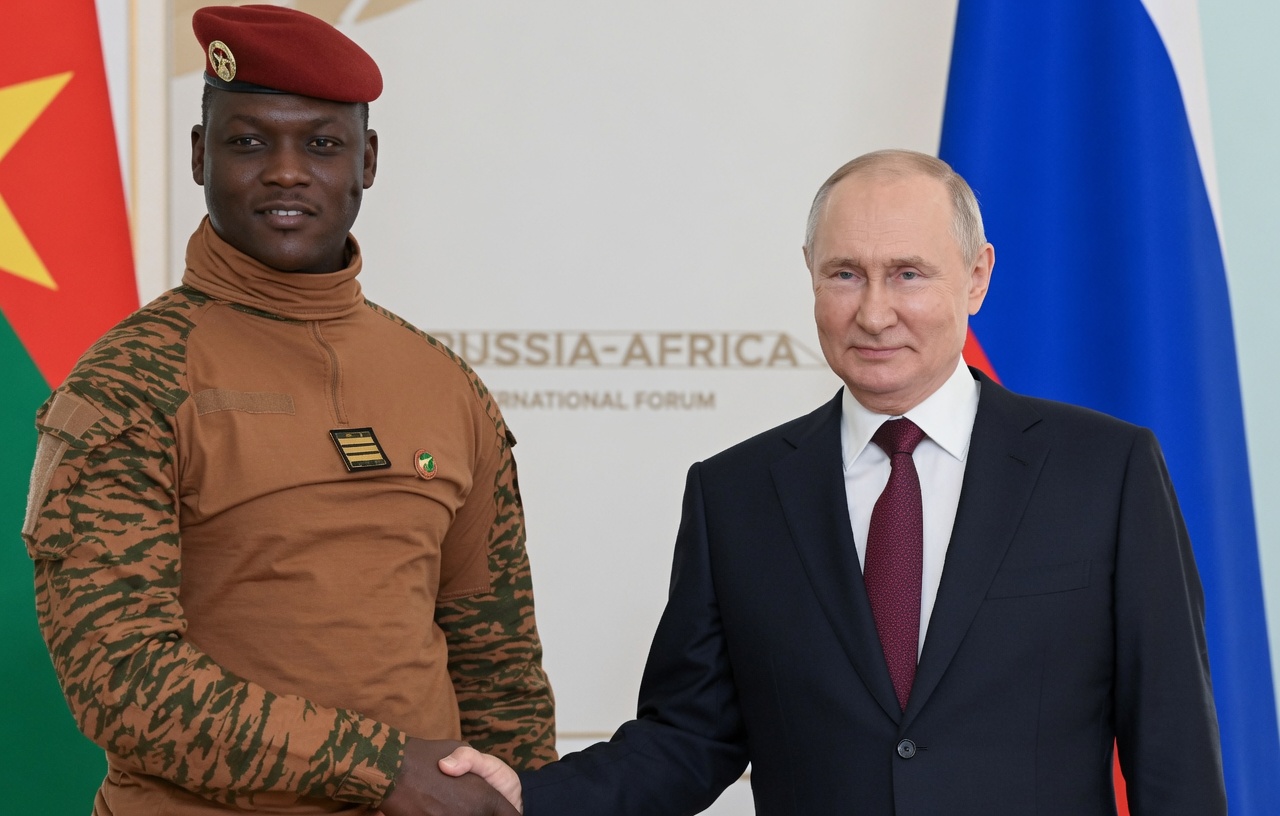
The Burkina Faso government has increasingly positioned Russia as a key ally, framing the relationship as a mutually beneficial partnership built on mutual respect and the absence of political strings attached. Yet, beneath the official narrative lies a more complex reality that raises questions about the true impact of this evolving alliance.
Diplomatic realignment and the quest for sovereignty
Ouagadougou’s pivot toward Moscow follows a period of strained relations with several Western partners. The authorities argue that this strategic shift has restored the country’s diplomatic independence. However, replacing one dependency with another does not automatically translate into genuine sovereignty. A truly balanced partnership requires not only the freedom to choose partners but also the capacity to maintain decision-making autonomy, especially in critical sectors such as security and natural resource management.
Security cooperation: progress or persistent challenge?
Military collaboration with Russia has intensified, yet the country continues to grapple with relentless armed violence. Deadly attacks, mass displacements, and the persistent threat posed by armed groups remain pressing concerns. Despite enhanced cooperation, there is little evidence that this partnership has fundamentally shifted the security landscape in Burkina Faso. The civilian toll continues to rise, and the underlying drivers of instability persist.
Economic promises and limited tangible benefits
Official statements have highlighted potential investments and new economic opportunities arising from the partnership. Yet, concrete economic gains for Burkina Faso remain elusive. Key indicators reflect ongoing strain, while local businesses struggle with insecurity, declining activity, and supply chain disruptions. Assessing the partnership’s success cannot rely solely on promises; it must be measured by tangible outcomes that benefit the population.
The controversial exchange of gold for wheat
The proposal to use gold reserves to secure wheat supplies from Russia has sparked debate over what sovereignty truly means. While Ouagadougou frames this as a strategic decision, critics argue it reveals a troubling dependence. If Burkina Faso must trade its primary wealth—gold—to secure a staple food like wheat, does this signal an inability to meet its own food needs? A robust vision of sovereignty goes beyond selecting new partners; it includes ensuring food security, transforming domestic resources into sustainable development, and improving living conditions for all citizens.
Education and human capital: a modest contribution
The educational cooperation between Burkina Faso and Russia offers some Burkinabè students access to training in Russian institutions. While these programs can help build national expertise, they remain limited in scope and cannot address the broader challenges facing the country’s education system or the employment prospects of young graduates.
The myth of unconditional cooperation
The claim that Russia imposes no conditions in its partnerships deserves scrutiny. Every international relationship is shaped by mutual interests—strategic, economic, or geopolitical. For Moscow, engagement in Africa serves to strengthen its global influence, bolster diplomatic standing, and counter Western sanctions. Presenting this relationship as purely altruistic reflects political messaging more than geopolitical analysis.
The risks of over-reliance on a single partner
Concentrating partnerships with a limited number of actors carries significant risks. An over-dependence on one power can narrow Burkina Faso’s diplomatic maneuverability, deter diverse investment, and complicate relations with other international actors. In a multipolar world, genuine diversification means maintaining open ties with multiple partners rather than substituting one bloc for another.
Measuring partnership success beyond rhetoric
The ultimate test of any international partnership lies in its impact on daily life. Sovereignty is not measured by diplomatic symbols or speeches, but by tangible improvements in security, access to public services, economic growth, and opportunities for youth. On these fronts, the results remain far below expectations. Presenting the Russian-Burkinabè partnership as unequivocally beneficial at this stage appears premature. While the alliance opens new diplomatic avenues, it has yet to prove it can deliver sustainable solutions to Burkina Faso’s most pressing challenges. Only measurable, long-term results will determine whether this realignment is a true catalyst for development—or merely a shift in alliances whose benefits for the Burkinabè people are still to be seen.