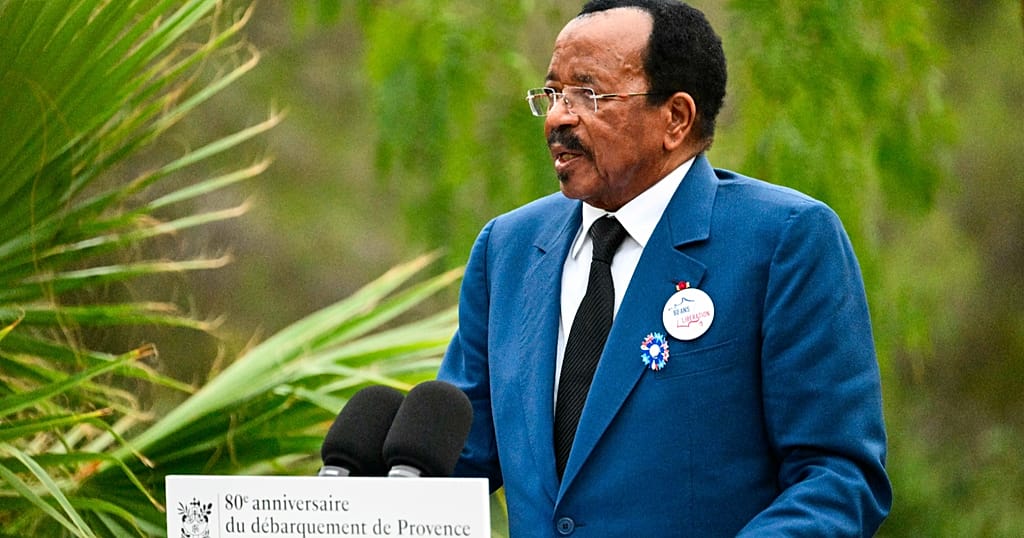
As Cameroon’s president maintains an unusually extended absence from the country, the 93-year-old leader, Paul Biya, has intensified his use of presidential decrees to demonstrate ongoing governance and counter claims of power vacuity.
Biya departed Cameroon with his wife on June 7, initially described as a brief private trip to Europe. Yet, nearly two months later, his prolonged silence has fueled widespread health-related rumors and intensified political scrutiny.
In response to growing doubts, the president has adopted a more visible approach to leadership through a surge in executive actions. Late last month, Biya signed a decree authorizing the Minister of Economy to finalize agreements with the Islamic Development Bank, securing nearly 28 billion CFA francs in funding. Earlier this month, he reshaped the military hierarchy, promoting five colonels to brigadier general rank and appointing General Ebaka Hypolite as the new Chief of Army Staff.
These strategic moves not only reinforce Biya’s presence in state affairs but also tighten his control over the security apparatus. Government officials continue to dismiss concerns about the president’s health, insisting he will return shortly.
The opposition has sharply criticized the prolonged absence, describing the situation as a constitutional void and accusing the administration of operating in autopilot mode. Calls for the long-overdue formation of a new government and the appointment of a vice president remain unanswered, deepening political tensions.