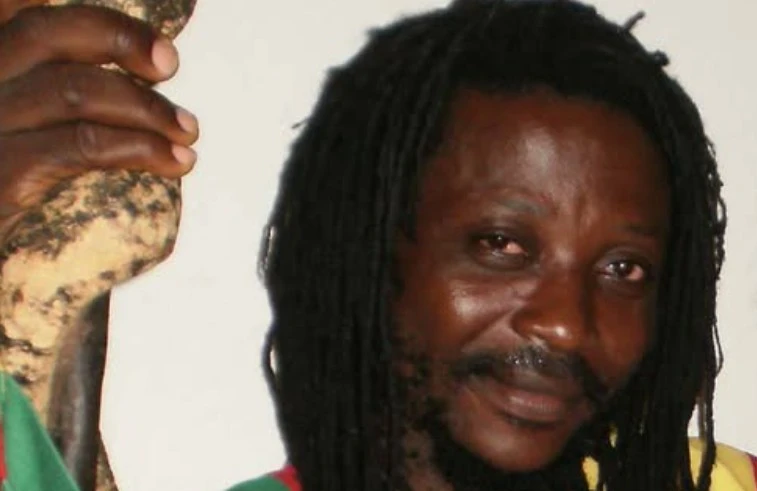
In a powerful statement issued on June 26, 2026, political activist Joe La Conscience launched a direct critique against Paul Biya. He painted a stark picture: forty-three years of tumultuous governance, a noticeable erosion of public liberties, and an apparent blueprint for a dynastic transfer of power. While accusations of Biya orchestrating a family succession are not entirely new, La Conscience’s coinage of the term “dynastocracy” introduces a fresh and impactful dimension to the debate.
four decades in power: a fractured legacy
Joe La Conscience anchors his argument in history, asserting that Paul Biya’s ascent to power in 1982 marked a significant misstep by his predecessor, Ahmadou Ahidjo. What was reportedly intended as a transitional mandate, he contends, instead evolved into a deeply entrenched personal reign spanning over four decades.
His analysis presents a grim economic landscape, a governance style he labels as tribal, and a steady decline in fundamental public freedoms. These are weighty allegations, presented as the author’s interpretations rather than conclusions drawn from official reports. Nevertheless, the tone is unequivocally that of a severe indictment.
the vice-presidency and the specter of family succession
The critique sharpens and becomes more contentious when Joe La Conscience scrutinizes recent constitutional amendments, particularly the establishment of the vice-president role. He posits this as a potential mechanism for succession, meticulously orchestrated from the highest echelons of power. It is here that he introduces “dynastocracy” to describe what he perceives as a deliberate strategy to transfer presidential authority within the ruling family’s inner circle.
He further alludes to alleged rivalries among key figures close to the presidency and various succession scenarios. While these elements are presented as hypotheses by the author and lack official confirmation, they nonetheless underscore a burgeoning political discourse, even among groups not typically associated with radical opposition.
The critical questions surrounding the president’s health, the uncertainties of the post-Biya era, and the tensions surrounding a potential transition are not fabrications by Joe La Conscience. He articulates these prevailing concerns, offering his own distinct conclusions.
Regardless of official recognition by state institutions, the Cameroonian political debate is unmistakably undergoing a significant transformation.