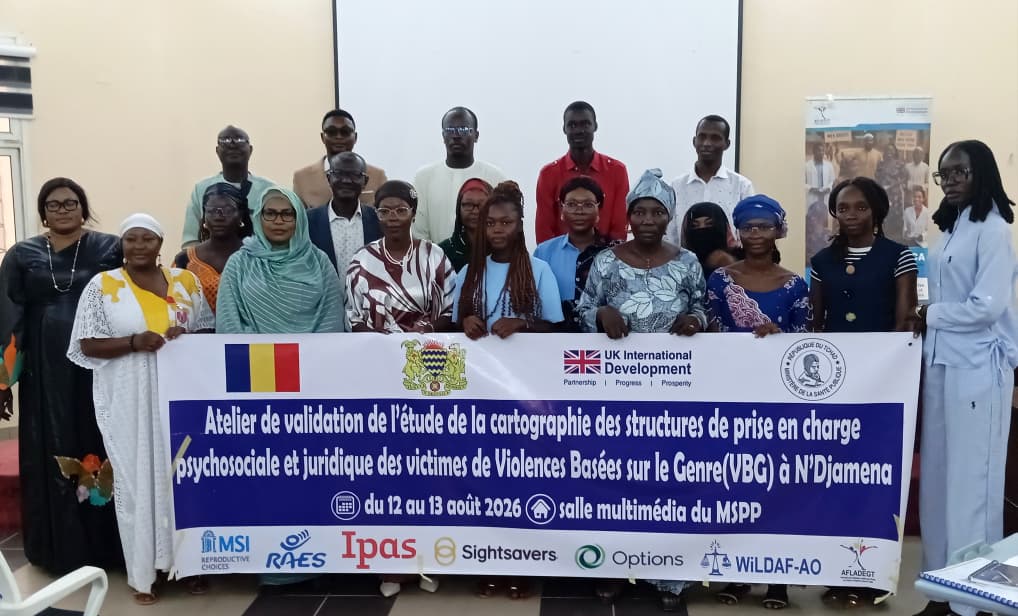
Landmark initiative to strengthen victim assistance services in N’Djamena
An important step is being taken in Chad’s capital to combat gender-based violence (GBV) more effectively. From August 12 to 13, 2026, the Association des féministes leaders pour l’accès aux droits et à l’équité du genre au Tchad (AFLADEGT) will host a validation workshop for a groundbreaking study mapping legal and psychosocial support services for GBV victims. Developed under the WISH 2-WACA project, this mapping aims to streamline victim referrals and enhance coordination among service providers.
Collaborative review to refine support services
Over two days, a diverse group of participants—including government officials, civil society representatives, technical partners, financial backers, and specialized agencies—will review and refine the mapping results. The goal is to identify gaps and opportunities to improve victim assistance across N’Djamena.
Empowering victims through better access
Wouténé Mélissa, President of AFLADEGT, emphasized the critical role of this mapping as more than just a document. “This tool isn’t just a reference; it’s a lifeline for victims,” she stated. “When a woman or girl experiences violence, she needs to know immediately where to turn for help, how to access appropriate services, and what steps to take next.”
Melissa highlighted key deficiencies uncovered by the study, including uneven service coverage, poor awareness among victims, ineffective referral mechanisms, and resource shortages. These findings will guide recommendations to strengthen existing services, improve referral pathways, and mobilize additional support.
Government commitment meets persistent challenges
Dr Kadidja Amadaye Abgrene, Director of Reproductive Health, underscored the severe impact of GBV on fundamental rights and dignity. While acknowledging government efforts—such as legal reforms and the establishment of integrated multisectoral service centers—she noted significant hurdles remain. Notably, fewer than 11% of identified victims receive legal assistance, with out-of-court settlements, lack of information, and weak referral systems being major obstacles.
The mapping also revealed stark disparities in service availability across N’Djamena’s districts. Many areas lack confidential, secure spaces for victims, while staffing and material resources remain critically inadequate. Dr. Abgrene stressed that the study’s findings must now drive actionable policies to improve victim orientation, streamline referrals, and inform public decisions.
Next steps: From analysis to action
The validation workshop marks a turning point in Chad’s fight against GBV. By refining this mapping, stakeholders aim to create a robust framework that ensures no victim is left without support—and no service provider is left working in isolation.