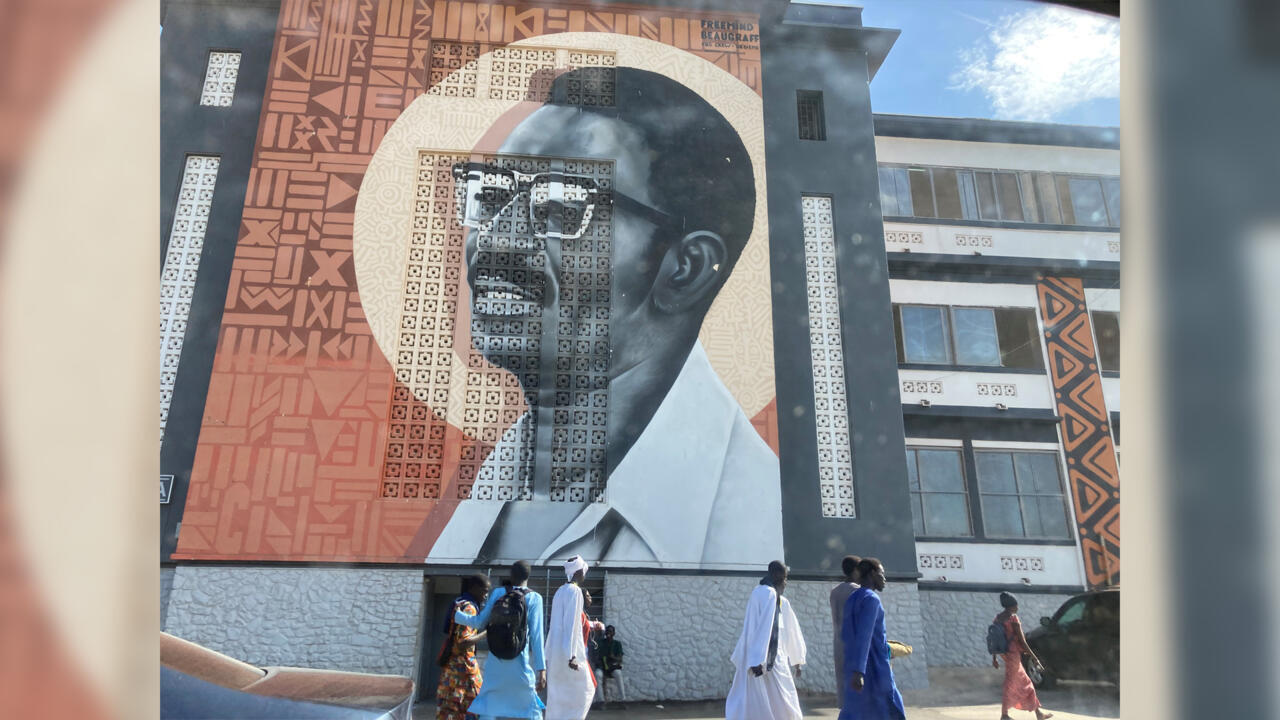
In the 1970s, Dakar University stood at the heart of a paradox: one of Africa’s greatest scholars worked within its walls yet was barred from teaching. His name was Cheikh Anta Diop. While President Léopold Sédar Senghor championed his concept of négritude, Diop advanced a radically different vision for Africa’s rebirth. This installment of our series on legendary African campuses takes us to Dakar, where a defining intellectual duel of the 20th century unfolded.
a campus divided by two visions
Dakar University in post-independence Senegal was a breeding ground for emerging dissent. Buuba Diop, a historian who studied there, recalls the tensions: “Senghor and the students didn’t see eye to eye. Those who challenged Senghor were in the majority. Socialist Party students were a minority, leading to the dissolution of student organizations.”
At the center of this ideological clash stood Cheikh Anta Diop, an accomplished intellectual whose 1955 book Nations nègres et culture argued that ancient Egyptian civilization was a Black African one—a foundation for Africa’s renaissance. Cheikh Anta Diop’s perspective starkly contrasted with Senghor’s view that “emotion is Black, reason is Hellenic.”
Fatou Sow, a sociologist who also attended the university, explains: “The debate over Egypt’s origins as the cradle of African civilization was central. Senghor rejected this idea. He respected Diop’s brilliance but strongly opposed his writings, leading to years of public exchanges between them.”
language as a battleground
The two intellectuals also clashed over language. While Senghor promoted French, Cheikh Anta Diop advocated for African languages. Despite his groundbreaking research, Diop was barred from teaching history at the university until 1981. Instead, he worked at the Fundamental Institute of Black Africa (IFAN), where he pioneered carbon-14 dating techniques, merging nuclear physics with research into Africa’s origins.
On campus, opportunities to hear Diop speak were rare. Fatou Sow recounts: “The Association of African Historians organized a conference on ancient antiquity and the Mediterranean without inviting Cheikh Anta Diop—a glaring omission. Students intervened, insisting he be included. I was there when he finally spoke on campus. No one moved in the audience. He spoke alone. It was a pivotal moment—the first time he addressed the university.”
Cheikh Anta Diop passed away in 1986 at age 62. A year later, the university and IFAN were renamed in his honor. For Fatou Sow, this recognition came far too late. Today, the Wolof language he championed remains absent from the curriculum of the university that bears his name.