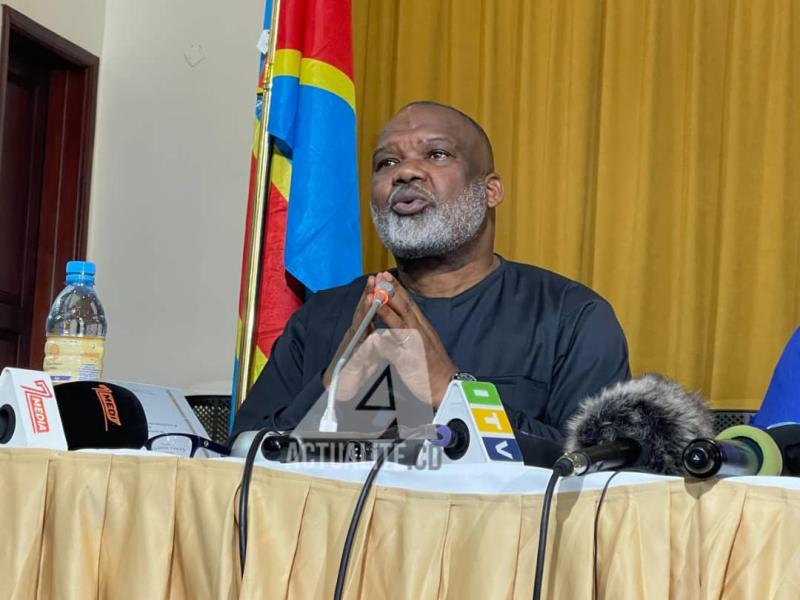
Eastern Democratic Republic of the Congo (DRC) remains a hotspot of instability as deep-seated divisions within the Alliance Fleuve Congo/Mouvement du 23 Mars (AFC/M23) continue to undermine its cohesion. A confidential report by United Nations experts, reviewed by this publication, highlights sharp disagreements between political and military factions over strategic objectives, troop deployment, and resource management.
At the heart of these tensions are ambitions of prominent political figures Corneille Nangaa and former President Joseph Kabila, who are reportedly pushing for a broader military campaign beyond the traditional strongholds of North Kivu and South Kivu. However, their vision faces strong resistance from hardline military commanders within the movement, particularly those aligned with the historical M23 leadership and former CNDP forces.
Military command remains contested
Despite attempts to centralize authority, the military leadership of the AFC/M23 remains under strain. The report confirms that General Sultani Makenga continues to hold the top military command, though his authority is increasingly challenged both internally and by external actors, including the Rwandan government, which has historically supported the movement. Meanwhile, the political leadership, led by Bertrand Bisimwa and Corneille Nangaa, retains control over the group’s decision-making processes, with both branches receiving strategic and logistical support from Kigali.
The document underscores that the AFC/M23’s operational zones have been divided into three military sectors:
- First Zone: Covers Nyiragongo, Rutshuru, and Lubero, under the command of General Baudoin Ngaruye.
- Second Zone: Encompasses Masisi and Walikale, led by Brigadier General Justin Gacheri Musanga.
- Third Zone: Spans South Kivu, commanded by General Innocent Byamungu.
The total combat strength of the AFC/M23 is estimated at around 30,000 fighters. This figure includes:
- Core members of the historical M23 and former CNDP units.
- New recruits mobilized since 2021, drawn from Congolese diaspora communities and Rwandan refugee camps.
- Defectors and volunteers from the DRC Armed Forces (FARDC), National Police, and Wazalendo militias, particularly after the fall of Goma.
- Local defense forces and newly formed police units integrated into the movement.
Strategic ambitions clash with operational realities
The UN experts’ report reveals a stark contrast between the political ambitions of Nangaa and Kabila, who are said to harbor ambitions of seizing power in Kinshasa, and the operational priorities of the military wing, which is focused on consolidating control within the Kivu provinces. This divergence has led to heated debates over the expansion of military operations and the allocation of resources, particularly in areas rich in minerals such as gold and coltan.
“While political leaders push for a broader military agenda aimed at influencing national politics, the majority of AFC/M23 commanders oppose any expansion beyond North and South Kivu. Disputes have also surfaced over resource distribution, with allegations of preferential treatment favoring Tutsi officers and fighters,” the report states.
Diplomatic deadlock compounds the crisis
The internal divisions within the AFC/M23 are exacerbated by a stalled diplomatic process. Despite the Washington Agreement and subsequent evaluation meetings, tensions between Kinshasa and Kigali persist over the interpretation and implementation of the accord. Similarly, the Doha Process, mediated by Qatar, has failed to yield progress, with both sides unable to bridge their differences on key issues. The recent geopolitical shifts in the Middle East have further sidelined the conflict, delaying potential mediation efforts and prolonging the suffering of civilian populations in the region.
The deteriorating security situation in eastern DRC, coupled with the lack of cooperation among armed groups and local communities, continues to fuel instability. The AFC/M23’s inability to rally broad support from other armed factions in Ituri further complicates efforts to achieve a sustainable peace.
As the international community grapples with these challenges, the humanitarian toll in eastern DRC continues to rise, with thousands displaced and civilian populations caught in the crossfire of competing ambitions and unmet diplomatic promises.