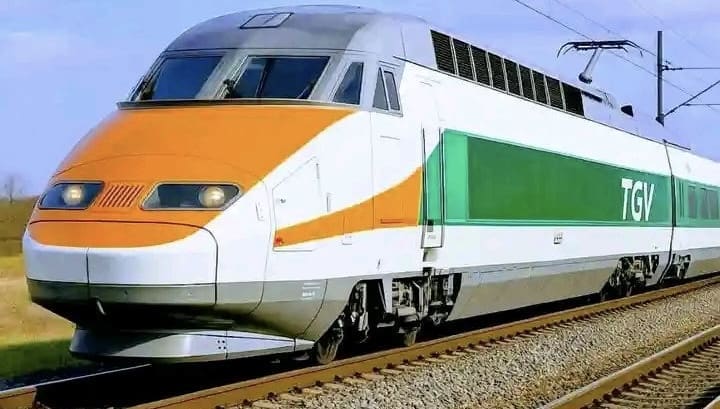
Côte d’Ivoire is on the verge of a historic leap in modernizing its national infrastructure. As part of the comprehensive National Development Program (PND) spanning 2026-2030, the government has unveiled plans for a state-of-the-art High-Speed Train (TGV) system designed to link the country’s southern and northern regions. This landmark initiative forms a crucial component of a broader economic and territorial transformation strategy, aiming to solidify Côte d’Ivoire’s position as a pivotal hub in West Africa.

Côte d’Ivoire aims to join the ranks of nations boasting a high-speed railway network. The upcoming Ivorian TGV will span a 640-kilometer corridor, connecting Abidjan to Ferkessédougou, with key stops in Yamoussoukro, Bouaké, and Korhogo along the route.
Beyond its technical prowess, this infrastructure project is envisioned as a powerful catalyst for territorial integration. It promises to seamlessly link the nation’s primary economic centers while drastically reducing travel durations.
According to Souleymane Diarrassouba, the Minister of Planning and Development, the journey between Abidjan and Yamoussoukro could be completed in a mere 45 minutes. This significant advancement is expected to revolutionize the daily lives and work patterns of citizens, particularly by enabling professionals to reside in the political capital while commuting to the economic capital for their activities.
Metro, airports, roads: a nationwide infrastructure overhaul
The TGV initiative is integral to a holistic vision for modernizing transportation infrastructure across the country. The government has also confirmed the scheduled launch of the 37-kilometer Abidjan Metro by 2029.
The aviation sector is also experiencing significant expansion. Plans are underway for two new international airports: one in San-Pedro, located in the country’s southwest, and another in Bondoukou, in the east. These additions are designed to bolster both national and regional connectivity.
The PND 2026-2030: a blueprint for structural transformation
Through its latest National Development Program, the Ivorian government is committed to accelerating the country’s economic transformation. The plan prioritizes several strategic objectives: fostering regional economic development, driving accelerated industrialization, and enhancing the value of local production.
This approach underscores the authorities’ determination to reinforce the state’s central role in national development planning and guidance.
The declared ambition is for Côte d’Ivoire to achieve upper-middle-income country status by 2030, while simultaneously solidifying its gains in stability and social cohesion.
Over 114 trillion FCFA to be mobilized
To bring this ambitious vision to fruition, the government estimates a financing requirement of 114,838.5 billion FCFA for the 2026-2030 period. The strategy hinges on a shared investment model, with public sector contributions accounting for 30% and the private sector for 70%.
In anticipation of this, Abidjan is set to host a high-level Consultative Group meeting on July 8 and 9, 2026. This gathering aims to engage international financial partners.
Organized with the crucial support of the World Bank, the European Union, the African Development Bank, and the United Nations System, the meeting will present the nation’s development vision and seek to attract the necessary funding for its successful implementation.
Aiming for regional economic leadership
Through this ambitious program, Côte d’Ivoire unequivocally signals its aspirations: to emerge as a leading logistics, industrial, and economic hub in West Africa.
From the high-speed rail and metro systems to new airport platforms and the modernization of its road network, the nation is committed to equipping itself with the essential infrastructure to sustain its growth and enhance its appeal on the regional stage.