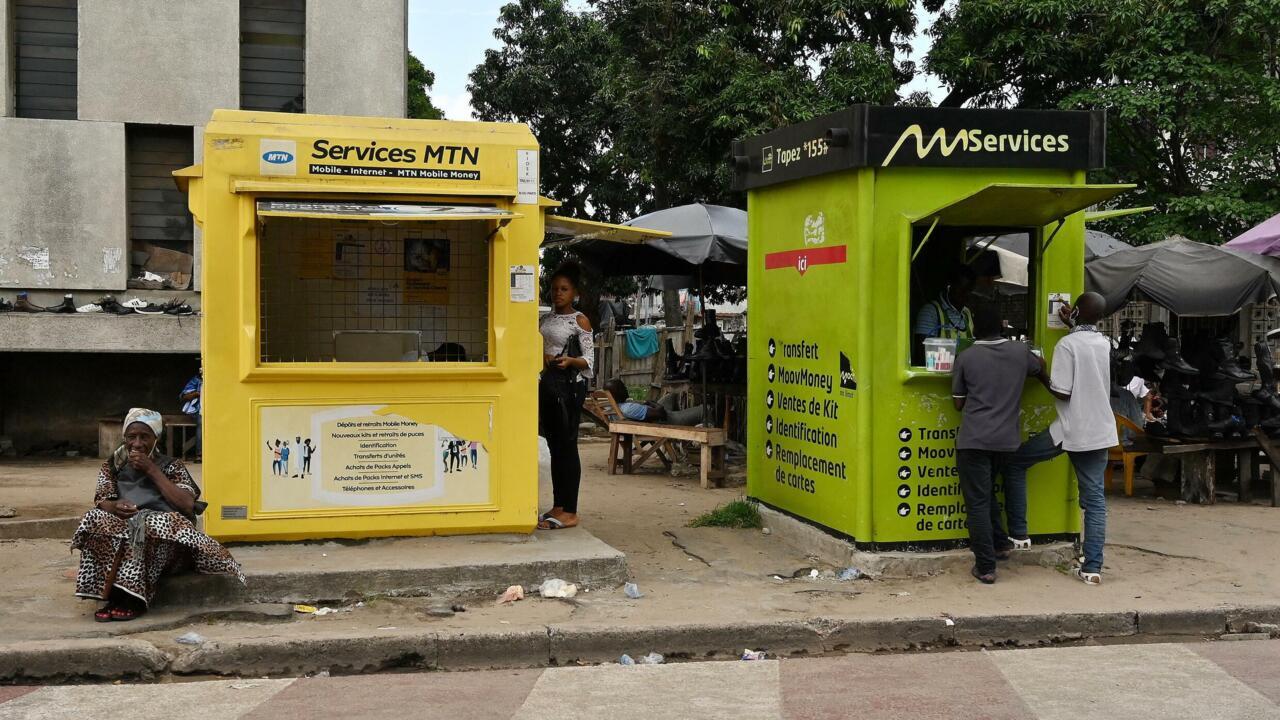
Côte d’Ivoire’s digital payment landscape is booming, with over 400,000 mobile money service points now operational across the nation – a staggering 300 times the number of traditional ATMs. Ivorians rely heavily on these ubiquitous kiosks for their daily financial needs, from salary deposits to cash withdrawals. However, the very agents facilitating this widespread financial inclusion are increasingly struggling with a significant hurdle: persistent cash liquidity issues that severely hinder their operations.
As dusk settled over Angré Château in Abidjan, a bustling neighborhood, the scene at a local mobile money booth unfolded with a familiar frustration. The kiosk, usually a hub of activity, had run dry of cash. Rosette, attempting to withdraw 10,000 CFA francs (approximately 15 euros), found herself out of luck. “It happens,” she remarked with resignation, “you come, and they don’t have what you need. We just have to deal with it.” Inside the yellow booth, teller Nema politely informed waiting clients, “Some days see a rush of withdrawals, and we simply run out of physical cash. We apologize and tell customers we’re currently only able to process deposits.” Affoué, the booth’s proprietor and a former accountant, understands the direct impact: “Losing a client means losing their commission. That’s why it’s crucial to serve customers well, so commissions grow and we can generate a decent net profit.”
Loss of clientele, diminished profitability
Mobile money operators such as Orange, Moov, MTN, and Wave compensate kiosk managers with commissions. For instance, an agent typically earns between 20 and 60 CFA francs (roughly 3 to 9 euro cents) for a 10,000 CFA franc transaction. Consequently, higher transaction volumes and larger values directly translate to increased earnings for these agents. However, this revenue stream is severely disrupted when agents face a deficit of either physical cash or digital credit. Such shortages compel them to temporarily close their operations to replenish their reserves from operators or banks. This interruption directly results in a decline in customer traffic, a reduction in earned commissions, and ultimately, a significant blow to their overall profitability.
Motorcycle couriers boost responsiveness
Addressing this critical issue, Gertrude Yapi, Operations Director at Leya, an Abidjan-based startup, has pioneered an innovative solution: a motorcycle-based cash delivery service designed to rapidly resupply mobile money points. “We provide them with credit in under four minutes,” Yapi explains, “and deliver physical cash within 30 minutes to ensure customer satisfaction. This service allows our points of sale to achieve a 50% increase in their turnover.” Leya currently boasts over 3,000 active clients across four key Ivorian cities: Abidjan, Bondoukou, Bouaké, and Korhogo.
Ivorian economist Kassoum Timité emphasizes the crucial role of uninterrupted service in sustaining broader economic activity. “Mobile money directly serves the informal sector, which accounts for the largest share of Côte d’Ivoire’s economic output – reportedly up to 40% of the Gross Domestic Product,” Timité notes. “Therefore, a lack of liquidity will inevitably slow down transactions, leading to a decrease in overall economic activity.” The sheer scale of mobile money’s impact is evident: in 2024, over 140 billion CFA francs (more than 210 million euros) were transacted daily through mobile money, a nearly fourfold increase since 2020.