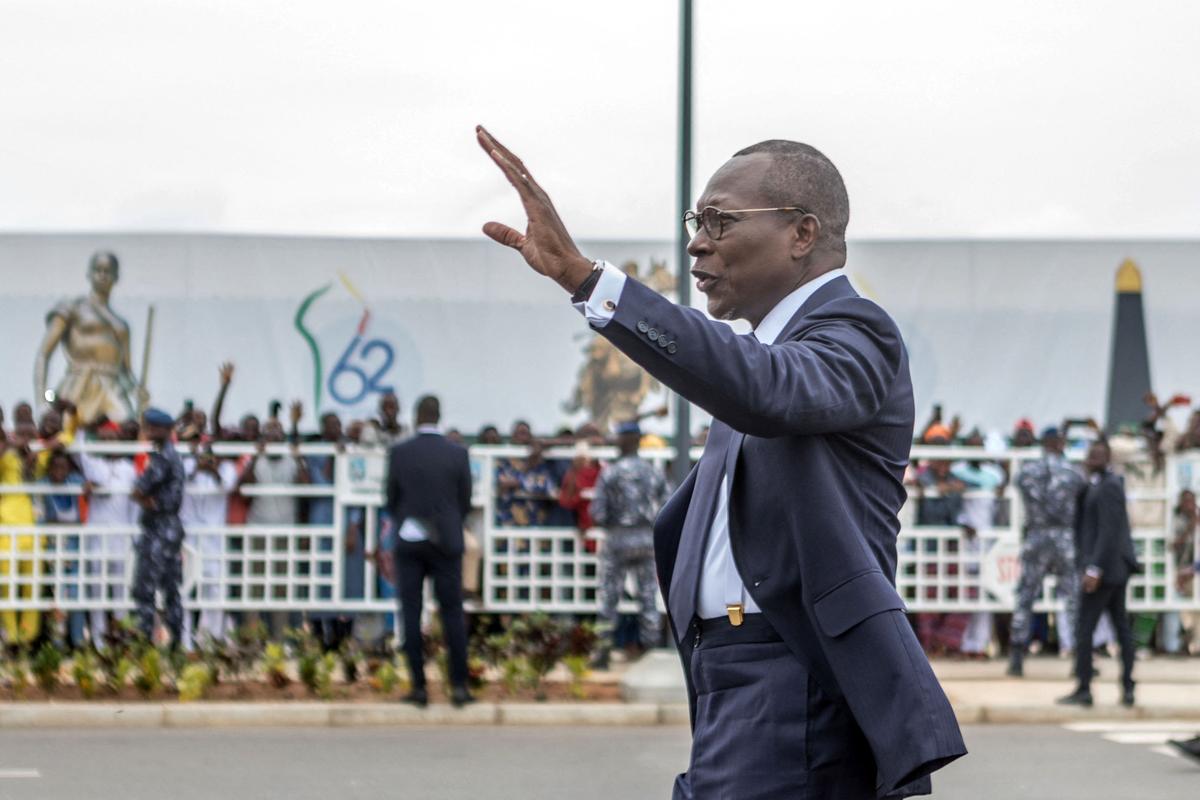
A tense morning unfolded in Cotonou, the economic heart of Bénin, as gunfire echoed through the streets. A group of soldiers, identifying themselves as the « Comité militaire pour la refondation » (CMR), stormed the national television station and declared the removal of President Patrice Talon from office. Yet, within hours, government officials swiftly countered the claim, asserting that the « maneuver » had been foiled.

What transpired during the attempted coup?
The insurgents, numbering eight soldiers adorned with varied berets and carrying assault rifles, seized control of Bénin’s state television on Sunday morning. They announced the formation of the « Comité militaire pour la refondation » (CMR) and declared themselves in charge, naming a lieutenant-colonel as their « president ».
Their justification for the power grab hinged on three key grievances:
- Security concerns: A deteriorating situation in northern Bénin, where jihadist violence has been on the rise.
- Neglect of fallen soldiers: Criticism over the lack of support for soldiers killed in action and their bereaved families.
- Unfair promotions: Allegations of biased career advancements within the military.
The group also accused the government of « covertly undermining fundamental freedoms » and raised social demands.
How did the government respond?
Despite the dramatic takeover of the television station, Cotonou remained largely calm. Gunshots were reported, and soldiers blocked access to key locations, including the presidential palace and the Sofitel hotel. Yet, most residents carried on with their daily routines.
Interior Minister Alassane Seidou addressed the nation, declaring the situation under control. He stated:
« Faced with this situation, the Béninese armed forces and their leadership, true to their oath, remained republican. Their response ensured the situation was contained and the maneuver thwarted. »
« This was an isolated group with only the television under their control. The regular army has regained control. The city of Cotonou and the country are fully secure. »
According to AFP sources, around a dozen soldiers, including the ringleaders, were arrested.
Who is President Patrice Talon?
President Talon, who took office in 2016, is set to step down in April 2026 after completing his second term—the maximum allowed by the constitution. His tenure has been marked by economic growth but also by accusations of authoritarianism. Critics argue that his government has stifled democratic freedoms that once made Bénin a regional model.
Northern Bénin has faced increasing threats from armed groups, adding pressure to his administration. The upcoming election will see the ruling party face off against a « moderate » opposition candidate, as the main opposition party has been barred from running.
International reactions to the coup attempt
The Economic Community of West African States (ECOWAS) condemned the « flagrant unconstitutional act », calling it a « subversion of the will of the Béninese people ». The bloc reaffirmed its support for the government and people of Bénin.
The African Union (AU) also issued a strong condemnation, urging all involved to « immediately cease illegal actions » and return to their professional duties. AU Commission Chair Mahamoud Ali Youssouf stressed the need to uphold constitutional order.
Historical context of political instability in Bénin
Bénin has a turbulent political history, with multiple coups and attempted coups since independence. Notable events include:
- 1963: A military coup led by Colonel Christophe Soglo ousted the government.
- 1965: Another coup reinstated military rule under General Soglo.
- 1969: A coup replaced President Émile Derlin Zinsou with a military directorate.
More recently, Bénin has seen two failed coup attempts during Talon’s presidency—in 2020 and September 2024.
The attempted coup comes amid a wave of military takeovers across West Africa, including in Mali, Burkina Faso, Niger, Guinea, and Guinea-Bissau in late 2025.