DRC: churches divided on constitutional reform proposal
The constitutional reform project in the Democratic Republic of Congo continues to be a focal point of contention. While the nation’s Revivalist Churches have voiced their support for the initiative, the influential Catholic Church has appealed for caution, emphasizing the need to safeguard democratic achievements.
This significant divergence in opinion emerges as the constitutional revision process progresses, having recently seen national deputies adopt the proposed referendum law.
Revivalist Churches back the reform
The Revivalist Churches align with the government’s perspective, which posits that the Constitution, in effect since 2006, no longer adequately addresses the country’s institutional realities.
Archbishop Evariste Ejiba Yamampia, who presides over the Revivalist Churches in Congo, believes this reform holds the potential to enhance national governance and foster development.
“This is about our territorial sovereignty. It’s also about the issue of governance. Thirdly, it concerns the development and well-being of our populations. It will bring about change because there will be an opportunity to properly utilize the country’s wealth. We can eliminate budget-draining entities,” he elaborated.
Catholic Church urges protection of democratic gains
Conversely, the National Episcopal Conference of Congo (Cenco) has yet to issue an official statement. However, the Council of Catholic Laity of Congo (CALCC) has reiterated the Catholic Church’s steadfast commitment to the existing Constitution, which it regards as the bedrock of the young Congolese democracy.
“The Church has consistently maintained that the current Constitution forms the foundation of our nascent democracy. Furthermore, the Church has always advocated for dialogue and wisdom. The Catholic Church has regularly reminded leaders that power is a service. I also acknowledge that the Church has always called upon Catholic laypeople, and all people of good will residing in the DRC, to exercise civic vigilance,” affirmed Faustin Onombili, President of the CALCC.
Opposition contests the reform
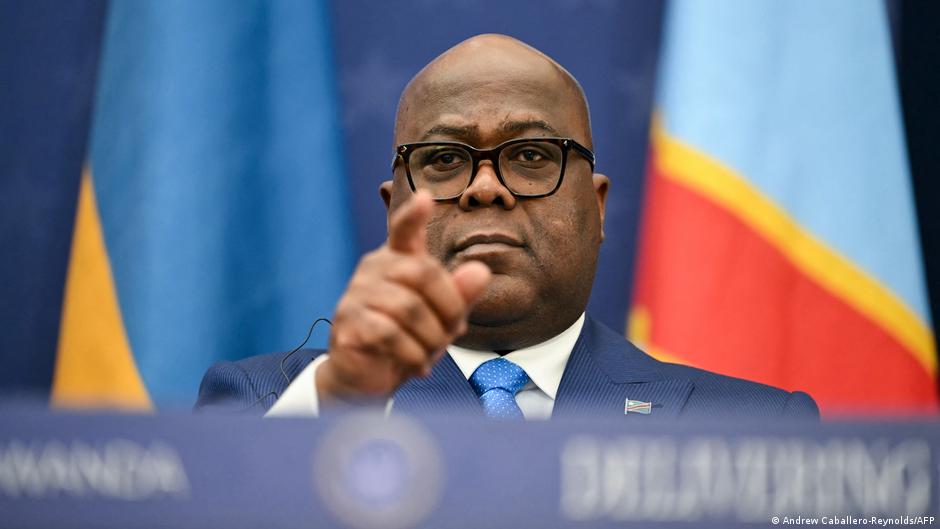
Beyond the religious discourse, the proposed reform is also intensifying political tensions. The opposition accuses President Félix Tshisekedi of seeking to alter institutional regulations to his own advantage.
The Coalition Article 64, which denounces the move as a “constitutional coup d’état,” had initially planned to file a complaint on Tuesday. However, this action was postponed to allow them to focus their efforts on a sit-in scheduled for Friday in front of Parliament.
With a national referendum on the horizon, the debate surrounding the constitutional reform appears more polarized than ever, split between those advocating for institutional adaptation and those staunchly defending the democratic framework established by the 2006 Constitution.