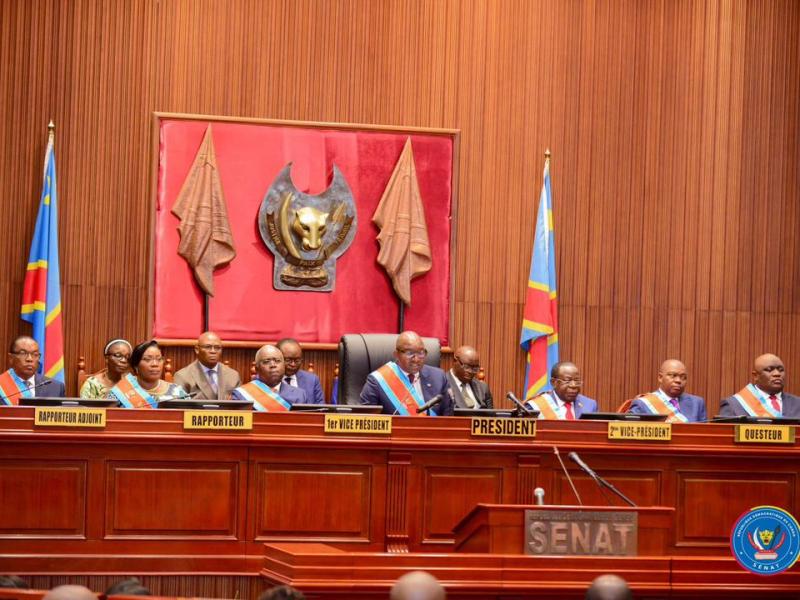
DRC Senate begins second reading of referendum law proposal
Kinshasa, — The Senate of the Democratic Republic of the Congo (DRC) has officially launched the second reading of the proposed law governing the organization of the national referendum. This legislative step follows its adoption by the National Assembly last month, marking a significant development in the country’s democratic process.
Senate takes charge of constitutional reform process
During a plenary session on Wednesday, 10 June, Senate President Sama Lukonde announced that the National Assembly had forwarded the referendum law proposal to the upper house for further examination. The text, which outlines the procedural framework for holding a constitutional referendum, was immediately referred to the Political, Administrative, and Legal Affairs Committee (PAJ) for detailed review.
The committee has been granted a three-day window to finalize its report before presenting it to the full Senate for debate. This accelerated timeline underscores the urgency and importance placed on the constitutional reform agenda by both chambers of Parliament.
National Assembly’s decisive vote in May
The referendum law proposal was initiated by National Assembly member Paul-Gaspard Ngondankoy, representing Yahuma territory in Tshopo Province. On 9 May, the lower house adopted the text with overwhelming support, reflecting broad political consensus on the need for constitutional reform.
Out of 351 deputies who participated in the vote, 348 voted in favor, two opposed, and one abstained. This near-unanimous approval highlights the cross-party backing for the reforms, which aim to modernize the country’s constitutional framework.
Next steps in the legislative process
With the Senate now seized of the matter, the PAJ committee will conduct thorough scrutiny of the proposal before submitting its findings. Once the report is presented, senators will engage in detailed debates, potentially introducing amendments before casting their votes.
If the Senate approves the text in its current or amended form, it will be sent back to the National Assembly for final reconciliation before being submitted for presidential assent. This legislative journey represents a critical milestone in the DRC’s ongoing efforts to strengthen its democratic institutions and governance structures.