DRC’s CNSA initiative: easing tensions ahead of inclusive talks?
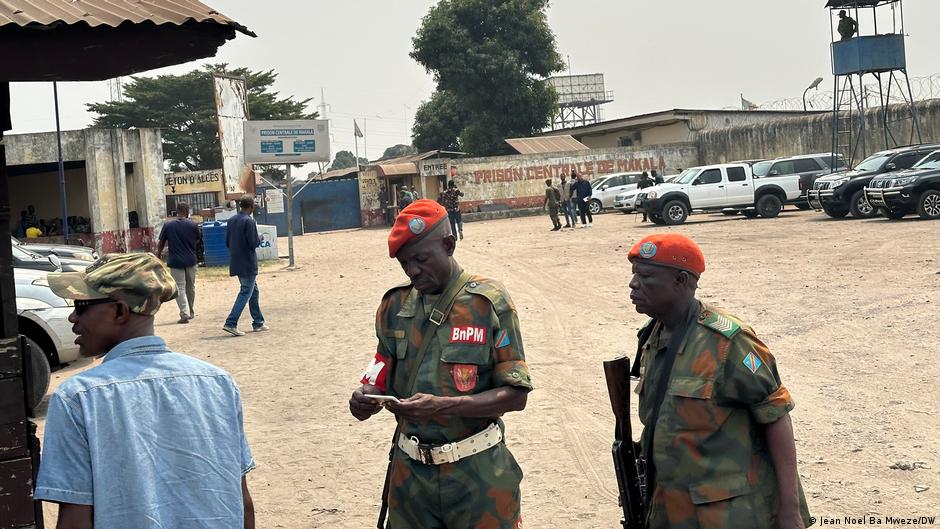
The National Council for Monitoring the Agreement and Electoral Process (CNSA) has launched a comprehensive review of political and opinion prisoners in the Democratic Republic of the Congo. This initiative aims to create a detailed list that will be submitted to President Félix Tshisekedi, potentially paving the way for preemptive measures before a much-anticipated inclusive national dialogue.
The CNSA emphasizes that the review applies to all eligible individuals, adhering to the principle that “the law is colorblind.” Joseph Olenghankoy, CNSA president, stressed the urgency of ensuring detainees are brought before their natural judges within 48 hours, noting that many have already spent around six months in detention without trial. “There is a clear violation of rights here,” he stated. “Rights are rights, regardless of who holds them. Our duty is to present these concerns to the authorities empowered to grant releases, fostering an environment conducive to national dialogue.”
Criteria for review and potential amnesty
The CNSA has established strict criteria for evaluating cases, with a focus on identifying individuals who may qualify for amnesty. Among those whose names have surfaced in discussions are Aubin Minaku and Emmanuel Ramazani Shadary, both prominent figures in the People’s Party for Reconstruction and Democracy (PPRD), which was led by former President Joseph Kabila.
PPRD welcomes the initiative
The PPRD has publicly welcomed the CNSA’s efforts, particularly the potential release of its detained members. “If this initiative leads to the liberation of our comrades, we can only commend it,” said Lucain Kasongo, a PPRD cadre. “Any initiative, regardless of its origin, that seeks to secure the release of our detained colleagues—Aubin Minaku, Emmanuel Ramazani Shadary, Dunia Kilanga, Parole Kamizelo, and many others—deserves our full support.”
Meanwhile, Justicia ASBL, a human rights organization, recently submitted a list of nearly 100 individuals considered political or opinion prisoners to the Minister of Justice, further highlighting the scale of the issue.
Death sentences complicate the path to dialogue
The CNSA’s initiative also casts a spotlight on high-profile cases, including those involving death sentences. Former President Joseph Kabila and Corneille Nangaa, coordinator of the AFC/M23 rebellion, are among those sentenced to death. Timothée Mbuya, coordinator of Justicia ASBL, argues that lifting these sentences is essential to building trust ahead of the dialogue. “A political decision must be made to annul these sentences, particularly for Joseph Kabila and Corneille Nangaa,” he stated. “We believe this is critical to fostering the political trust needed to establish an inclusive dialogue.”
As calls for an inclusive national dialogue grow louder across the DRC, the CNSA’s initiative represents a critical step toward easing tensions. Whether it will translate into tangible measures remains to be seen.