The structural trap inside Senegal’s delayed local elections
Senegal’s long-awaited local elections have become far more than a routine democratic exercise. Behind the scenes, a quieter and more consequential dynamic is unfolding: every additional day of delay chips away at the political capital of President Bassirou Diomaye Faye and his allies. Political analyst Babacar Ndiaye has put it bluntly — time is not working in the president’s favour.
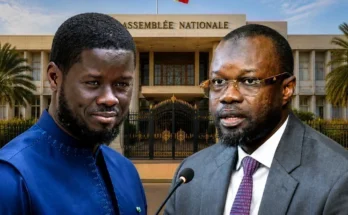
This is not simply a question of scheduling. The local elections represent the first nationwide test of the Pastef movement’s grassroots strength since it swept to power. For Bassirou Diomaye Faye and his mentor Ousmane Sonko, the vote is a chance to convert presidential momentum into tangible local control. But the longer the ballot is postponed, the more that momentum risks dissipating.
Why the calendar itself is the real opponent
Babacar Ndiaye’s warning is rooted in a simple observation: political capital depreciates. The enthusiasm that carried Bassirou Diomaye Faye to the presidency was built on promises of rupture and rapid change. When local elections are pushed back, voters are left with more time to measure the gap between those promises and everyday reality — rising prices, youth unemployment, and the slow grind of institutional reform.
In this context, the delay does not freeze the political landscape. It transforms it. Opposition figures and disaffected allies gain room to organise, while the ruling camp risks appearing hesitant or overly focused on internal consolidation rather than delivering at the local level.
The Kiiraay factor and the battle for local legitimacy
Another layer of complexity comes from the emergence of Kiiraay – Les Patriotes républicains, a political formation that adds a new variable to the local electoral equation. Its presence complicates any assumption that Pastef can simply replicate its presidential performance at the municipal and departmental levels.
Local elections are won through local networks, not national slogans. They reward embeddedness, clientelism, and the patient work of mayors and local notables. That is precisely why Babacar Ndiaye argues that the clock is running against Bassirou Diomaye Faye: the longer the vote is delayed, the more time rivals have to rebuild those very networks.
What is really at stake beneath the surface
Analysts who follow Senegalese politics closely see the local elections as a stress test for the Pastef project itself. A strong showing would confirm that the movement has deep roots beyond the presidential palace. A weak or chaotic result would expose the limits of a political machine built rapidly around two charismatic figures.
The stakes extend beyond party politics. Local councils control budgets, land management, and basic services. For citizens, the outcome will shape how quickly — or slowly — change reaches their neighbourhoods. For the government, it will determine whether it can govern with a supportive local base or faces constant friction from opposition-controlled municipalities.
The danger of waiting too long
Babacar Ndiaye’s core insight is that delay is never neutral. In politics, an unfrozen calendar becomes a weapon in the hands of those who want to see the incumbent weakened. Every month without a vote is a month in which expectations can curdle into disappointment, and disappointment into electoral punishment.
For Bassirou Diomaye Faye, the path forward requires more than just setting a date. It demands a clear narrative about why the delay was necessary, and a visible record of local achievements that voters can feel before they cast their ballots. Without that, the local elections risk becoming a referendum not on Pastef’s opponents, but on Pastef’s own promises.
The clock, as Ndiaye suggests, is already ticking. The only question is whether the president’s camp can move faster than the doubts accumulating around it.