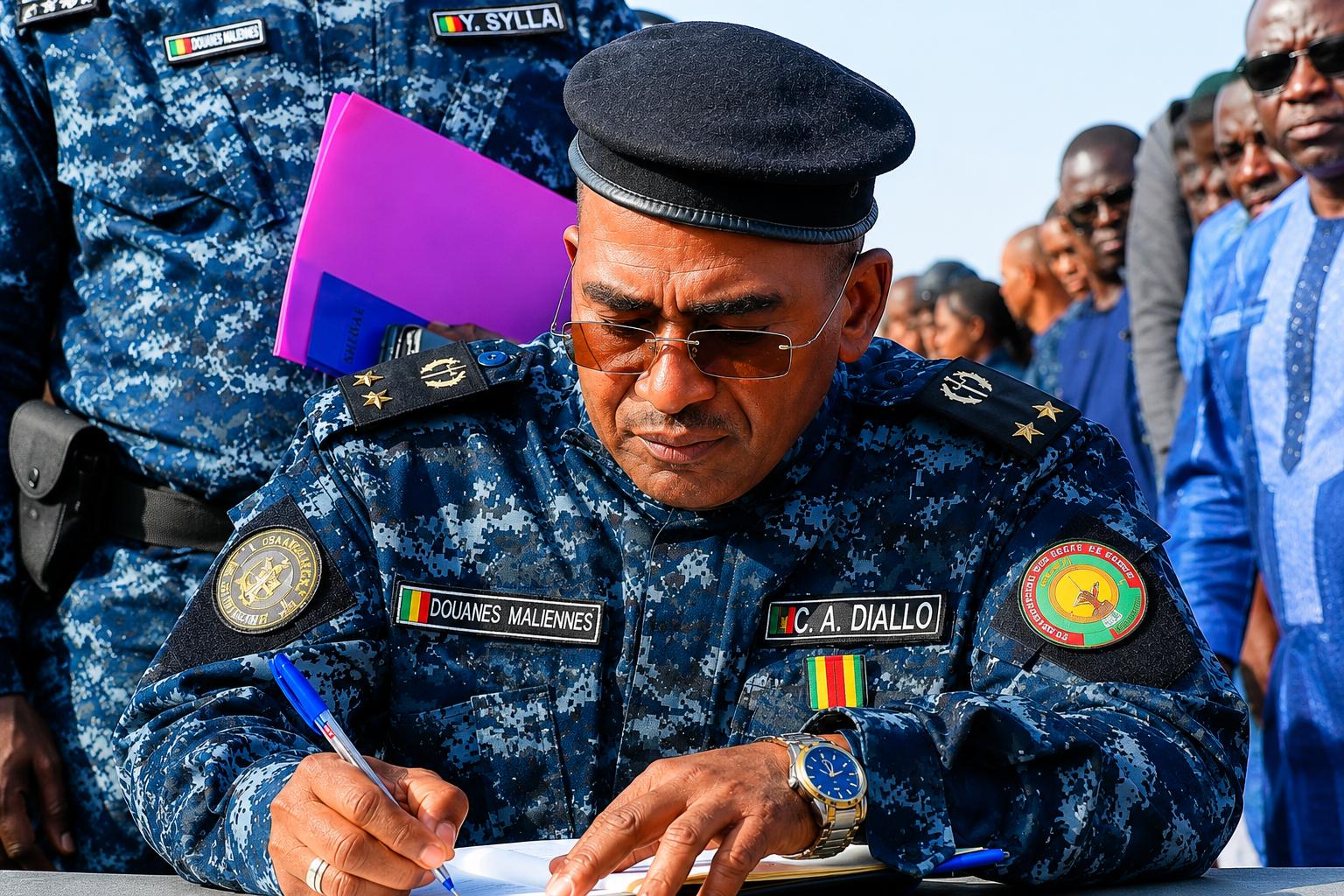
The Malian Customs Directorate, a cornerstone of the country’s economic machinery, has once again become the stage for a high-stakes game of institutional chess. Recent waves of appointments and transfers have sent ripples through the corridors of power, sparking both official narratives and whispered speculation. In a bold examination, journalist and analyst Fousseyni Sissoko dissects this turmoil, questioning whether it represents a genuine restructuring or a calculated purge.
Official reform or political maneuvering?
The government frames these changes as a strategic necessity, particularly in a time of economic transition. With Mali under pressure to bolster domestic revenue, the Ministry of Finance and Customs authorities argue that refreshing leadership in border offices and regional branches will enhance efficiency and combat fraud. The stated goal? Strengthening fiscal performance and tightening control over critical logistics hubs.
Yet Fousseyni Sissoko’s analysis urges readers to look beyond the surface. In an institution where oversight of high-value goods—especially hydrocarbons and major trade routes—translates into immense influence, the line between reform and repositioning of power is often blurred. Efficiency claims, he suggests, may mask a more complex agenda.
The shadow of internal purges
What makes Sissoko’s take particularly compelling is his challenge to the narrative of mere administrative optimization. By framing the upheaval as a potential “settling of scores,” he draws attention to the timing and nature of certain departures. Are these moves a subtle purge, targeting officials deemed too independent or tied to bygone networks of influence?
In Mali’s current climate, the stewardship of key institutions is not just about governance—it’s about sovereignty and security. The practice of replacing seasoned professionals with figures aligned to prevailing political winds is a longstanding feature of the state apparatus. Sissoko’s piece underscores a troubling reality: loyalty and patronage may sometimes eclipse technical expertise in decision-making.
A customs service caught in the crossfire
Ultimately, this analysis serves as a vital reminder. The Malian Customs Directorate is far more than a tax-collecting entity; it is a battleground where economic imperatives and political interests collide. Whether framed as a necessary overhaul or a politically motivated reshuffle, this episode lays bare the fragile balance—and the high stakes—of managing personnel within one of Mali’s most critical security and financial institutions.