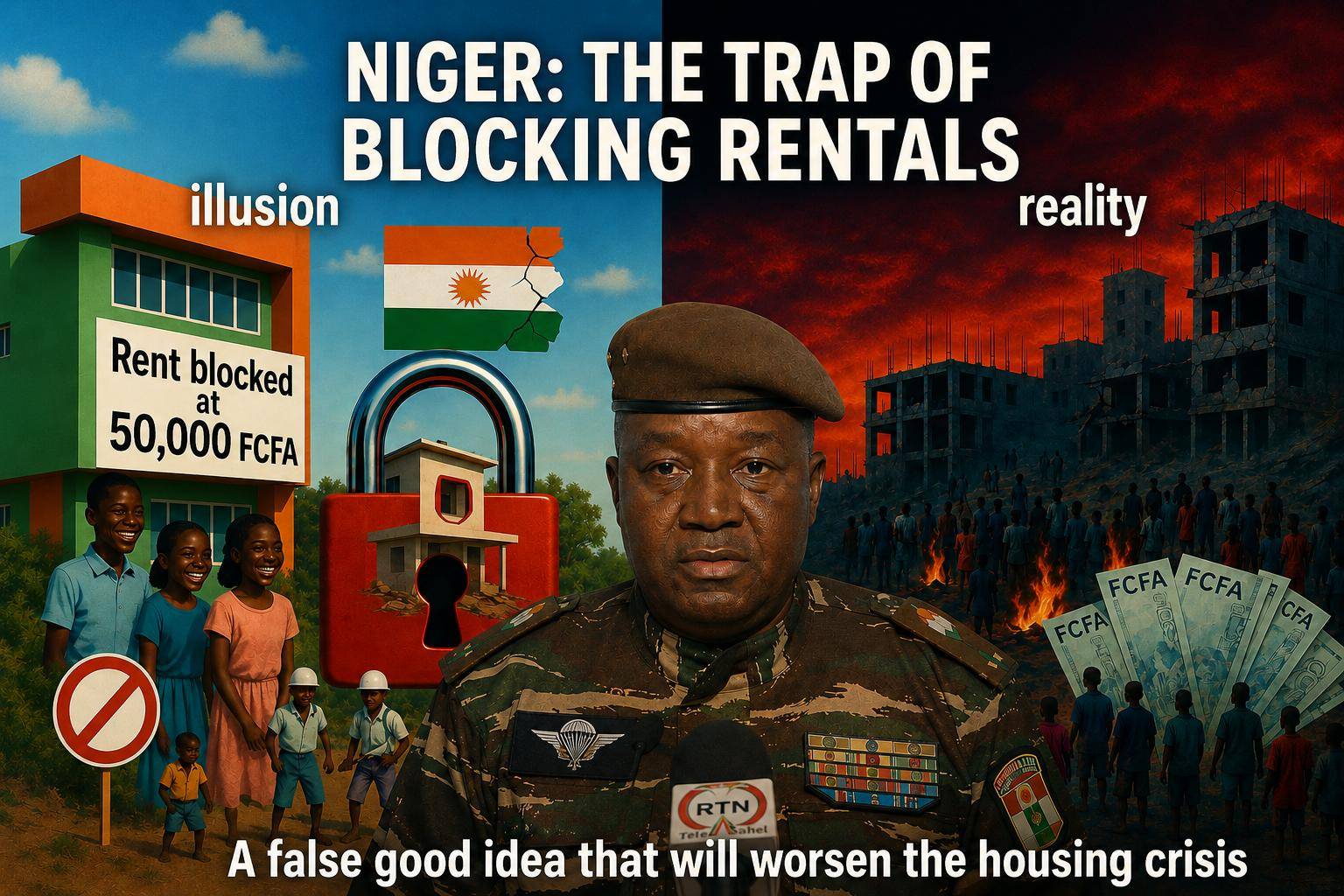
Understanding the recent rental price freeze in Niamey
The Nigerien transitional government has recently implemented a decree to cap residential rental prices in Niamey, ranging from 15,000 to 80,000 West African CFA francs. While the initiative aims to address housing affordability for low-income families, economists warn that such measures could backfire, triggering unintended consequences for the real estate sector and the broader economy.
Why the decree fails to address housing shortages
The fundamental issue lies in the disconnect between policy and economic realities. Rent control, as history has repeatedly shown, disrupts market dynamics rather than resolving them. The Nigerien approach overlooks the core problem: a severe housing deficit exacerbated by rapid urbanization and insufficient construction activity.
Rather than fostering sustainable affordability, the price ceiling risks:
- Discouraging new construction: Investors and developers may withdraw from the market if profitability becomes uncertain under fixed rental rates. This would further reduce housing supply, deepening the shortage.
- Accelerating property deterioration: Landlords operating under reduced income streams may neglect maintenance, leading to the physical decay of existing housing stock.
- Encouraging informal practices: With demand outstripping supply, prospective tenants may resort to under-the-table payments or favoritism, undermining the intended fairness of the decree.
The state’s limited capacity to intervene
The government’s ambition to bridge the housing gap through public investment faces significant financial constraints. Strained national budgets and reduced international aid flows limit the feasibility of large-scale social housing projects. Without private sector participation, the state alone cannot meet the escalating demand for affordable accommodation in urban centers like Niamey.
Moreover, the decree sends a chilling signal to financial institutions. Reduced investment in real estate translates to fewer mortgage loans and diminished economic activity across related sectors, from construction materials suppliers to skilled laborers.
A short-term political gamble with long-term costs
This policy appears to be a populist move aimed at securing public approval during a transitional period. However, by distorting market signals, it risks exacerbating the very housing crisis it seeks to alleviate. Instead of creating a stable and accessible housing market, the government may inadvertently transform Niamey into a city where securing decent accommodation becomes increasingly unattainable for the average citizen.