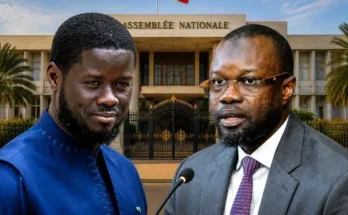
The concept of civic power in Senegal has taken center stage in the nation’s political discourse following the historic 2024 election of Bassirou Diomaye Faye. While the peaceful transfer of power signaled a triumph of democratic ideals, the long-term sustainability of this civic momentum remains uncertain. The erosion of direct citizen access to constitutional remedies, such as the abandoned plan for citizen-initiated constitutional petitions, underscores a growing institutional disconnect between political promise and civic empowerment.
what is civic power in Senegal?
Civic power in Senegal transcends mere electoral participation. It encompasses the active engagement of citizens as watchdogs, participants in deliberative assemblies, and bearers of constitutional rights. Rooted in both modern legal frameworks and traditional ethical systems like the Wolof jom (honor), kersa (respect), and ngor (integrity), this power reflects a dynamic interplay between institutional democracy and cultural identity.
At its core, civic power requires citizens to be more than passive voters—they must be vigilant, informed, and capable of holding institutions accountable. This vision aligns with the theories of Pierre Rosanvallon, who describes counter-democracy as the necessary vigilance of society against state power, and Cynthia Fleury, who emphasizes the psychological and ethical dimensions of citizenship, including courage and resistance to resentment.
historical roots of civic engagement in Senegal
The lineage of civic power in Senegal is not confined to the post-colonial era. Pre-colonial West African societies, particularly among the Wolof, Serer, and other ethnic groups, developed sophisticated systems of governance and civic virtue long before European contact. The penc (village assembly under the baobab tree) served as a deliberative forum where decisions were made through consensus rather than majority rule. Ethical virtues such as teranga (hospitality), masla (tact in mediation), and muñ (patience) were not just cultural ideals but active frameworks for political participation and social cohesion.
During the colonial period, the Four Communes (Saint-Louis, Gorée, Rufisque, Dakar) became early laboratories for civic engagement. Senegalese citizens, though subjected to French rule, developed forms of political participation that blended Islamic legal traditions with French civic models—a hybrid identity later theorized by scholars like Souleymane Bachir Diagne under the concept of lateral universality.
modern civic power: from protest to institutional participation
The 2021–2024 protest cycle in Senegal—sparked by the arrest of Ousmane Sonko and the attempted postponement of the 2024 presidential election—exemplified the power of civic mobilization. These movements demonstrated the vitality of counter-democratic practices: vigilance through digital and street protests, veto power through mass demonstrations, and judicial oversight through calls for constitutional accountability. Yet, this energy faced a critical test with the 2024 election of Bassirou Diomaye Faye. While the victory was hailed as a triumph of civic power, the transition from protest to governance has revealed structural weaknesses in institutionalizing citizen participation.
One glaring example is the abandonment of plans for direct citizen access to the Constitutional Council. Despite recommendations from the 2024 and 2025 national dialogues, the final draft of constitutional reforms excluded this mechanism. This decision perpetuates a long-standing flaw in Senegal’s legal architecture: only political elites (the president or a minimum of 10% of deputies) can initiate constitutional review. Ordinary citizens, even when their rights are violated, remain powerless to seek redress directly through the highest judicial body.
the role of national dialogues in civic renewal
The national inclusive dialogues of 2024 (on justice) and 2025 (on political reform) marked an important step toward participatory governance. By opening legislative drafts to public debate before adoption, President Faye signaled a commitment to transparency and collective ownership of constitutional change. However, the credibility of such initiatives depends on their ability to translate deliberation into tangible institutional reform. The exclusion of key civic empowerment measures—such as citizen-initiated constitutional petitions—from the final drafts risks undermining public trust and fueling resentment.
cultural and ethical foundations of civic power
Beyond legal and institutional reforms, civic power in Senegal is deeply tied to ethical and cultural values that have historically shaped social behavior. The Wolof concept of jom (dignity and courage) underpins public integrity, while kersa (respect and restraint) tempers political discourse and prevents the degeneration of civic engagement into populist excess or identity-based conflict.
These values are not relics of the past but living resources that can inform modern governance. For instance, the penc tradition of consensual deliberation offers a model for local governance that complements formal democratic structures. Similarly, the virtue of ngor (keeping one’s word) is essential in a political culture often marred by opportunistic shifts and broken promises.
Intellectuals like Mary Teuw Niane and Felwine Sarr have warned about the erosion of these civic virtues in contemporary Senegalese politics. The rise of clientelism, political transhumance (opportunistic party-switching), and public cynicism reflects a broader crisis of moral authority. Revitalizing civic power, therefore, requires not only legal reforms but also a cultural and educational reawakening that teaches and reinforces these ethical principles from school to civic life.
pathways to strengthening civic power in Senegal
To consolidate civic power in Senegal, several strategic reforms are essential—each rooted in a blend of modern governance and traditional ethical frameworks:
- direct citizen access to constitutional review: Allow citizens or civil society groups to petition the Constitutional Council when they believe their constitutional rights have been violated. This would institutionalize the people-as-judge model envisioned by Rosanvallon and empower citizens beyond periodic elections.
- legal recognition of traditional deliberative spaces: Formalize the role of the penc, gokh (neighborhood assemblies), and youth or women’s mbootaay groups in local governance. These bodies could serve as mandatory consultation forums for municipal decisions on urban planning, resource management, or social programs. Such recognition would bridge the gap between formal institutions and lived civic practices.
- education in civic virtues: Integrate the study of traditional ethical systems (jom, kersa, teranga, masla) into civics curricula, alongside modern political philosophy. This dual approach would help young citizens understand governance not as a distant abstraction but as an extension of their cultural and moral heritage.
- strengthening oversight institutions: Reform bodies like the Court of Auditors (Cour des comptes), the National Anti-Corruption Office (OFNAC), and the General Inspectorate of State to guarantee their independence and allow direct citizen complaints. Public platforms for whistleblowers and civic audits would enhance transparency and accountability.
- institutionalizing national dialogues: Establish a public charter for national dialogues to ensure transparency in participant selection, deliberation rules, and the publication of discrepancies between recommendations and adopted laws. This would prevent civic engagement from being reduced to symbolic gestures.
- decentralization with participatory budgets: Mandate participatory budgeting in municipalities, allowing citizens to co-decide how a portion of public funds are allocated. Annual civic audits and public accountability sessions would reinforce local ownership of governance.
- addressing the politics of resentment: Develop a national commission on recognition and memory to acknowledge historical injustices (e.g., colonial violence, post-independence abuses) and foster social healing. This aligns with Cynthia Fleury’s call for a politics of care in democracy, where institutions actively support the emotional and psychological well-being of citizens.
comparative perspectives: lessons from Africa and beyond
Senegal’s journey toward civic empowerment can draw valuable lessons from other African and global models. For example, South Africa’s 1996 Constitution grants citizens direct access to the Constitutional Court—a mechanism that has played a pivotal role in consolidating democracy despite ongoing challenges. In Tunisia, the 2014 Constitution emerged from a broad national dialogue, though subsequent democratic backsliding highlights the fragility of such gains without sustained civic vigilance.
France’s Citizens’ Convention for the Climate (2019–2020) demonstrated the potential of citizen assemblies when their recommendations are seriously considered. Conversely, the failure to implement key proposals underscored the risks of superficial participation. These cases confirm that civic power is not a one-time event but a continuous process requiring institutional commitment, cultural resonance, and adaptive governance.
challenges and critiques
Critics of efforts to revive civic power in Senegal raise valid concerns. Some argue that traditional deliberative models like the penc are inherently hierarchical and exclude marginalized voices (women, youth, lower castes). Others caution against romanticizing the past, noting that pre-colonial institutions were not immune to power asymmetries or political manipulation.
There is also skepticism about whether legal reforms alone can transform governance. As Achille Mbembe reminds us, the challenge lies in avoiding both the imitation of Western models and the retreat into identity-based nostalgia. The goal is not to replicate Athens or Rome but to forge a uniquely Senegalese civic identity that honors its past while addressing contemporary needs.
Finally, the risk of populism looms large. Vigilant civic engagement can easily tip into systemic distrust and rejection of institutions. The key is to channel counter-democratic energy into constructive institutional reforms rather than allowing it to become a force of perpetual disruption.
conclusion: toward a resilient civic culture in Senegal
Civic power in Senegal is not a static achievement but a living process—one that demands active participation, ethical grounding, and institutional support. The 2024 election of Bassirou Diomaye Faye opened a window of opportunity, but the true test lies in whether this energy can be institutionalized into a durable civic culture.
The path forward requires a synthesis of modern governance and traditional ethics. It calls for citizens who act with jom (courage), debate with kersa (respect), and govern with ngor (integrity). It demands institutions that are transparent, accessible, and accountable to the people they serve. And it requires a society that nurtures civic virtues not as folklore, but as the bedrock of a thriving democracy.
The power of the citizen is not given—it is built, every day, through engagement, vigilance, and a shared commitment to the values that define what it means to be Senegalese.