Understanding the roots of Mali’s ongoing conflict with Touareg separatists
Mali’s security landscape has deteriorated sharply in recent months, culminating in coordinated attacks in late April 2026. These assaults targeted major cities and resulted in the death of the Defence Minister, Sadio Camara, alongside numerous Malian soldiers. The violence represents the latest escalation in a troubling trend of rising insurgencies against state institutions and military forces across the country.
Our decade-long research into insecurity and governance in West Africa and the Sahel reveals a clear pattern: the surge in attacks stems from unaddressed grievances among the Touareg people. These nomadic Berber communities, primarily based in northern Mali, have long voiced demands for political autonomy, cultural recognition, equitable resource distribution, and improved security—concerns that successive Malian governments, including the current military regime, have failed to resolve.
Three critical factors fueling the Touareg insurgency
The roots of the current crisis are deeply entrenched in historical injustices and systemic neglect. Here are the key challenges that continue to drive the conflict:
-
Political marginalization: The Touareg have repeatedly expressed frustration over their exclusion from power structures dominated by southern elites. Since Mali’s independence in 1960, their calls for greater autonomy or federal recognition have been met with repression rather than dialogue. The current military leadership has similarly overlooked these demands, perpetuating a cycle of discontent.
-
Militarized responses and collateral damage: The Malian military’s heavy-handed tactics in the north—often involving indiscriminate force—have alienated local populations. The Touareg have long opposed the militarization of their regions, viewing it as an oppressive strategy rather than a solution. Civilian casualties, arbitrary arrests, and collective punishments from counterterrorism operations have further eroded trust in the state and inadvertently strengthened recruitment efforts by armed groups.
-
Economic inequity and resource control: Northern Mali is rich in gold deposits, salt mines, grazing lands, and strategic trade corridors, yet its people see little benefit. Revenue and development investments overwhelmingly flow to the southern regions, leaving the north economically stagnant. This disparity fuels resentment and perpetuates instability, as economic grievances intersect with political and cultural marginalization.
How extremist groups exploit the void in northern Mali
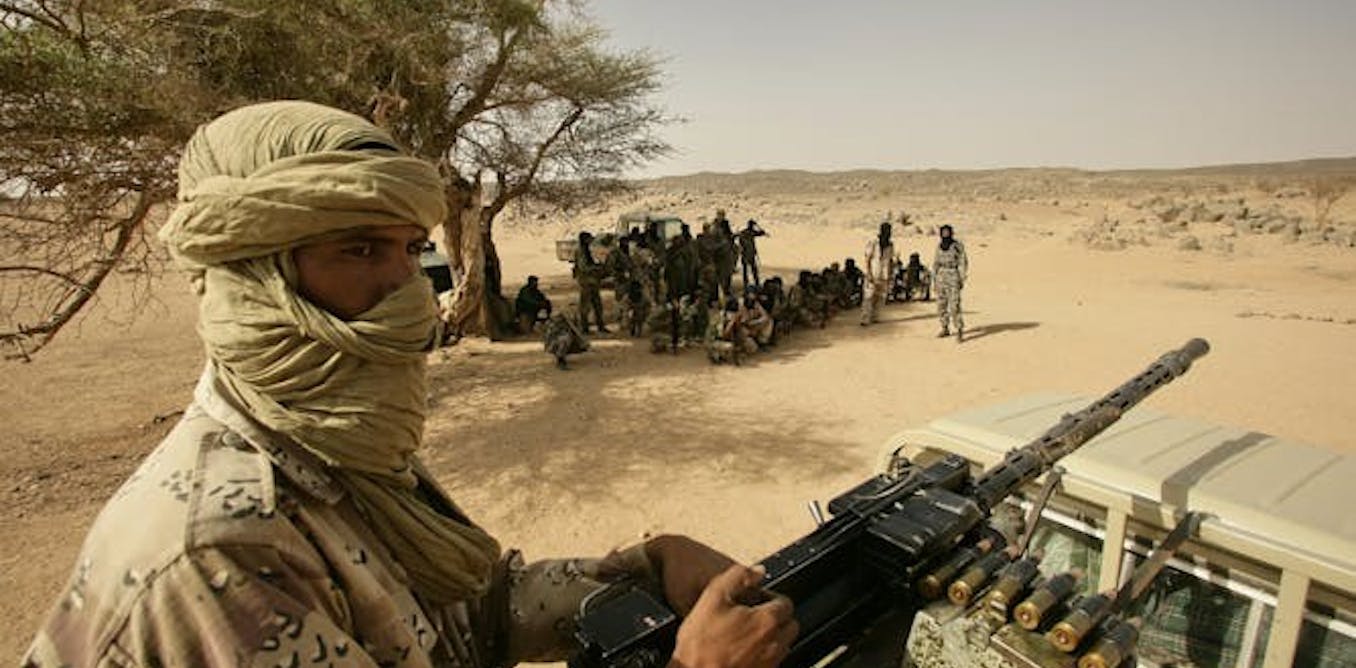
The resurgence of coordinated attacks in April 2026 marks a troubling alliance between the Support Group for Islam and Muslims (JNIM) and the separatist Azavad Liberation Front (FLA). This partnership echoes a similar crisis in 2012, when Touareg-led groups, including the National Movement for the Liberation of Azawad (MNLA), launched an offensive against the Malian state, initially succeeding in capturing key cities like Gao, Tombouctou, and Kidal.
The MNLA, a predominantly Touareg separatist movement founded in 2011, peaked at around 10,000 fighters in 2012. Despite its numbers, it lacked the military strength to maintain territorial control and soon formed an uneasy alliance with Islamist factions such as Ansar Dine, Al-Qaeda in the Islamic Maghreb (AQMI), and the Movement for Oneness and Jihad in West Africa (MUJAO). However, this partnership collapsed when the Islamists—better armed and financed—ousted the secular separatists and seized control of major urban centers.
The withdrawal of French forces in 2022 removed a critical counterterrorism deterrent, creating a security vacuum that militant groups have exploited. With weakened state capacities and disrupted intelligence networks, these groups have expanded their operations, deepened local recruitment, and reclaimed influence in remote and desert regions. Their tactics, including suicide bombings and landmines, have intensified insecurity across northern and central Mali.
Why past peace agreements have failed—and what needs to change
The current military regime under Assimi Goïta has yet to address the core issues driving Touareg discontent. Successive governments have systematically suppressed calls for autonomy, often through force, rather than engaging in meaningful dialogue. Environmental challenges—such as worsening droughts, desertification, and climate variability—have further devastated the pastoral livelihoods of the Touareg, adding urgency to their demands for justice and recognition.
Previous peace accords promised decentralization, financial support, and the integration of former combatants, but implementation has been inconsistent at best. Meanwhile, counterterrorism operations continue to inflict severe collateral damage, displacing communities and perpetuating cycles of violence that extremist groups exploit to justify their presence and recruit new members.
Analysts attribute part of the blame to the legacy of international interventions, including France’s Operation Barkhane, which, despite its goals, has been criticized for failing to address the root causes of instability. Structural inequalities, where development and political attention remain concentrated in southern Mali, further exacerbate tensions and undermine efforts toward national cohesion.
Lessons from Niger: a path forward for Mali
To break the cycle of violence, Mali could draw inspiration from neighboring Niger, where President Mahamadou Issoufou implemented a transformative approach to address Touareg grievances after taking office in 2011. His strategy included:
Institutional integration: Actively involving Touareg elites and former rebels in state institutions to ensure representation and reduce marginalization.
Decentralization: Granting regional authorities greater administrative and budgetary control to empower local governance and reflect community priorities.
Disarmament and reintegration: Implementing structured programs to demobilize fighters, provide vocational training, and facilitate their reintegration into civilian life.
Issoufou’s government also prioritized infrastructure development in Touareg regions, focusing on pastoralism support, education, water access, road connectivity, and rural security. These investments directly addressed the economic and social vulnerabilities that had fueled past rebellions, demonstrating how targeted development can stabilize historically marginalized areas.
A shared future for Mali
While Touareg separatist groups have at times aligned with jihadist factions, their primary grievances remain rooted in political and economic exclusion. Addressing these structural inequalities is essential to reducing recruitment for extremist groups and fostering long-term stability. By embracing decentralization, inclusive governance, and equitable resource distribution, Mali can begin to heal its divisions and build a more cohesive national identity—one that recognizes and respects the diversity of its people.