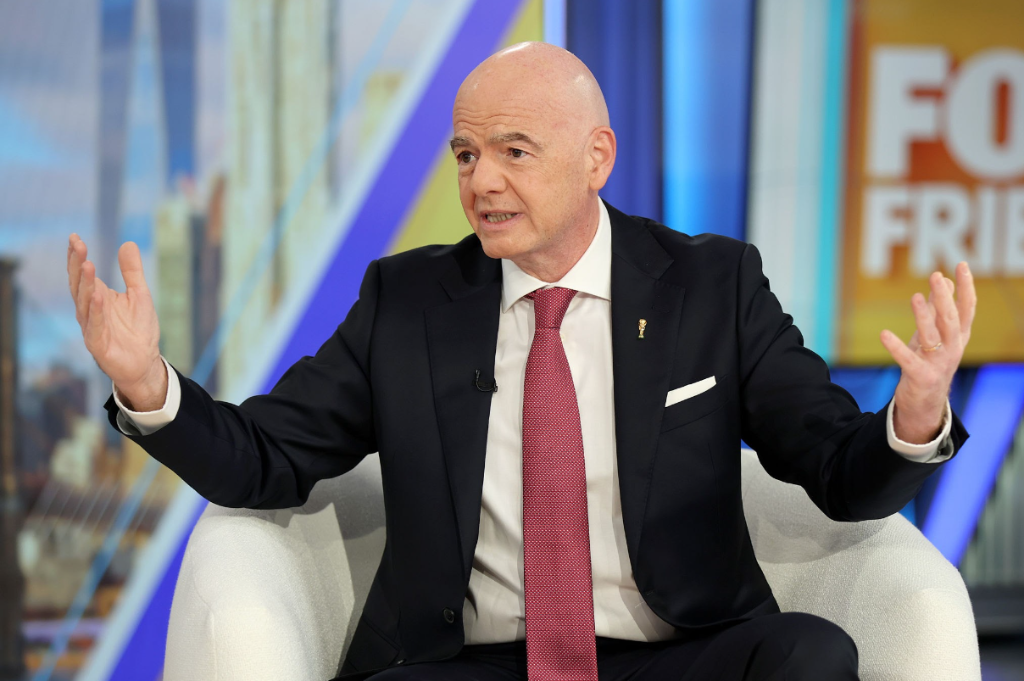
In a momentous response to FIFA’s proposal to open its flagship competitions to private investors, UEFA, alongside its 55 member federations, has declared a historic decision. A firm and unanimous statement from the European governing body confirms its unequivocal refusal to participate in future World Cups. This unprecedented development threatens to shatter the existing governance structure of international football.
A historic rupture between Nyon and Zurich
The world of football has plunged into an institutional crisis of unparalleled magnitude. Through a communiqué delivered with a notably assertive tone, UEFA announced the immediate and indefinite suspension of all European national teams’ participation in competitions organized by FIFA. The root cause of this schism lies in the international body’s plan to cede a portion of the rights and ownership of the World Cup and other major tournaments to private investment funds.
For European football, a critical line has been crossed. Convening an urgent meeting, UEFA’s 55 member associations voted unanimously against what they perceive as the irreversible commodification of global sporting heritage. The sport’s most prominent nations, from France and Germany to Spain, England, and Italy, are now united behind a common stance: a complete withdrawal from international competitions until this contentious project is definitively abandoned.
World Cup privatization: the catalyst for conflict
At the heart of this dispute is a plan developed with utmost discretion by FIFA’s presidency. Seeking new revenue streams to fund global football development and maximize its earnings, the Zurich-based organization initiated advanced discussions to open the governance and revenue of the World Cup to external financial entities.
This initiative, pursued behind the scenes without prior consultation with leagues, clubs, or continental federations, immediately triggered widespread opposition. UEFA strongly condemns the opaque process, characterizing FIFA’s approach as ‘governance by intimidation.’ According to the European body, national federations were presented with an ultimatum: accept this major financial transformation or face statutory sanctions.
“The World Cup cannot be considered merely an investment product,” UEFA emphasized in its statement. “It represents one of football’s greatest sporting legacies. Built over generations by players, national teams, and supporters across all continents, it should never be handed over to private investors. The World Cup is not for sale.”
The looming threat of a destructive financial model
Beyond the methodology, European football categorically rejects the fundamental premise of the project. Integrating private investors into the World Cup’s ownership structure would introduce a perpetual demand for financial profitability and dividends.
In its analysis of the situation, UEFA highlights several significant risks to the game’s overall structure. Firstly, the obligation to generate consistent profits for shareholders would intensify pressure on the football calendar, leading to an increase in matches at the expense of player health. Secondly, it would result in a substantial loss of sporting sovereignty, with strategic decisions driven by financial return imperatives rather than competitive fairness. Finally, the fundamental interests of supporters, leagues, and clubs would become directly subordinate to the expectations of external shareholders.
For European officials, this ownership model is fundamentally incompatible with the mission of safeguarding and transmitting the sport’s core values.
Global football’s impending consequences
The announcement of such a boycott places FIFA in an unprecedented predicament. A World Cup devoid of European nations would be a championship in name only. Sportingly, the absence of recent champions would significantly devalue the global title.
Economically, the damage to FIFA would be colossal. Europe accounts for the largest share of global audiovisual rights and sports sponsorship markets. The absence of Champions League stars and major European nations would drastically reduce the commercial value of competitions under Zurich’s aegis, risking a massive withdrawal of broadcasters and long-standing partners.
This impasse also threatens to paralyze all negotiations concerning the international match calendar. National team breaks, the status of players released by clubs, and the coordination between club and national team competitions are now entirely dependent on the resolution of this confrontation.
A political power struggle with unforeseen outcomes
This crisis marks the culmination of several years of simmering tensions between UEFA and FIFA. Repeated disagreements over the frequency of the World Cup, the reform of the Club World Cup, and the distribution of financial resources had already strained relations between the two giants of football governance.
By setting strict and verifiable conditions for any return to the negotiating table, Europe compels FIFA to make an existential choice. The international body must decide whether to formally abandon any project involving private capital, providing binding legal guarantees, or to maintain its current trajectory, risking a definitive split and organizing devalued competitions without the European continent.
Upholding the spirit of the game
By leading this revolt, UEFA asserts its role as a safeguard against the commercial overreach in elite sports. In refusing to endorse what it terms a ‘fire sale of collective heritage,’ the European body poses a fundamental question: how far can modern football go in the pursuit of profit without losing its soul?
The coming days will be decisive. The ball is now in FIFA’s court, which must choose between maintaining its financial ambitions or preserving the unity of global football. One thing is certain: the power struggle is engaged, and the landscape of the planet’s most popular sport risks being transformed forever.