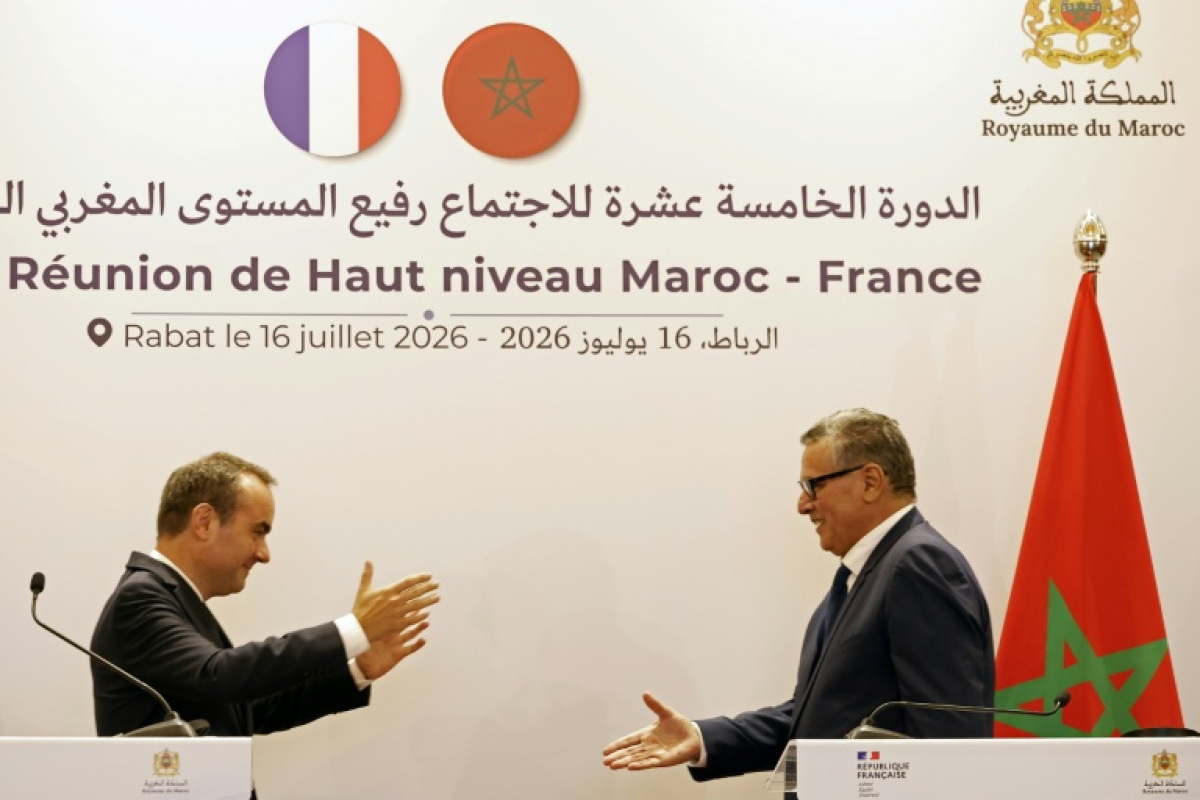
In Rabat, France and Morocco have showcased their renewed confidence in each other during a high-level visit by French Prime Minister Sébastien Lecornu. The meeting, held at the Moroccan Ministry of Foreign Affairs, marked a significant step in the warming of bilateral relations, following years of strained ties.
Lecornu described the outcome of the talks as “exceptionally positive,” highlighting the strengthening of Franco-Moroccan relations since French President Emmanuel Macron formally recognized Morocco’s sovereignty over the disputed Western Sahara territory in the summer of 2024. This move, which sparked strong reactions from Algeria, was followed by a state visit by Macron to Rabat in October of the same year, effectively ending three years of diplomatic tensions.
The visit culminated in the signing of multiple agreements and the establishment of an “exceptional strengthened partnership” between the two nations.
However, the visit was not without controversy. On the same day, an international media consortium published new reports alleging the extent of Morocco’s use of the Pegasus spyware, prompting questions about France’s potential acquisition of the technology. Rabat has consistently denied these claims as “completely false and baseless.”
The originally planned joint press conference was reduced to a brief statement by the two prime ministers, with no opportunity for questions from journalists.
Unprecedented partnership
French officials declined to comment on the spyware allegations, with sources within Lecornu’s delegation dismissing the reports as outdated news. The main focus remained on advancing bilateral cooperation, with France and Morocco agreeing to elevate their relationship to a new level, particularly in security and counterterrorism efforts.
In a message marking France’s Bastille Day, Morocco’s king praised the “consolidation” of the two countries’ “privileged relations,” hinting at a potential state visit to France and the signing of an unprecedented treaty—the first of its kind between France and a non-EU country. While no date has been set for the royal visit, the groundwork for this historic agreement is underway.
Lecornu, accompanied by twelve ministers including Foreign Affairs Minister Jean-Noël Barrot and Interior Minister Laurent Nuñez, reaffirmed the importance of the African continent, where both nations face jihadist threats in the Sahel. He emphasized the need for joint action in the region.
Moroccan Prime Minister Aziz Akhannouch welcomed the partnership as a “strategic vision based on shared political convergence, renewed trust, and mutual ambition.”
Shifting diplomatic priorities
France has increasingly prioritized Morocco in its Maghreb diplomacy, moving away from its previous efforts to maintain a delicate balance with Algeria. In the security dossier in the Sahel, Paris now appears to be relying more heavily on its Moroccan partner, as Algeria remains reluctant to share intelligence despite the resumption of Franco-Algerian cooperation.
Twelve agreements were signed during the meetings, including an initiative to explore electrical interconnection between the two countries and loan agreements with the French Development Agency for water projects and the development of a Rabat regional express rail network.
The fifteenth “high-level meeting” between the two delegations, which had not convened since 2019, was hailed by Lecornu as a “turning point” in the bilateral relationship. He also addressed visa policies, stating that France is now working to facilitate “circular mobility” across the Mediterranean, particularly for entrepreneurs and students—a move aimed at easing past tensions over visa restrictions imposed in 2021 and 2022.
Lecornu praised the “excellent cooperation” between the two countries’ services, which has led to “unprecedented operational successes” in combating organized crime and drug trafficking in recent weeks.