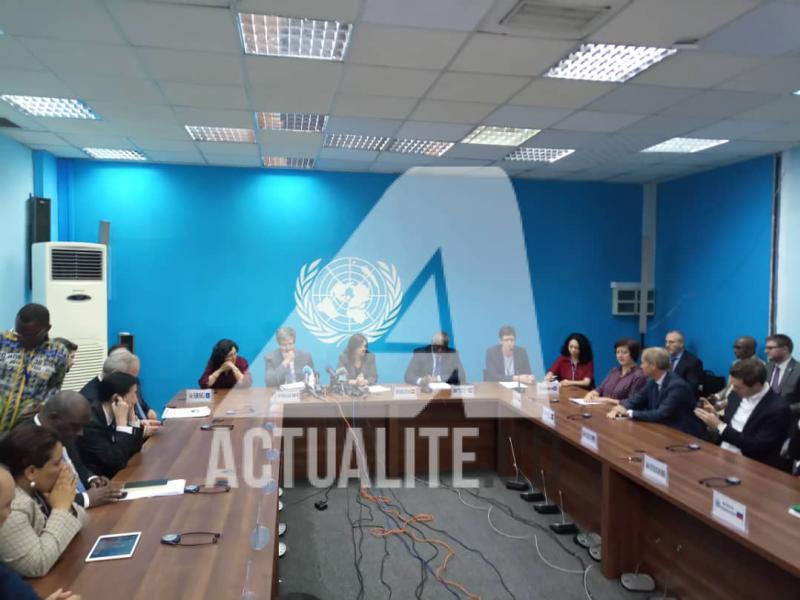
The Democratic Republic of Congo (DRC) is leveraging its current presidency of the United Nations Security Council to place a critical yet often overlooked issue on the global agenda: the governance of natural resources. In New York on Monday, July 13, Kinshasa hosted a high-level Arria-formula meeting examining the nexus between resource exploitation and peacebuilding. This diplomatic push will culminate on July 22 with a high-level debate presided over by President Félix Tshisekedi, under the theme ‘Natural Resource Governance as the Foundation for Peace, Security, and Prosperity’.
Kinshasa’s campaign for stronger international norms
The Congolese Ministry of Foreign Affairs, led by Thérèse Kayikwamba Wagner, has spotlighted what it describes as a ‘normative gap’ in how the international community governs natural resources in conflict and post-conflict settings. Existing frameworks—including mineral traceability systems, corporate due diligence obligations, and measures to curb conflict financing—are viewed as fragmented and ineffective. The DRC is advocating for a more integrated global framework that aligns resource governance with conflict prevention and international security priorities.
At the heart of this initiative lies a fundamental shift in perspective: natural resources should no longer be treated solely as economic assets. Instead, they must be recognized as strategic pillars of peace and security, deserving a central place in the UN Security Council’s agenda. This stance has resonated with key international partners, including France, which has pledged full support for the Congolese-led effort.
France endorses DRC’s vision
Speaking at the UN, Jérôme Bonnafont, France’s Permanent Representative to the United Nations, underscored Paris’s commitment to strengthening and harmonizing international initiatives aimed at ensuring the responsible use of natural resources. His statement reflects a shared concern: the exploitation of these resources must serve sustainable and equitable development, protect host nations, and prevent their diversion for malicious purposes.
‘Natural resources must be leveraged for inclusive, sustainable development that benefits the populations and countries that possess them. They must be shielded from exploitation by predatory actors and protected from being weaponized in conflicts. France fully supports the DRC’s objective to enhance and align international initiatives for the responsible management of these resources. We are ready to contribute constructively to the Security Council’s upcoming work, which will align with the high-level debate the DRC will host next week under President Félix-Antoine Tshisekedi.’
This endorsement from France marks a significant diplomatic victory for Kinshasa as it seeks to elevate the issue of resource governance within global peace and security discussions. The move also aligns with the DRC’s broader strategy during its UN presidency, which includes addressing the human cost of war economies and reinforcing prevention, survivor protection, accountability, and reparations mechanisms.
A fragile security backdrop
The timing of this diplomatic offensive is critical, as the DRC grapples with persistent security challenges. While the DRC has signed strategic partnerships—such as its agreement with the United States on critical minerals and a de-escalation accord with Rwanda—these efforts have yet to translate into meaningful stability on the ground.
Efforts to facilitate dialogue between Kinshasa and the AFC/M23 rebel group, mediated by Qatar, remain stalled. The rebels, widely accused of receiving Rwandan support, continue to control key cities in North and South Kivu, including Goma and Bukavu, as clashes persist in multiple regions. This disconnect between diplomatic progress and on-the-ground realities continues to fuel instability in the eastern DRC.
The DRC’s push for stronger international norms on natural resource governance represents more than a policy initiative—it is a call to rethink how the world addresses the root causes of conflict in resource-rich nations. With France’s backing, Kinshasa is positioning itself at the forefront of a movement to transform natural resources from a source of strife into a foundation for peace and shared prosperity.