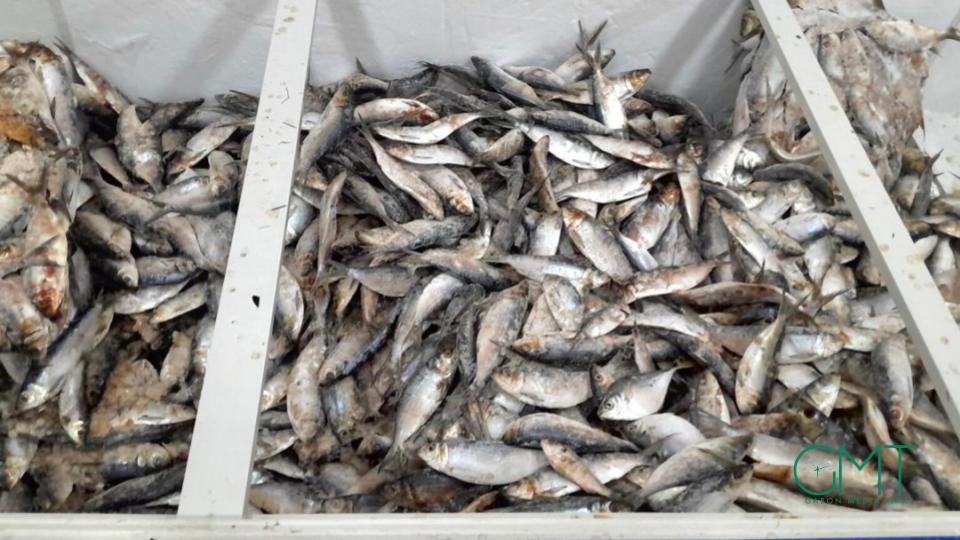
In a decisive move to safeguard the national supply of seafood, the Gabonese government has imposed a temporary ban on the export of sardine (Ethmalosa fimbriata) and the locally known « sans nom » fish (Heterotis niloticus). Effective since March 26, 2026, this restriction applies across the entire country, as confirmed by two ministerial decrees issued by the Ministry of Maritime Affairs, Fisheries, and the Blue Economy and published in the official gazette on April 16, 2026.
The decision comes amid growing concerns over a noticeable shortage of these fish species in domestic markets. While neighboring countries continue to import these products—particularly through border regions like Cocobeach—the authorities are prioritizing local consumption and curbing unregulated exports to address the supply imbalance.
On May 30, the Governor of the Estuaire Province, Marie Françoise Dikoumba, visited Cocobeach to reinforce the mandatory nature of the ban. Her outreach targeted local fishermen, traders, and transporters, emphasizing the need to comply with the new measures. This initiative follows widespread consumer complaints about the scarcity of sardines on market stalls, which has driven up prices and made these essential proteins less accessible to households.
Securing fish stocks and stabilizing the market
The temporary ban is part of a broader strategy to reorganize the production and distribution chains, stabilize the domestic supply, and prevent price surges. Authorities are also working to enhance the traceability of fishery products, ensure compliance with health standards, and prepare for future exports under controlled conditions. This policy aligns with the government’s dual objectives of combating food insecurity and reducing the cost of living, two key priorities in its national agenda.
The Ministry of Maritime Affairs has highlighted the increasing strain on sardine populations in Gabonese waters and the « sans nom » fish in river and lake basins. By suspending exports, the state aims to allow these fish stocks to recover, particularly in overexploited areas, to ensure sustainable harvesting in the long term. Violators of the ban face penalties outlined in the Fisheries Code, which may include confiscation of catches, revocation of fishing licenses, or legal action—unless an exceptional export permit is granted by the competent authorities.