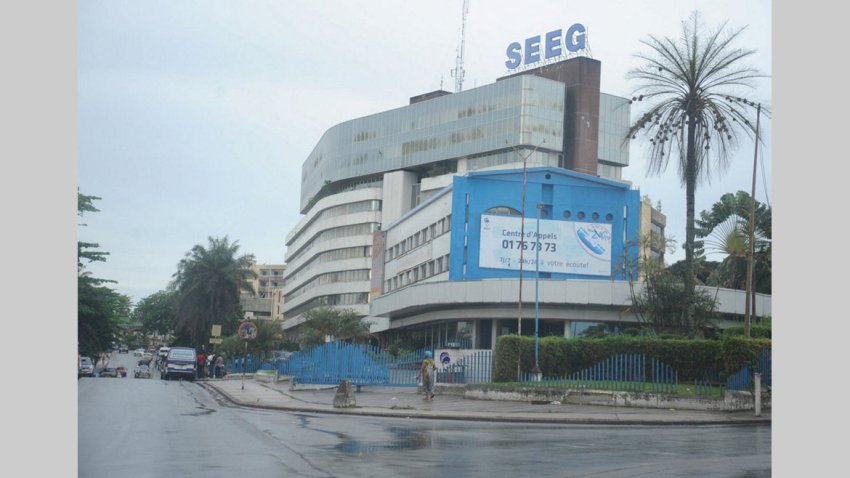
Libreville – After nearly three decades as the face of Gabon’s water and electricity services, the Société d’Énergie et d’Eau du Gabon (SEEG) has been officially dissolved. The government’s decision, taken during a cabinet meeting on 25 June 2026, splits the former monopoly into two new state-private enterprises: La Gabonaise des Eaux for water and Électricité du Gabon for electricity.
This reform goes far beyond a simple rename. It represents a fundamental shift in how Gabon manages its most essential public services. The move follows President Brice Clotaire Oligui Nguema’s state-of-the-nation address less than two weeks earlier, signalling a rapid conversion of political promises into concrete policy. In a country where frequent power cuts and limited access to clean water remain top concerns among citizens, this restructuring is one of the most strategic undertakings of the current term.
Breaking with a failing model
SEEG was created in 1997 under a concession to French group Veolia, embodying the single-operator model for both water and electricity. For a time, that setup appeared adequate. But structural weaknesses mounted over the years. Even after the company returned to public control in 2018, problems persisted: aging infrastructure, chronic underinvestment, repeated service interruptions, financial constraints and rapidly growing urban demand exposed the limits of centralised management.
The authorities have chosen a clean break. La Gabonaise des Eaux will handle all aspects of drinking water – production, transport, distribution and sales. Électricité du Gabon will do the same for electrical power. This specialisation follows a logic widely recognised worldwide: water management poses challenges fundamentally different from those in the energy sector. Keeping them under one roof had diluted priorities, slowed decision-making and complicated targeted investments.
A controlled public-private partnership
The choice of a mixed-economy company status reveals another ambition. The state wants to retain strategic control over these sensitive sectors while opening the door to partners that can bring technical expertise, innovation and financial resources. This hybrid model has been tried in several African countries. In theory, it combines the public sector’s guarantee of the general interest with the private sector’s efficiency demands. Its success, however, will depend on several critical factors over the coming months: the capital structure of the two new companies, the identity of strategic partners, corporate governance, handling of SEEG’s inherited debts and the transfer of assets.
International financial institutions are watching closely. The African Development Bank, the French Development Agency and other technical partners know that the outcome of this reform will shape future investment in Gabon’s infrastructure. For industrial players – especially in mining, forestry and oil – energy stability is also a major competitiveness issue.
The real test
Beyond the administrative reshuffle, this reform carries a strong political promise: universal access to water and electricity for all Gabonese, and tangible improvements in daily life – both in urban neighbourhoods and in the most remote localities. The authorities present the restructuring as a lever for national solidarity, economic modernisation and territorial justice. The stated goals are ambitious: service continuity, better distribution quality, network expansion, energy transition and supply security.
But history teaches that changing structures alone does not transform reality. Citizens will judge the new companies not by their legal texts, but by whether blackouts disappear, water shortages become rare and living conditions actually improve. The dissolution of SEEG marks one of the most significant public-service reforms in Gabon in decades. It opens a historic opportunity for renewal. The true success of La Gabonaise des Eaux and Électricité du Gabon will be measured only by visible results on the ground.