Congo president faces opposition ultimatum over constitutional reform
15 August 2026On the brink of an ultimatum from coalition 64, President Félix Tshisekedi of the Democratic Republic of the Congo has taken a tactical step by returning a constitutional referendum bill to parliament for a second review. This move comes after the Constitutional Court validated the bill’s constitutionality with certain reservations.
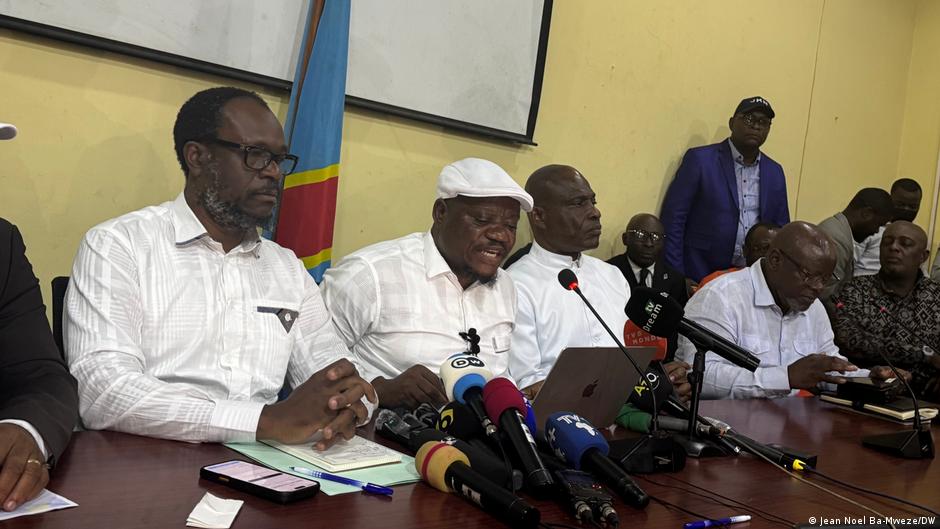
The C64 coalition, along with over sixty civil society organizations, had demanded that the president abandon his constitutional reform agenda by August 15 and reject the referendum bill outright. They also called for an inclusive national dialogue, though no date has been set for such discussions despite the looming deadline.
Tshisekedi’s strategic retreat under pressure
While many anticipated the referendum bill to take effect automatically due to the president’s failure to sign it within 15 days—a provision outlined in article 140 of the Congolese Constitution—Tshisekedi chose instead to submit the bill for further parliamentary deliberation. This decision follows the Constitutional Court’s observations, signaling a temporary retreat by the president.
Professor Bob Kabamba, a political scientist at the University of Liège in Belgium, interprets this move as a setback for Tshisekedi. However, he warns that it does not indicate an abandonment of the president’s potential strategies to extend his political influence beyond 2028, the end of his second term.
“It’s important to recognize the immense pressure from both domestic opposition and regional actors that forced Tshisekedi to backtrack and seek a second reading of the bill. While this appears as a retreat, it doesn’t rule out future attempts by the president to achieve his political objectives beyond 2028,” Kabamba explains.
C64 prepares decisive actions after August 15 deadline
The coalition has welcomed the bill’s return to parliament but remains resolute in its demands. With the August 15 deadline fast approaching, the C64 has hinted at launching a series of strategic initiatives to escalate pressure on the government.
“When the clock strikes midnight on August 15, we will confirm that no progress has been made. We will unveil a series of targeted operations through our C64 laboratory to compel this regime to abandon its attempts to strip away our freedoms and threaten our national sovereignty,” declares Franklin Tshiamala, Secretary-General of Leadership for Governance and Development (LGD), an affiliate of former Prime Minister Augustin Matata Ponyo’s party.
The standoff escalates
From the government’s perspective, the referendum process is framed as a legitimate political and institutional initiative. The ultimatum issued by C64 is dismissed as an illegitimate demand that cannot dictate the president’s agenda.
“The ultimatum from C64 is theirs alone. It may appeal to their backers, but the Republic operates under normal constitutional processes,” asserts Adolphe Amisi Makutano, a senior member of the Union for Democracy and Social Progress (UDPS), the party led by President Tshisekedi.
The political standoff remains unresolved, with the August 15 deadline marking a potential turning point in the Democratic Republic of the Congo’s evolving political landscape.