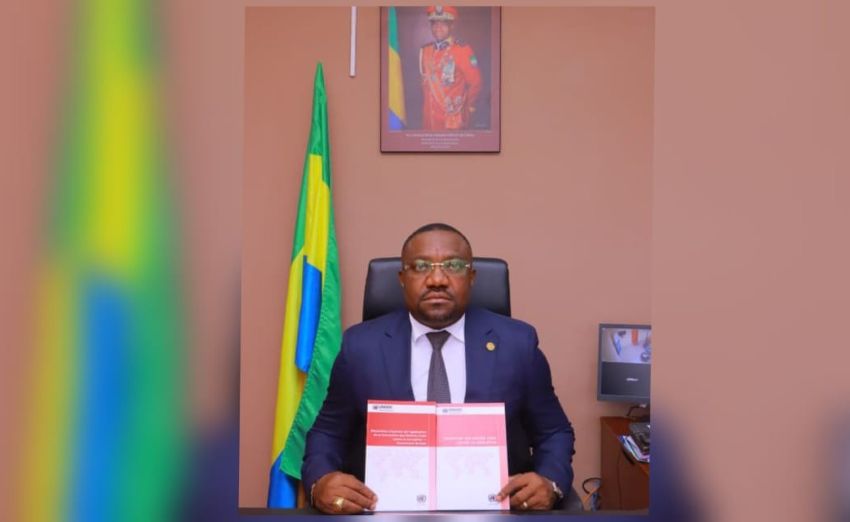
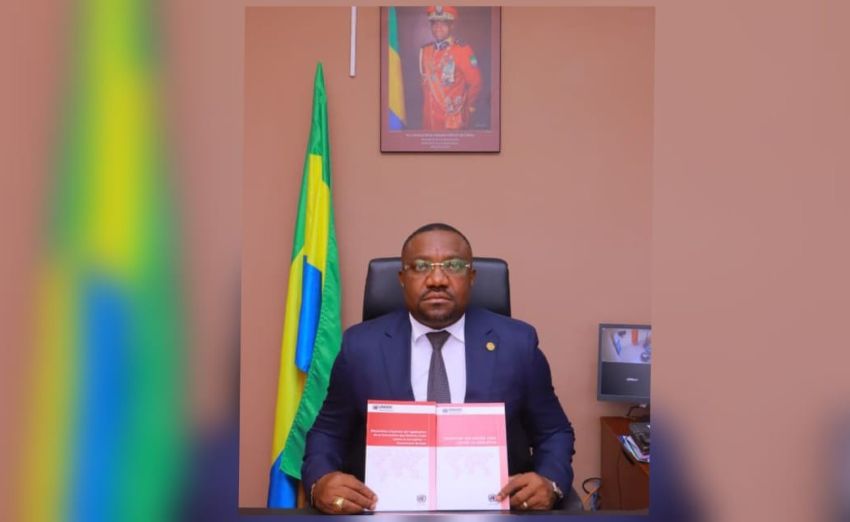
Libreville is preparing for more than just a routine international visit. At the end of June, the city will host a critical assessment of Gabon‘s commitment to public governance, financial integrity, and the global fight against corruption.
Between June 29 and July 1, 2026, specialists from the United Nations Office on Drugs and Crime (UNODC) will conduct a thorough review. Their mission is to evaluate the national capacity to stop corruption, identify illegal financial movements, and reclaim assets tied to economic crimes.
Beyond the formal procedures, this visit carries significant strategic weight. In a global landscape where a nation’s reputation is built on both institutional strength and economic health, this evaluation serves as a major benchmark for international trust.
Scrutinizing national governance
This initiative is part of the second review cycle for the United Nations Convention against Corruption, the primary global framework for addressing dishonest practices. Gabon initiated this process in October 2025, providing a self-assessment to the UNODC and the reviewing nations, Chad and Libya. The upcoming phase in Libreville is the most vital, as it allows evaluators to see how official policies translate into real-world actions.
The review centers on two essential pillars of the Convention. The first involves preventative strategies to minimize corruption within public administration. The second focuses on asset recovery, a highly complex area of international cooperation.
Experts will examine various mechanisms, including wealth disclosure requirements, public procurement protocols, ethical standards for civil servants, and budget oversight systems. Furthermore, the effectiveness of national anti-money laundering measures will be under the microscope.
Key bodies such as the National Commission for the Fight Against Corruption and Illicit Enrichment, the National Financial Investigation Agency, and various judicial and security services will be actively involved in this process.
The challenge of recovering illicit assets
A central component of this evaluation is the recovery of stolen assets. In the modern era, the misappropriation of public funds and transnational bribery often utilize intricate financial networks. Illicit capital frequently moves across multiple borders through complex structures, making it difficult to monitor.
Consequently, the ability of Gabon to track, freeze, and seize these resources is a major sign of institutional maturity. For the country, the goal is to prove that its domestic systems meet international requirements and that its agencies have the legal and technical tools to safeguard public wealth.
International financial partners, credit rating agencies, and investors are paying close attention to these developments, as governance quality is increasingly tied to investment decisions.
Building institutional credibility
While the technical findings of the mission are important, the broader message is even more significant. In an era where transparency and accountability are non-negotiable, nations that open their institutions to independent reviews show a genuine desire for reform.
Gabon is leaning into this transparency. The objective in Libreville is not just to provide a report, but to spot vulnerabilities, strengthen current frameworks, and improve collaboration with global partners.
This evaluation is a test of institutional credibility. In a world where confidence is a strategic asset, the quality of a country’s governance is now as important as its natural resources. This meeting is an opportunity to show that the fight against corruption in Gabon has moved beyond political rhetoric and into a concrete phase of state modernization. The aim is not merely to be reviewed, but to demonstrate real progress.