Gabon launches 700 billion fcfa plan to achieve poultry self-sufficiency
Starting January 1, 2027, Libreville will ban frozen chicken imports. Gabon aims to produce 125,000 tonnes of broiler meat annually by 2028, according to the Ministry of Agriculture. Several challenges remain before that deadline.

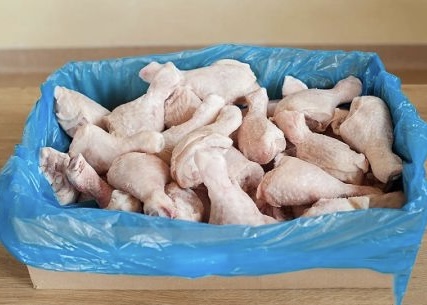
On June 2, 2026, Minister of Agriculture Pacôme Kossi presented to parliament a 700 billion CFA franc program to enable the country to achieve poultry meat self-sufficiency by January 1, 2027. On that date, Gabon will halt annual imports of 65,000 tonnes of frozen chickens. Gabon consumes about 65,000 tonnes of chicken per year, according to the FAO. For economist Louis Ndong, the goal is clear: “Achieve food sovereignty to lighten household budgets.”
An ecosystem to build
Hervais Omva, president of the Zambia-based NGO IDRC AFRICA and an expert in poultry value chains, says project success will depend on establishing the entire production chain. “The president set the direction. It’s up to sector stakeholders to build the upstream and downstream ecosystem,” he explains. According to him, local production of maize and soybeans is a critical condition. These two crops represent nearly 75% of poultry feed. “One of the main challenges will be locally producing millions of tonnes of these grains,” he stresses. Job creation is also a major issue. “Some automated slaughterhouses can process up to 60,000 chickens per day with only about twenty employees. If the goal is also to reduce youth unemployment, we must prioritize a model adapted to local realities,” he adds.
Gabon bets on African investors
Libreville intends to mobilize investors from the continent to support this transformation. After the call launched by Brice Clotaire Oligui Nguema at the Kigali summit in mid-May 2026, several African operators were received on June 9 at the Presidential Palace. The government says the technical framework is in place and an investment bank is already operational. A senior official from the Ministry of Agriculture states that “the various mechanisms will be deployed gradually.” In Port-Gentil, G.M., a poultry farmer with ten years of experience running a flock of 10,000 chickens, sees this policy as a major opportunity. “The potential is real, but moving to industrial production requires significant investments,” he confides.
A sector to structure
The Covid-19 pandemic and then the war in Ukraine reminded importing countries of their dependence on international markets. Gabon now wants to strengthen its domestic production to reduce this vulnerability. According to data from the General Directorate of Statistics, 54.6% of Gabon’s population is under 26. The youth unemployment rate is estimated between 30% and 38%, according to the UNDP. Developing the poultry sector thus represents an agricultural, economic, and social challenge. Hervais Omva sends a message to young Africans: “The president has paved the way. Investors are ready.”