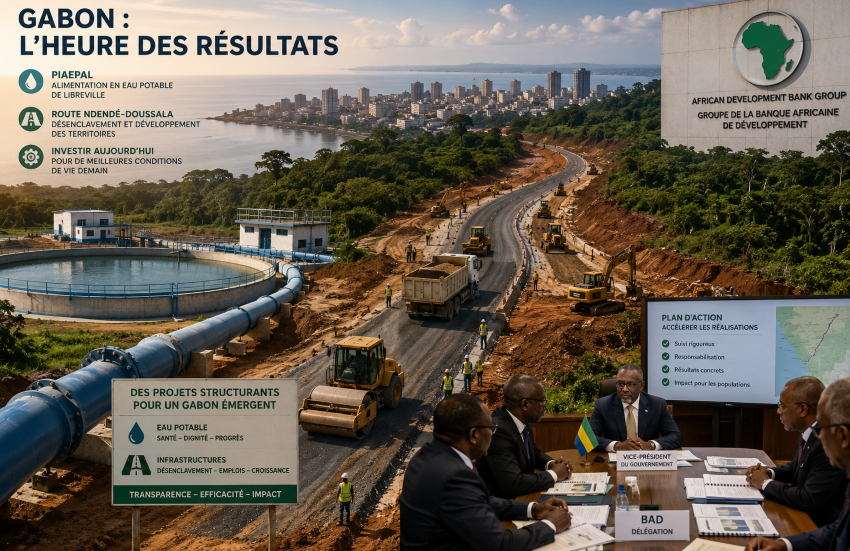
Gabon tightens debt accountability for tangible development outcomes

Libreville, July 1, 2026 – Gabon is taking a firm stance. With delays plaguing multiple development projects backed by the African Development Bank (AfDB), officials are now demanding tangible results from every financed initiative.
The June 29 meeting in Libreville between Vice President Hermann Immongault and an AfDB delegation led by country administrator Mamour Ousmane Ba underscored a critical shift: funds must translate into visible progress for citizens.
Two flagship projects dominated discussions. First, the Integrated Program for Safe Drinking Water and Sanitation in Libreville (PIAEPAL), designed to address persistent water access challenges in the capital. Second, the Ndendé-Doussala road, a strategic infrastructure project aimed at boosting regional trade and economic integration. Both are priorities, yet their sluggish progress fuels public frustration.
An end to delays
For years, Gabon has secured substantial international financing to modernize its infrastructure. Yet many projects fall behind schedule, eroding public confidence in government commitments. The AfDB meeting signals a new era of accountability, where every dollar invested must deliver measurable impact.
This urgency is heightened by tightening budget constraints. Authorities emphasize that success hinges not on funds raised but on their effective deployment. Citizens care less about financial commitments than about tangible improvements in their daily lives.
The PIAEPAL case highlights this challenge. Despite chronic water shortages in Libreville’s neighborhoods, delays persist, undermining trust in public programs. The Ndendé-Doussala road faces similar hurdles—once hailed as a catalyst for economic growth, its slow progress delays expected benefits for communities and businesses.
Shared responsibility
A key takeaway from the meeting was the recognition that delays stem from systemic issues, not just external factors. Immongault acknowledged internal administrative bottlenecks, including cumbersome procedures, poor inter-institutional coordination, and delayed decision-making.
This transparency marks a departure from past practices, where delays were often blamed solely on contractors or lenders. By identifying governance gaps, the government signals a willingness to address root causes rather than symptoms.
A test for reform credibility
The AfDB’s response reflected cautious optimism. Mamour Ousmane Ba reaffirmed the bank’s readiness to support Gabon’s priorities while stressing that execution capacity determines project success. This underscores a global truth: financing alone cannot drive development—strong national systems are essential.
Libreville’s new approach will be judged by results. The completion of PIAEPAL and the Ndendé-Doussala road will serve as litmus tests for the government’s pledge to prioritize performance over promises. In an era where international funders favor countries that deliver—not just those that borrow—Gabon’s ability to convert debt into tangible progress will define its future standing.
Related Posts