Gabon’s search for poultry production partnerships abroad has reignited debates about food sovereignty. The recent announcement of Guinean group SONOCO’s plan to raise 15 million chickens annually in Gabon has exposed a critical question: why does the country turn to foreign investors when homegrown solutions already exist?
The arrival of SONOCO, while welcomed for boosting local production, has drawn attention to Gabon’s existing agricultural champions—particularly the Société Gabonaise de Développement Agricole (SOGADA), which has quietly built a thriving agro-industrial complex over the past decade.
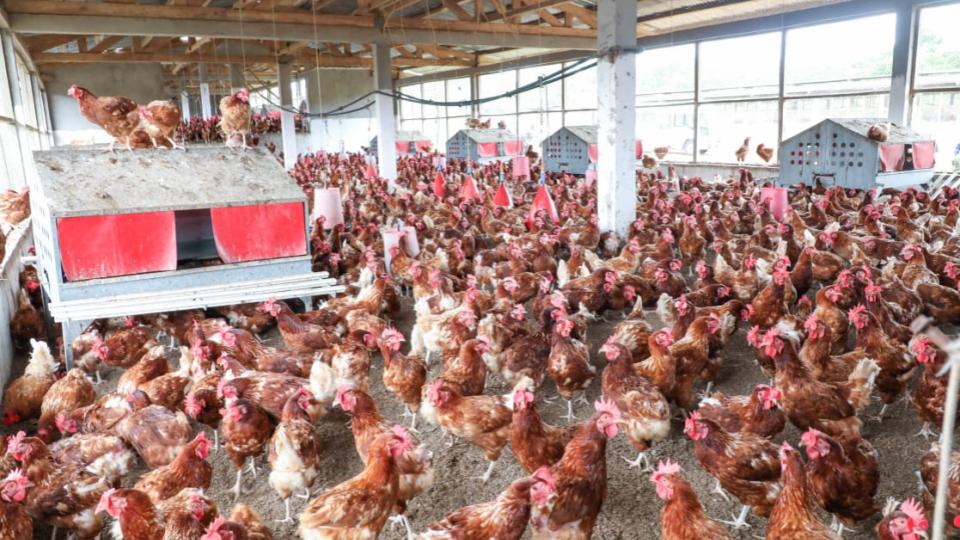
Founded in 2013, SOGADA operates on 160 hectares near Libreville with over 16 billion CFA francs in private Gabonese investments. Its integrated model spans poultry farming, egg production, pork rearing, agricultural processing, and even egg packaging—a complete value chain exactly matching the government’s stated priorities.
The forgotten pioneer in Gabon’s agricultural sector
Former Transition MP Jean-Valentin Leyama has been among those questioning why SONOCO’s project receives more attention than SOGADA, a company that has already:
- Produced locally for years, reducing poultry imports
- Created hundreds of jobs for Gabonese workers
- Paid taxes and contributed to national food security
- Developed an entire agricultural ecosystem
This raises fundamental questions about Gabon’s economic development strategy. If food sovereignty is truly a national priority, why aren’t existing domestic champions being prioritized over new foreign ventures?
Beyond slogans: real economic sovereignty
The debate extends far beyond poultry farming. It touches on how nations achieve sustainable economic transformation. Successful countries don’t merely attract foreign investors—they systematically nurture local entrepreneurs who can become national champions.
Consider South Korea’s industrial giants, Morocco’s supported agricultural enterprises, or Rwanda’s locally driven economic growth. Each case demonstrates how states build sovereignty not by substituting imports, but by empowering their own business leaders.
Gabon’s challenge isn’t attracting investment—it’s creating an environment where Gabonese entrepreneurs can thrive alongside international partners.
The state’s strategic role
SONOCO’s projected impact is undeniable: thousands of jobs and reduced poultry imports. But the deeper question remains: will Gabon build real food sovereignty by supporting those who’ve already invested everything, or only by welcoming new players?
True economic independence requires more than local production—it demands a system that identifies, supports, and scales domestic champions. A nation that doesn’t champion its own builders risks importing its development as surely as it imports its products.
A question demanding answers
The SONOCO announcement forces a confrontation with an uncomfortable truth: if food sovereignty matters, why do Gabon’s proven agricultural pioneers still wait for recognition while newer foreign projects receive immediate institutional backing?
SOGADA proves Gabon has entrepreneurs capable of massive investment and risk-taking. The real question isn’t why foreign companies come to Gabon—it’s why the Republic hasn’t yet elevated its own builders to the status they’ve earned through years of dedication.