controversial invocation: why Maïmouna Dièye’s remarks about Ousmane Sonko sparked outrage in Khombole
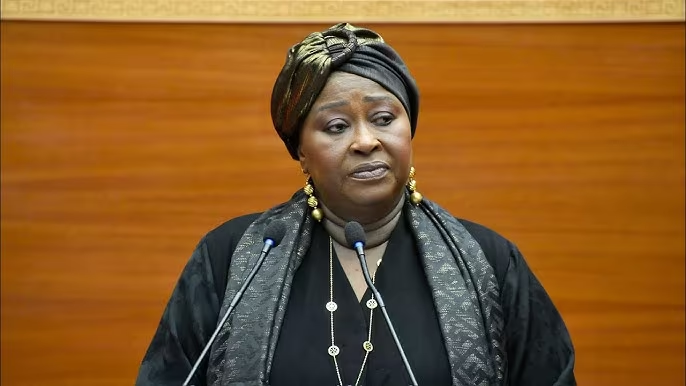
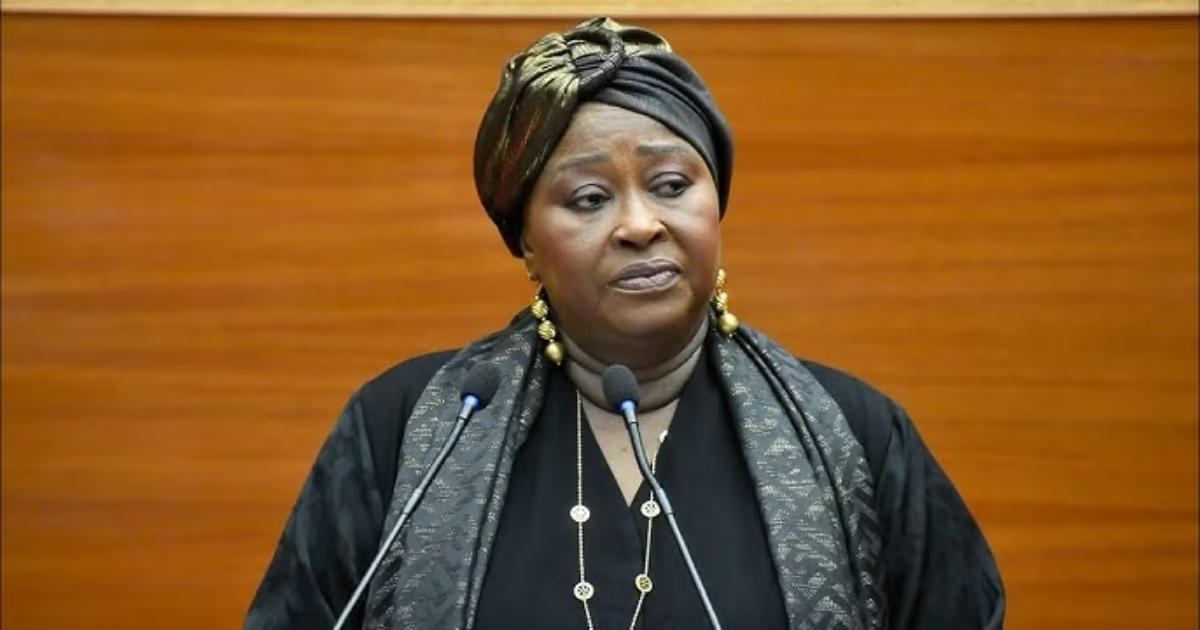
Maïmouna Dièye’s choice of words during a public address in Khombole left Ousmane Sonko visibly uncomfortable, as she invoked a sacred Islamic blessing typically reserved for the Prophet Mohammad. This linguistic misstep has ignited a fierce debate about the boundaries between political admiration and religious reverence in Senegal.
During a rally in Khombole on Saturday, Maïmouna Dièye’s speech took an unexpected turn when she prefaced her remarks by invoking a blessing usually reserved for prophets in Islamic tradition. The phrase she used—« under the presence of Seyidina Ousmane Sonko Salalahou Aleyhi Wa Salam »—directly associated Ousmane Sonko with a sacred invocation typically reserved for the Prophet Mohammad (peace and blessings upon him) and, in some interpretations, other revered prophets. This deliberate or accidental conflation of political leadership with divine sanctity struck a raw nerve in Senegal’s deeply religious society.
the weight of sacred language in Senegalese politics
In Islam, the invocation « Salalahou Aleyhi Wa Salam » is a hallmark of profound respect, exclusively applied to the Prophet Mohammad and, by extension, to other prophets recognized in Islamic teachings. Its use in reference to a political figure—no matter how prominent—crosses a line that many religious scholars argue should never be blurred. The gravity of such a statement lies in its potential to elevate a human leader to a quasi-divine status, a notion incompatible with Islamic monotheism. This explains why Ousmane Sonko, visibly taken aback, felt compelled to address the incident immediately, emphasizing the distinction between admiration and sacralization.
The incident has thrust into the spotlight a recurring concern in Senegal’s political landscape: the tendency of some supporters to blur the lines between secular respect for leaders and religious veneration. Religious leaders have long warned against this phenomenon, stressing that while political figures may command deep affection, their status must remain firmly within the realm of the human and the temporal. Ousmane Sonko’s swift response underscores the sensitivity of this issue in a country where religious discourse holds immense sway over public opinion.
Ousmane Sonko’s measured response
Recognizing the potential for his opponents to exploit the remark, Ousmane Sonko moved quickly to clarify the situation. In a public statement, he acknowledged the affection of his supporters but firmly rejected the notion of being placed on a pedestal reserved for the Prophet. « I have never claimed, nor will I ever claim, to have reached that level, » he asserted, drawing a clear line between the admiration of his followers and the sacred inviolability of the Prophet’s name. His reaction was not merely a personal defense but a strategic move to prevent the controversy from spiraling into a broader crisis, particularly in a political climate where religious sentiment is both a unifying and a divisive force.
This episode serves as a reminder of the delicate balance political figures in Senegal must maintain when navigating the intersection of faith and governance. In a nation where religion permeates daily life, even the most well-intentioned remarks can carry unintended consequences, making vigilance and precision in language essential.