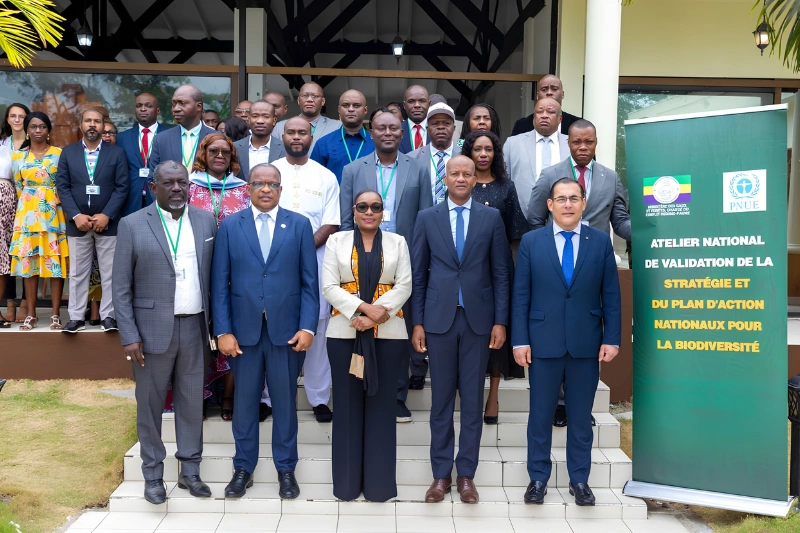
Gabon has taken a decisive step toward safeguarding its natural heritage as the national workshop for validating the 2022-2030 National Biodiversity Strategy and Action Plan (SPANB) concluded in Libreville this week. The gathering brought together experts, officials, and stakeholders to finalize a critical framework for the country’s ecological future.
At the heart of this initiative lies a bold commitment: to shield at least 30% of Gabon’s land, coastal, and marine areas under enhanced protection measures. The SPANB serves as the nation’s guiding compass, directing public policies while promoting sustainable management of Gabon’s exceptional biological wealth.
Drawing from global commitments made under the Kunming-Montréal accord, Gabon’s roadmap outlines four key priorities to be achieved by 2030: expanding protected zones, restoring degraded ecosystems, curbing threats like poaching and pollution, and securing sustainable funding for conservation efforts. The finalized strategy will soon be submitted to the Government for approval before being officially presented to the Convention on Biological Diversity (CBD) Secretariat.
The road ahead, however, demands more than just policy—it requires action. As Tsayi Mouvagha, the SPANB coordinator, emphasized, the next phase focuses on widespread outreach to government agencies, private enterprises, local communities, and civil society to ensure the strategy’s effective implementation nationwide.
With nearly 9 out of 10 hectares covered by forests and 13 national parks, Gabon ranks among Africa’s biodiversity hotspots. The 2022-2030 SPANB aims to strike a balance between economic progress, resource utilization, and environmental preservation. Yet, challenges remain—without dedicated funding, local engagement, and corporate accountability, this ambitious plan risks becoming little more than ink on paper.