Libreville, July 11, 2026 – A nation’s re-emergence on the global stage is not solely defined by the resumption of diplomatic ties. Rather, it is marked by its renewed ability to articulate a vision, engage in critical discussions, and actively shape the political landscape of the world.
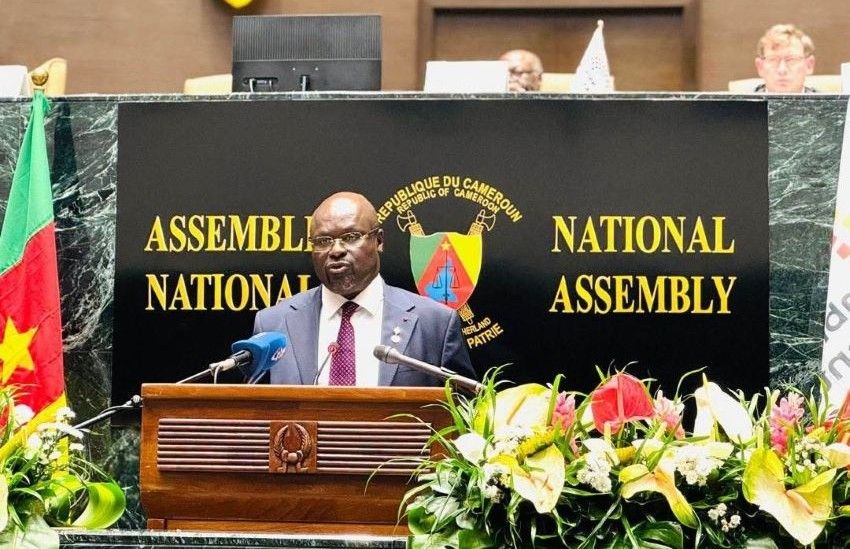
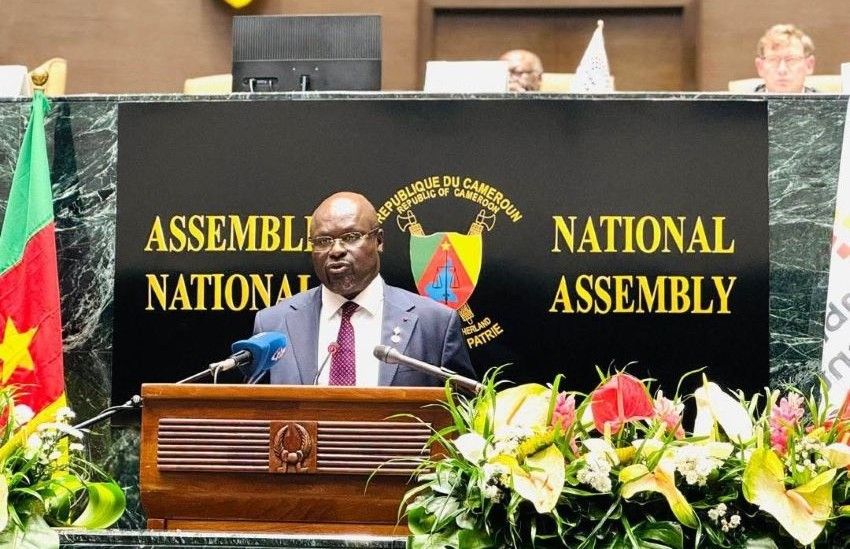
This commitment to active participation was precisely demonstrated by Gabon at the 51st session of the Parliamentary Assembly of La Francophonie (APF) held in Yaoundé.
In the Cameroonian capital, before an assembly of presidents, delegation heads, and representatives from the Francophone community, Michel Régis Onanga M. Ndiaye, President of Gabon’s National Assembly, formally announced the country’s re-entry into this esteemed institution. This return follows a two-year period of political transition dedicated to national institutional reforms.
Far from a mere procedural gesture, this declaration signifies a critical new phase in Libreville’s diplomatic strategy, reflecting the Gabonese authorities’ strong desire to reposition the nation at the heart of regional and international consultation mechanisms.
Beyond symbolic reintegration
The proceedings of the 51st session of the Parliamentary Assembly of La Francophonie unfolded against a backdrop of escalating global crises, profound questions about the future of multilateralism, and a surge in sovereignty demands across various world regions. The session’s central theme, focusing on multilateralism and state sovereignty, provided Gabon with a uniquely strategic platform to articulate the contours of its evolving diplomatic doctrine.
During his address, Michel Régis Onanga M. Ndiaye expressed gratitude to the Francophone institution for its unwavering support throughout Gabon’s transition period. He also reaffirmed Gabon’s enduring historical commitment to the values of dialogue, cooperation, and solidarity that form the bedrock of the Francophone community.
By emphatically asserting that Gabon is back, the National Assembly President aimed to send an unequivocal message to international partners: that of a nation which considers its exceptional institutional sequence complete and now intends to fully reclaim its rightful place within global decision-making and influence spheres.
This reintegration carries implications far beyond the parliamentary domain. It also serves as a clear signal to investors, international organizations, and economic partners regarding the country’s restored stability and its readiness to actively engage in regional dynamics.
Sovereignty without isolation
A key takeaway from this intervention was Libreville’s distinctive definition of sovereignty. At a time when some states equate sovereign assertion with distancing themselves from international institutions, Gabon advocates for a different perspective. Here, sovereignty is presented as a state’s capacity to safeguard its national interests while remaining fully committed to international cooperation.
This vision is underpinned by the conviction that dialogue, consultation, and solidarity remain the most effective instruments for crisis prevention, the consolidation of democratic institutions, and the preservation of regional stability.
Such a stance mirrors the ongoing African debates concerning the role of states within the international system. It also highlights the emergence of a new generation of leaders and political figures actively seeking to redefine the relationship between national independence and multilateral collaboration.
In this evolving landscape, Gabon endeavors to position itself as a key player capable of harmonizing the affirmation of its sovereignty with active diplomatic engagement.
Transforming Gabonese experience into regional influence
The address in Yaoundé also revealed Gabon’s broader ambition to support other African nations undergoing transition or institutional reconstruction processes.
The proposal for a high-level conference, bringing together parliamentary presidents from countries in transition and post-transition, underscores this commitment to leverage Gabon’s own experience as a tool for continental cooperation. The concept is both simple and ambitious: to transform the lessons learned over the past two years into a catalyst for institutional solidarity, ultimately serving African political stability.
This strategic direction signifies a notable evolution in parliamentary diplomacy across the continent. Historically confined primarily to national duties, parliaments are progressively assuming roles as mediators, crisis preventers, and democratic enablers.
By also endorsing the reform proposals championed by the Senegalese and Ivorian sections, Gabon demonstrates its intent to move beyond mere participation in debates to become an active contributor to their advancement. This proactive posture could enable Libreville to strengthen its influence within the Francophone sphere while solidifying its image as a constructive partner on institutional and democratic matters.
Gabon’s return to the Parliamentary Assembly of La Francophonie thus represents far more than a diplomatic normalization. It marks the initial step in a broader strategy designed to reposition the country within major African and international dialogues.
In a world grappling with geopolitical tensions, identity retrenchments, and challenges to multilateralism, Libreville chooses an alternative path. This path embraces an assertive yet open sovereignty, cooperation founded on mutual respect, and parliamentary diplomacy dedicated to stability and development.
The true challenge for Gabon now extends beyond simply rejoining international institutions. It lies in its capacity to project a distinctive voice within these forums and to transform its re-established presence into enduring influence, benefiting both its citizens and the entire Francophone community.