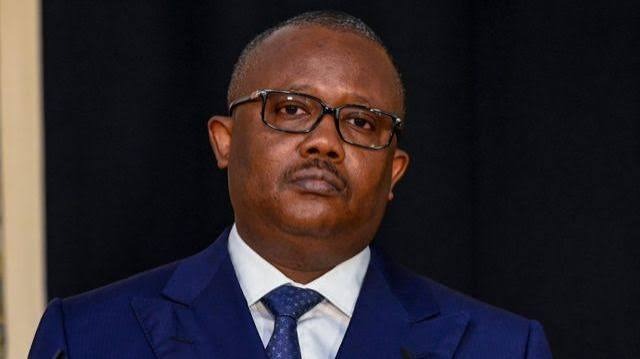
President Umaro Sissoco Embaló has formally declared his intention to seek a second term, a move that removes the ambiguity that had hung over Bissau’s political landscape for months. The announcement, which had been anticipated but never confirmed, puts the incumbent squarely at the centre of a contest that will test the resilience of Guinea-Bissau’s institutions.
From hesitation to certainty: the logic behind a delayed decision
For weeks, Embaló had cultivated uncertainty, hinting at times that he might step aside. That ambiguity was not accidental. It allowed him to gauge the mood within his coalition, test the loyalty of key allies, and keep potential rivals off balance. When the declaration finally came, it was framed as a response to appeals from his supporters and coalition leaders — a narrative designed to present the decision as a collective demand rather than a personal ambition.
Yet the delay itself reveals a deeper calculation. By waiting, Embaló ensured that no alternative candidate could gain traction within his own camp, effectively freezing the political field until his own position was secured. The move also bought time to assess the strength of the opposition and the readiness of electoral institutions.
A presidency defined by reform and recurring institutional crises
Since his contested election in late 2019 and his inauguration in early 2020, Embaló has pursued a dual agenda: raising Guinea-Bissau’s international profile and modernising infrastructure. His tenure as chair of the ECOWAS Authority of Heads of State and Government brought renewed diplomatic visibility to Bissau, positioning the small West African nation as a more active player in regional affairs.
But the domestic record is far more turbulent. The past five years have been marked by repeated institutional breakdowns that have shaped the country’s political trajectory:
- Repeated dissolution of parliament: The president dissolved the National People’s Assembly twice — in 2022 and again in late 2023 — citing destabilisation attempts and institutional deadlock. Each dissolution deepened the rift between the executive and the legislature.
- Mounting tension with the opposition: The PAIGC-led opposition coalition has consistently accused the government of authoritarian drift and of curtailing public freedoms, creating a climate of mistrust that has poisoned political dialogue.
- Security pressures: The regime has had to contend with several episodes of military unrest and alleged coup attempts in the capital, underscoring the fragility of civilian control over the armed forces.
These episodes are not isolated incidents. They reflect a structural tension between a president who governs by decree and an opposition that questions the legitimacy of his mandate. The upcoming election will be fought against that backdrop.
What the coming months will reveal about Guinea-Bissau’s stability
With Embaló now officially in the race, the electoral battle has begun. The critical questions are no longer about who will run, but about how the vote will be conducted and whether the opposition will participate fully. The logistical organisation of the ballot and the level of engagement by opposition forces will determine whether the process is seen as credible.
Regional observers and international partners have made clear that their priority is an inclusive, transparent and peaceful election. For a country that has experienced four coups since independence and numerous attempted takeovers, the stakes go beyond the fate of one candidate. The vote will test whether Guinea-Bissau can break its cycle of instability or whether the pattern of contested power will repeat itself.
The answer may lie less in the campaign rallies than in the quiet negotiations over electoral guarantees, the independence of the judiciary, and the willingness of all sides to accept the outcome. Embaló’s candidacy has clarified the field, but it has also sharpened the questions that will define the nation’s political future.
