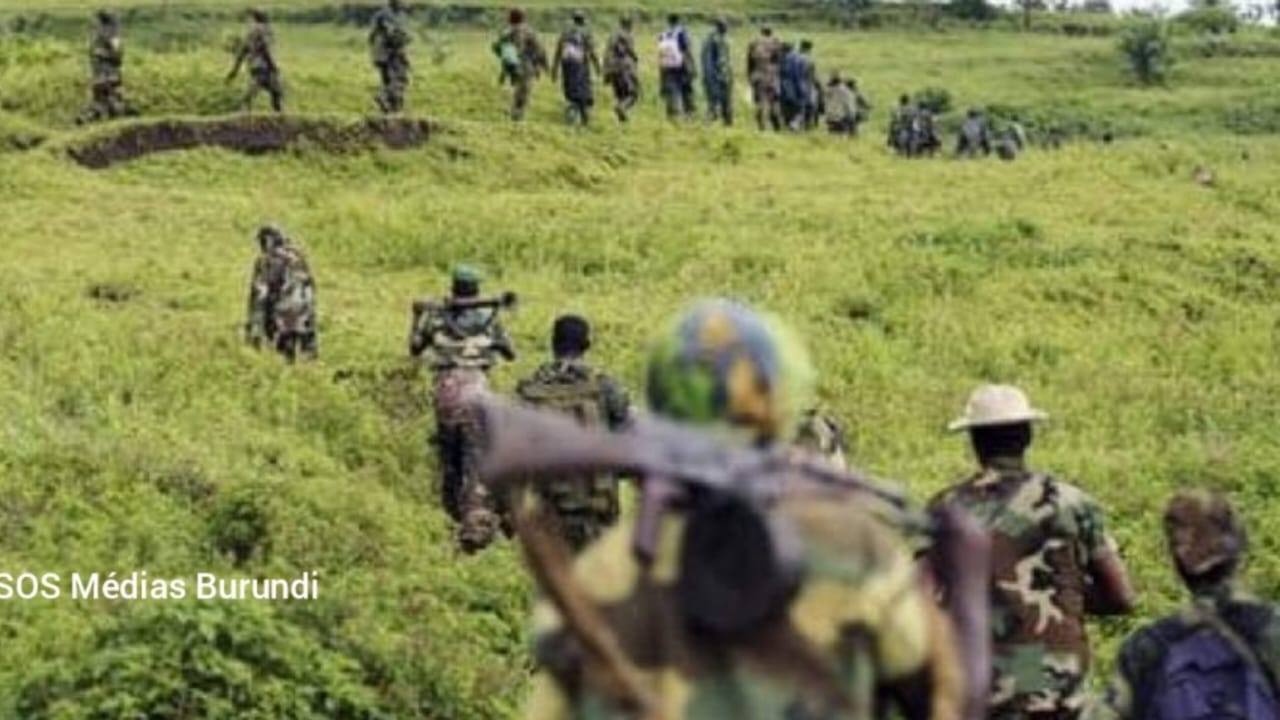
Minembwe, July 6, 2026 — Two armed factions, the Twirwaneho group and the M23/AFC-M23 alliance tied to the Alliance Fleuve Congo coalition, have declared control over the strategic Point Zéro position in Itombwe sector, Mwenga territory, Sud-Kivu. According to their joint statement, this base served as a critical stronghold for the Congolese Armed Forces (FARDC), Burundian Defense Forces (FDNB), and local Wazalendo militias backed by Kinshasa in the volatile highlands region. No official response has been issued from military or government sources at this time.
The claim comes after a coordinated offensive launched on July 4 by the two groups against Point Zéro, following intense clashes that lasted several hours. In a communiqué signed by Twirwaneho military spokesman Fidèle Rugabo, fighters state that FARDC troops, Burundian soldiers, and allied Wazalendo militias retreated from the area under heavy pressure.
«Point Zéro has fallen into our hands,» the statement declared, asserting that government-aligned forces abandoned their equipment and positions without resistance.
Local residents in Minembwe describe a tense atmosphere as rumors swirl about nearby skirmishes along routes connecting Mikenge, Kalongi, and Rubemba. One resident shared anonymously, «For months, we’ve lived between gunfire and uncertainty. If this base is truly under new control, maybe the attacks will finally ease.»
Observers note that in recent weeks, FARDC and FDNB units have reportedly withdrawn from multiple positions—including Point Zéro, Mikenge, Kalongi, Rubemba, and Kakenge—retreating toward Mutambala, Mukera, and Fizi territory. These reports remain unverified pending official confirmation.
Why Point Zéro Matters in the Sud-Kivu Conflict
Nestled in the rugged Itombwe massif, Point Zéro commands one of the most contested military zones in the Sud-Kivu highlands. Its capture disrupts supply lines and communication hubs linking Minembwe, Mikenge, Mwenga, and Fizi—key areas where armed groups vie for territorial dominance. Since the M23/AFC-M23 withdrew from Uvira in January 2026, the highlands have become a flashpoint for clashes between FARDC, Burundian troops, Wazalendo militias, and Twirwaneho fighters operating alongside the AFC-M23 coalition.
Burundi’s Military Presence: A Bilateral Commitment
The presence of Burundian troops in eastern Democratic Republic of the Congo is authorized under a bilateral security cooperation agreement between Gitega and Kinshasa. Both governments have publicly acknowledged this arrangement, which allows the FDNB to operate on Congolese soil.
Between August 2022 and December 2025, over 29,000 Burundian soldiers were deployed in eastern DRC, initially to combat Burundian rebel factions such as RED-Tabara. Today, the FDNB participates in joint operations with FARDC against multiple armed groups active in the region.
Recent months have seen significant troop movements across Mwenga, Fizi, and Uvira territories, coinciding with a sharp rise in hostilities between government forces and the two armed groups.
Regional Tensions Fuel Ongoing Violence
The conflict in eastern DRC remains intertwined with broader regional rivalries. Kinshasa has repeatedly accused Kigali of backing the M23/AFC-M23, a claim Rwanda denies. Meanwhile, Rwanda asserts that FARDC collaborates with the Democratic Forces for the Liberation of Rwanda (FDLR), a rebel group composed largely of former Hutu extremists linked to the 1994 genocide against Tutsis.
Burundi, too, has accused Rwanda of supporting anti-government armed groups operating in eastern DRC. Kigali, in turn, has criticized Gitega for its continued cooperation with the FDLR and other regional militant factions.
Despite diplomatic efforts—including a June 27, 2026 agreement in Washington between DRC and Rwanda under U.S. mediation—the violence persists, particularly in the Sud-Kivu highlands. This area remains one of the most volatile zones in the Great Lakes region, where local rivalries, communal tensions, and geopolitical interests sustain a protracted and complex conflict.
As of this report, no official statements have been released by FARDC, FDNB, or Burundian authorities addressing the claims made by the armed groups.